
Colorado Wedding Blog
Relationships | Marriage Wedding Planning
Start Planning Your Next Adventure
Create the wedding and marriage of your dreams with insights, tips, and little notes.
How to Include Family and Cultural Traditions in a Modern Wedding Ceremony
Summary
Learn how to include family, culture, and traditions in a modern wedding ceremony with meaningful ideas for readings, rituals, heirlooms, blended families, cultural customs, and Colorado weddings.
How do you include family, culture, or traditions in a modern wedding ceremony?
Include family, culture, or traditions by choosing rituals that feel emotionally honest, briefly explaining their meaning, assigning thoughtful roles to loved ones, and adapting inherited customs so they match your values. The strongest modern ceremonies honor where you come from without letting tradition overwhelm the couple’s story.
Frequently Asked Questions (FAQ)
How can we include family traditions in a wedding ceremony without making it too long?
Choose one or two traditions with the strongest emotional meaning, keep each moment brief, and ask the officiant to explain the ritual in a sentence or two. Family traditions work best when they support the ceremony rather than interrupt its rhythm.
What are meaningful ways to honor culture in a modern wedding ceremony?
Meaningful options include a cultural blessing, bilingual reading, family heirloom, music selection, tea ceremony, handfasting, chuppah, lasso ritual, ancestral acknowledgment, traditional garment, or a family member’s spoken blessing. The right choice depends on what the tradition means to the couple and their families.
Can a wedding ceremony include traditions from two cultures?
Yes. A wedding ceremony can include traditions from two cultures when each element has a clear purpose and enough room to be understood. Many couples use one tradition near the opening and another near the vows or ring exchange so the ceremony feels balanced.
How do you modernize old wedding traditions?
Modernize old wedding traditions by preserving the emotional meaning while changing outdated language or structure. For example, instead of “giving away” a bride, both families can offer a blessing of support for the couple’s marriage.
Should family members speak during the wedding ceremony?
Family members can speak during the ceremony if the role feels natural and the reading or blessing is concise. A ceremony usually feels stronger with one or two carefully chosen family voices rather than many speakers.
How do you include a deceased loved one in a wedding ceremony?
A deceased loved one can be honored through a brief remembrance, reserved seat, heirloom, flower, piece of music, candle, program note, or private family moment. The ceremony mention should be tender but not so long that it changes the emotional center of the day.
Can cultural wedding traditions be included in a non-religious ceremony?
Yes. Many cultural traditions can be included in a non-religious ceremony, especially when the couple understands the tradition’s meaning and adapts it respectfully. Some rituals are cultural, some are religious, and some are both, so it is wise to ask family members or cultural leaders for guidance.
What should we do if our families disagree about wedding traditions?
Listen to the meaning behind each request, then decide as a couple which traditions fit your ceremony. You can honor some family customs at the rehearsal dinner, reception, or private family gathering if they do not belong in the ceremony itself.
Key Topics
how to include family in wedding ceremony
cultural wedding ceremony ideas
modern wedding ceremony traditions
family traditions wedding ceremony
how to honor culture in wedding ceremony
multicultural wedding ceremony ideas
blended family wedding ceremony ideas
non religious wedding ceremony traditions
wedding ceremony rituals
meaningful wedding ceremony ideas
Colorado wedding officiant
Denver wedding officiant
Boulder wedding officiant
Golden wedding officiant
Colorado elopement ceremony
personal wedding ceremony ideas
wedding ceremony readings family
wedding ceremony unity rituals
how to personalize a wedding ceremony
family blessing wedding ceremony
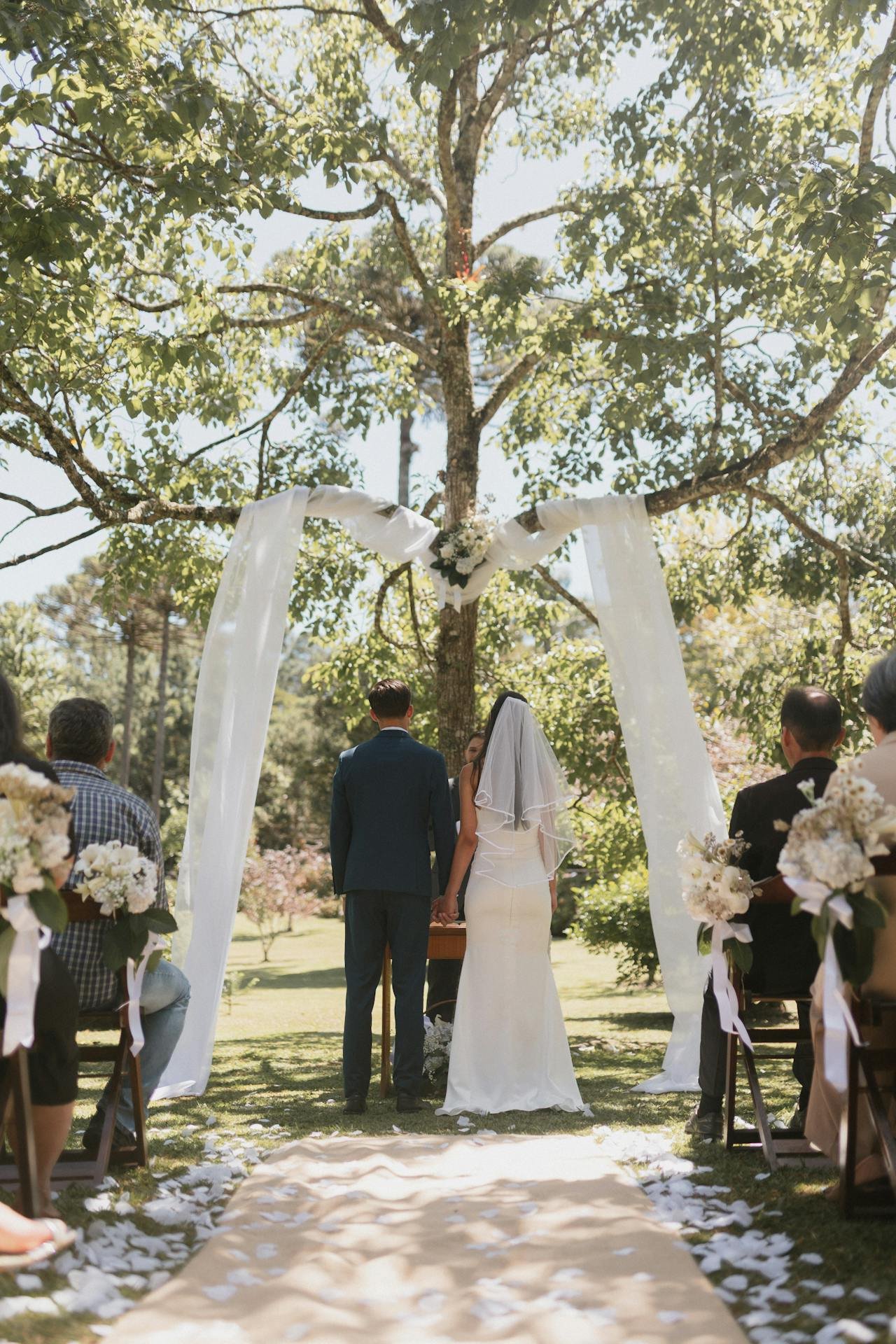
Denver Wedding Officiant / Photo: Alexander Mass
How Modern Weddings Are Reshaping Traditions
A modern wedding ceremony does not have to be stripped bare to feel current. In fact, the most memorable ceremonies often do the opposite. They keep the room simple enough for the couple to be seen, then allow a few carefully chosen traditions to bring the past into the present. For many couples, the old template no longer works. The father does not always “give away” the bride. The ceremony may be non-religious, interfaith, spiritual but not doctrinal, bilingual, same-sex, blended-family-centered, or intentionally small. A couple may want their grandmother’s blessing but not the full church service. They may want a tea ceremony, a chuppah, a lasso, a handfasting cord, a jump-the-broom ritual, a reading from a poet, or a quiet moment of remembrance for someone who is missing.
The question is no longer, “Which traditions are required?” The better question is, “Which traditions still carry truth?”
That distinction matters. A wedding ceremony should not become a museum of inherited gestures. It should not feel like an obligation quietly dressed as reverence. The right tradition has breath in it. It tells the guests something about the couple, their families, their history, or the promises being made. For couples planning a ceremony with a Denver wedding officiant, a Golden wedding officiant, a Boulder wedding officiant, or a more intimate Colorado elopement ceremony, the goal is not to make the ceremony more complicated. The goal is to make it more legible: to yourselves, to your families, and to the people who have gathered to witness you.
Table of Contents
Why modern weddings are returning to meaning
Start with the question beneath the tradition
How to include family without handing over the ceremony
Cultural traditions: honor without performance
Blending two families, faiths, or backgrounds
Modern ceremony ideas that feel natural
What to say when families disagree
Colorado ceremony considerations
How an officiant helps hold it all together
Related articles
How to Include Family Without Handing Over the Ceremony
Family involvement is one of the easiest ways to make a wedding ceremony feel warm. It is also one of the easiest ways to lose the shape of the ceremony if every loved one needs a visible role. Not every family member needs a microphone. Some roles are spoken; others are symbolic, logistical, or private.
Processional Roles
The processional is often the cleanest place to honor family structure. A parent, sibling, grandparent, child, close friend, or chosen-family member can escort one or both partners. In blended families, it can be moving to include a step-parent or to split the aisle into two meaningful segments. Modern options include:
Both partners walking in with both parents.
Each partner walking alone, then meeting halfway.
The couple entering together.
Children leading the processional.
Grandparents entering just before the wedding party.
A chosen-family member escorting a partner when biological family is absent or complicated.
The key is to choose an entrance that reflects reality, not etiquette theater.
Readings and Blessings
A family reading can work beautifully when it is short and specific. Avoid assigning a reading simply because someone “should” be included. Choose someone who can hold the moment without rushing, improvising, apologizing, or turning the reading into a toast. Good reading choices include:
A poem connected to place, memory, or family history.
A short passage from a spiritual or philosophical text.
A blessing from a parent or grandparent.
A few lines from a letter, song, or book that has meaning for the couple.
A bilingual reading with one section in each language.
If the family member is nervous, the officiant can introduce the reading with enough context that the person does not feel responsible for explaining everything.
Family Vows or Community Promises
A family vow can be especially meaningful when children are involved or when the couple wants the room to feel like an active witness rather than a passive audience. For example, the wedding officiant might ask the families: “Will you support this marriage with patience, generosity, and care, not only today, but in the ordinary days that follow?” The families respond: “We will.” This works because it is brief. It gives the room a role without making the ceremony feel forced or participatory.
Heirlooms and Objects
Objects can carry family meaning without adding time to the ceremony. A ring box, handkerchief, pin, veil, watch, cufflinks, prayer book, rosary, tallit, piece of fabric, or family letter can be present without being heavily explained. If an heirloom has a strong story, the officiant can name it in one sentence. That is usually enough. The object does not need a biography. Its presence is the point.
Cultural Traditions: Honor Without Performance
Cultural traditions deserve more than decorative use. They carry history, language, memory, and sometimes religious or communal responsibility. When couples include them well, the ceremony gains depth. When they include them carelessly, the moment can feel borrowed rather than lived. The first rule is simple: do not include a tradition only because it photographs well. A ritual should relate to the couple, their families, their heritage, or the life they are building. It does not have to be practiced perfectly in its most formal form, but it should be treated seriously.
Ask the Elders, Then Edit for the Ceremony
Family members can be invaluable sources of context. Ask parents, grandparents, aunts, uncles, clergy, cultural leaders, or family friends:
What does this tradition mean?
Who usually participates?
Is there language that should be used?
Is there anything we should avoid changing?
Can this be adapted for a shorter or non-religious ceremony?
Would it be better suited for the reception, rehearsal dinner, or private family gathering?
The answers may surprise you. A ritual you thought was mandatory may be flexible. Another may have a sacred structure that should not be casually rearranged.
Explain Just Enough
Guests do not need a lecture, but they do need a doorway. If a ceremony includes a cultural ritual unfamiliar to some guests, the officiant can offer a brief explanation before it begins. For example:
“In a moment, their families will offer a blessing that has been part of family celebrations for generations. Today, it serves as both a welcome and a promise: that this marriage is held not only by two people, but by the community around them.”
That is enough. The explanation should illuminate the moment without flattening it.
Protect the Ritual from Becoming a Prop
Some traditions need space. A tea ceremony, for example, may not fit neatly inside a 20-minute Western-style ceremony unless it is intentionally adapted. The same is true for rituals involving multiple family members, repeated blessings, music, circling, candles, cords, coins, garments, or shared food and drink. A thoughtful wedding officiant will ask practical questions:
Where will people stand?
Who brings the objects forward?
Does the photographer know when the ritual is happening?
Does the venue allow candles, incense, alcohol, glass, rice, petals, or open flame?
Is amplification needed?
Will wind, altitude, cold, or uneven ground affect the ritual?
Does the ritual require a table, chair, covering, or private preparation?
Meaning is emotional, but ceremony is physical. The body has to know where to go.
Quick Summary List: What Couples Should Remember
Choose traditions that still feel meaningful, not merely expected.
Ask family members what a custom means before including it.
Keep ceremony rituals brief, visible, and easy for guests to understand.
Use readings, music, language, heirlooms, blessings, or procession choices to honor heritage.
Blend two cultures by giving each tradition space instead of forcing them into one generic ritual.
Work with a wedding officiant who can explain the moment with care and restraint.
Let the ceremony sound like you, even when it includes something old.
Blending Two Families, Faiths, or Backgrounds
Many couples are not choosing between tradition and modernity. They are choosing how to hold multiple inheritances at the same time. A wedding might include Jewish and Mexican traditions, Catholic family expectations, and a secular ceremony; Indian and Western attire; Filipino sponsors; Persian poetry; Chinese tea; Celtic handfasting; African American ancestral customs; or a simple mountain elopement followed by a large family celebration later. The mistake is trying to make every tradition equivalent in length, tone, and placement. Equal respect does not always mean equal minutes. A better approach is to give each tradition a clear purpose. One family tradition might belong at the beginning as a welcome. Another might belong near the vows as a symbol of commitment. A third might be better at the reception, where food, music, dance, and family storytelling have more room.
A Balanced Modern Ceremony Structure
Here is one possible structure for a multicultural or family-rich ceremony:
Processional with family roles
Opening words from the wedding officiant
Brief acknowledgment of families, ancestors, or place
Reading or blessing from one tradition
Couple’s story
Cultural ritual or unity moment
Vows
Ring exchange
Second brief blessing, poem, or family response
Pronouncement and recessional
This structure allows the ceremony to feel layered without becoming crowded.
When One Partner Has More Visible Traditions
Sometimes one partner comes from a background with many wedding customs, while the other comes from a family or culture with fewer formal rituals. That imbalance does not have to be a problem. The couple can balance the ceremony through tone rather than quantity. One partner’s culture may be represented through a ritual. The other’s may be represented through a reading, a family heirloom, music, vows, or the location itself. In Colorado, place often becomes part of the ceremony language. A foothills ceremony in Golden, a refined city ceremony in Denver, a mountain-view ceremony in Boulder, or a private elopement on a trail can carry meaning without competing with family tradition. Landscape can be part of the inheritance too: the place where the marriage begins.
Modern Ceremony Ideas That Feel Natural
The best modern traditions are not always new. Often, they are old ideas with the pressure removed.
A Family Blessing Without “Giving Away”
Instead of asking who gives someone away, the wedding officiant can ask: “Do your families offer their blessing and support as you enter this marriage freely and together?” This preserves the beauty of family blessing while removing the language of transfer.
A Moment of Remembrance
A remembrance can be spoken or silent. It should be brief and carefully placed. Too much detail can shift the emotional center of the ceremony away from the couple. A single sentence can be more powerful than a long memorial paragraph. Example: “We also hold close those who are not physically with us today, especially the loved ones whose presence is felt in the stories, gestures, and family resemblances gathered here.”
A Bilingual Welcome
A bilingual ceremony does not require translating every word. In fact, full translation can make a ceremony feel doubled rather than woven. Consider a bilingual welcome, a family blessing in one language, vows in two languages, or a short explanation printed in the program.
A Unity Ritual That Is Not Generic
Unity rituals work when they are specific. Instead of choosing a candle or sand ceremony because it is familiar, ask which image best represents your relationship. For Colorado couples, possibilities might include:
Blending soil from meaningful places.
Sharing water from a family home, mountain stream, or ceremonial vessel.
Tying a handfasting cord made from family fabric.
Signing a private letter to open on an anniversary.
Placing rings in an heirloom dish or box.
Inviting parents to warm the rings before the exchange.
The ritual should be simple enough that guests understand it as it happens.
Music as Family Memory
Music can carry culture without explanation. A processional song from a parent’s home country, a recessional song from a family celebration, a hymn played instrumentally, or a reception transition into a traditional dance can be more evocative than a long spoken section.
Food and Drink Outside the Ceremony
Some customs belong better at the reception. Bread, wine, tea, sweets, dessert tables, family recipes, late-night snacks, or ceremonial meals often need more space than the ceremony can give them. Moving a tradition out of the ceremony is not demoting it. Sometimes it allows the tradition to be experienced more fully.
What to Say When Families Disagree
Family disagreement often appears as etiquette advice, but underneath it is usually emotion. A parent may say, “This is how it is done,” when they mean, “I want our family to still matter.” A grandparent may resist a modern ceremony because the old structure helped them understand what was happening. The couple’s job is not to satisfy every expectation. It is to listen carefully, decide clearly, and communicate with kindness.
A useful script:
“We want the ceremony to honor our families, but we also need it to feel true to us. We are choosing a few traditions that carry the most meaning and adapting them so they fit the kind of ceremony we are creating.”
Another:
“We understand why that tradition matters. We are not including it in the ceremony, but we would like to honor that part of the family in another way.”
And when needed:
“We are keeping the ceremony simple. That will help the traditions we do include feel more intentional.”
Boundaries do not have to sound cold. They can sound composed.
Colorado Ceremony Considerations
Colorado gives couples unusual freedom in how they design a ceremony. That flexibility is one reason the state works so well for modern weddings, intimate ceremonies, and elopements. But freedom does not remove logistics. A cultural ritual that works beautifully in a ballroom may need to be adjusted on a windy overlook. A candle may not work outdoors. A long family processional may be difficult on a narrow trail. A fragile heirloom may not belong on a mountain pass. A bilingual ceremony may require stronger sound support than expected, especially outside.
For Denver weddings, the ceremony may need to fit the tempo of a polished venue, rooftop, private club, hotel, restaurant, art space, or urban garden. For Golden weddings, the foothills, Clear Creek, historic spaces, and mountain light can influence the ceremony’s tone. For Boulder weddings, couples often balance natural scenery with a refined, intimate guest experience. For Colorado elopements, the ceremony may be just the couple, the officiant, the photographer, and the weather. The place should shape the ritual. Not dominate it, not dilute it—shape it.
How a Wedding Officiant Helps Hold It All Together
A well-written wedding ceremony is not a pile of meaningful parts. It is a sequence. The wedding officiant’s job is to make that sequence feel natural. That means knowing when to explain, when to be quiet, when to slow the room down, and when to move the ceremony forward. It also means protecting the couple from two common extremes: a ceremony so minimal it feels thin, or one so full of additions that the couple disappears inside it. For couples including family, culture, or traditions, the wedding officiant should help with:
Ceremony structure and timing.
Tone and language.
Family-role decisions.
Ritual placement.
Transitions between traditions.
Inclusive wording.
Non-religious or interfaith adaptations.
Vow and reading placement.
Practical staging.
The emotional arc of the ceremony.
A modern ceremony can include old things. It can include sacred things. It can include humor, memory, family complexity, cultural specificity, and quiet elegance. What it cannot include is everything. The art is choosing.
Related Articles
From the Michael Moody Officiant wedding blog directory:
How to Personalize Your Wedding Ceremony Without Making It Awkward or Overlong
Preparing for Your Wedding Ceremony in Colorado: A Couple’s Guide
Common Wedding Ceremony Planning Challenges and How to Overcome Them
How to Get Married in Colorado: Marriage License Guide for 2026
Colorado Front Range Elopement Guide: Hiking-In Wedding Ceremonies and Scenic Trails
The directory includes ceremony planning articles, wedding-specific planning guidance, Front Range elopement content, and relationship-focused resources for couples planning meaningful Colorado ceremonies.
About the Author: Michael Moody, Wedding Officiant
Michael Moody is a Colorado wedding officiant serving Denver, Boulder, Golden, Larkspur, and mountain communities throughout the state. Since 2012, he has officiated more than 300 weddings, bringing a calm presence, thoughtful guidance, and emotionally grounded ceremony writing to couples seeking a meaningful experience. He also offers Colorado elopement ceremonies for couples who want something intimate, intentional, and beyond the boundaries of a traditional wedding day. His work is shaped by a lifelong interest in connection, reflection, and personal growth. Michael is the author of the self-improvement book Redefine Yourself: The Simple Guide to Happiness and host of The Elements of Being podcast. As a wedding officiant, he draws from that same foundation: the belief that our relationships, words, and everyday interactions help shape a life rooted in love, empathy, and purpose. Michael’s ceremony work has been recognized across Colorado. He is a 2023 WeddingWire Couples’ Choice Award winner in Denver, marking his eighth consecutive year receiving the honor. He was also named “Best Business of 2024, 2025, and 2026” by Three Best Rated and earned “The Best Wedding Officiant in Commerce City, Colorado for 2024” from Quality Business Awards USA.
Beyond weddings, Michael and his wife, Sammy, have sponsored an annual student scholarship for more than 10 years. They also founded Civic Growth Alliance, a 501(c)(4) nonprofit dedicated to strengthening communities through civic advocacy, resident engagement, strategic partnerships, public safety initiatives, neighborhood vitality, and community well-being.
Wedding locations: Michael officiates wedding ceremonies in the Denver neighborhoods of LoDo, River North, Washington Park, Cherry Creek, City Park, Central Park, Capitol Hill, Cheesman Park, Park Hill, Lower Highlands, and Sloan Lake. Michael also serves as an ordained minister in Larkspur, Littleton, Golden, Boulder, Breckenridge, Frisco, Aspen, Vail, Estes Park, and more. If your Denver neighborhood or Colorado town isn’t listed here, no worries! Please contact Michael to propose a wedding ceremony location in a different area!
Wedding Planning Tips

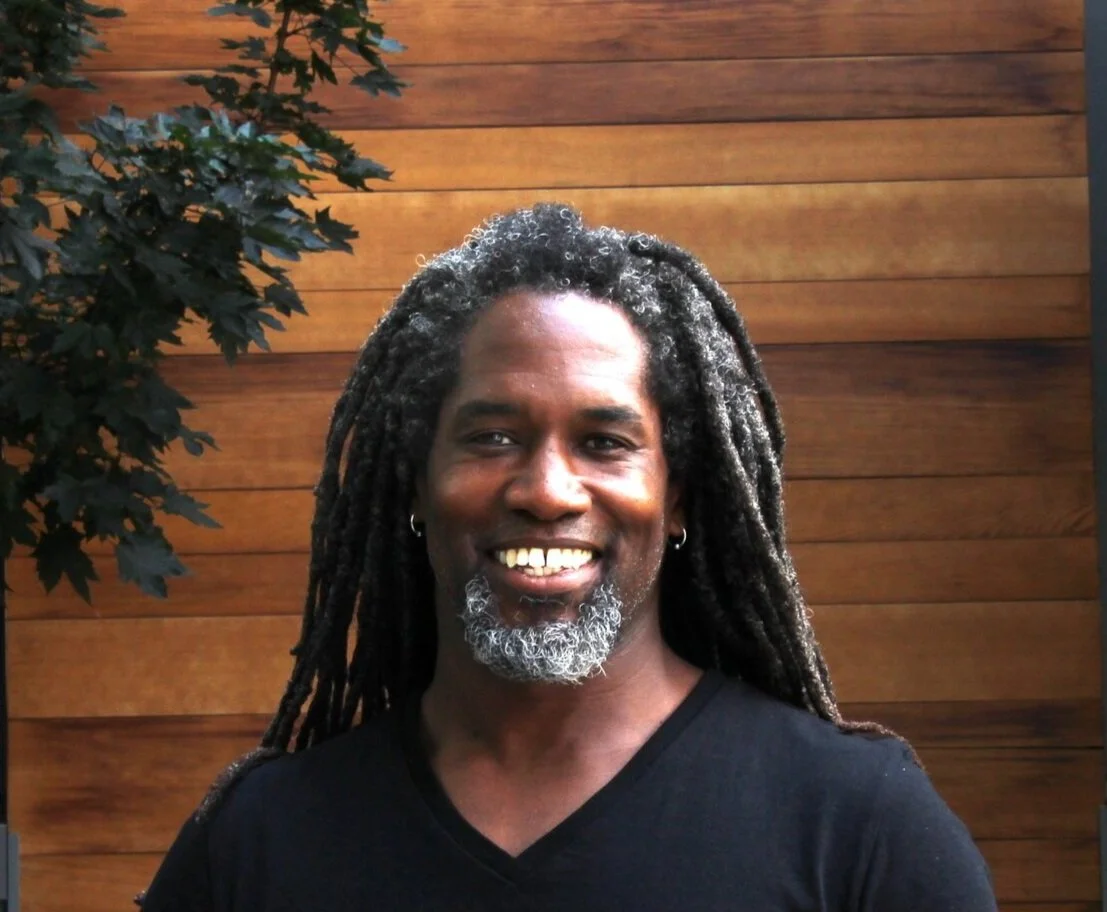
Michael Moody is a Colorado wedding officiant serving couples in Denver, Boulder, Golden, and scenic elopement locations throughout the Front Range and beyond. His ceremonies are written with care for the couple’s story, family context, cultural traditions, and emotional tone of the day—whether the setting is a refined Denver venue, a foothills ceremony in Golden, a Boulder celebration with mountain views, or an intimate Colorado elopement ceremony shaped by place, privacy, and meaning.
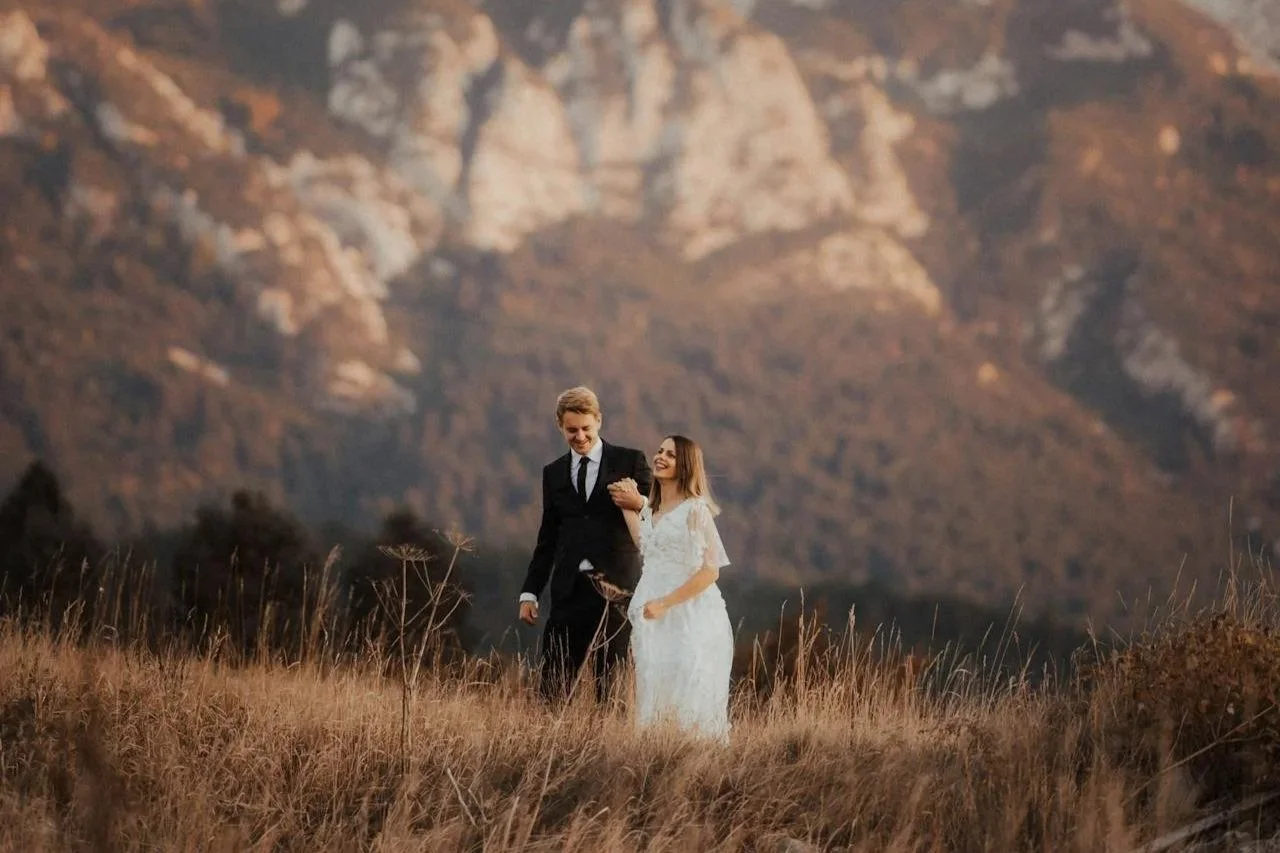
How to Elope in Colorado: Ceremony Guide for Intimate Mountain Weddings
Summary
Plan a Colorado elopement ceremony with confidence. Learn about marriage licenses, self-solemnization, permits, locations, weather, guests, vows, and wedding officiant support in Denver, Golden, Boulder, and across Colorado.
What do couples need to know before planning a Colorado elopement ceremony?
Couples planning a Colorado elopement need to confirm marriage license timing, ceremony location rules, permits, weather, access, guest count, photography logistics, and Leave No Trace expectations. Colorado also allows self-solemnization, but many couples still hire an officiant to create a personal, polished ceremony.
Frequently Asked Questions (FAQ)
Can you legally elope in Colorado?
Yes. Couples can legally elope in Colorado after obtaining a Colorado marriage license, signing it within the valid 35-day window, and returning it for recording. Colorado also allows self-solemnization, meaning couples may solemnize their own marriage.
Do we need witnesses for a Colorado elopement?
Colorado does not require witnesses as many other states do. Couples can self-solemnize or have an authorized wedding officiant perform the ceremony. Always follow the instructions from the county clerk who issues your license.
Do we need a wedding officiant if Colorado allows self-solemnization?
Not legally in every case, but many couples still hire a wedding officiant because they want a guided, meaningful, well-paced ceremony. Self-solemnization handles the legal side. A thoughtful officiant helps create the emotional architecture of the moment.
Do Colorado elopements require permits?
Sometimes. It depends on the location, land manager, guest count, setup, and whether professional vendors are involved. Rocky Mountain National Park requires a Special Use Permit for ceremonies, while Colorado state parks may require a special activity agreement or photography permit, depending on the park.
Where are the best places to elope near Denver?
Strong options near Denver include foothill overlooks, Golden-area trails, Boulder open space, private venues, gardens, and mountain towns within a one- to two-hour drive. The best location depends on privacy, access, season, guest count, and permit rules.
Is Boulder good for an elopement ceremony?
Yes. Boulder is one of Colorado’s strongest elopement areas for couples who want mountain views, trails, and easy access to restaurants and lodging. Couples should check open space rules, parking, trail conditions, and ceremony restrictions before choosing a specific site.
Is Golden good for an elopement ceremony?
Yes. Golden works well for couples who want foothill scenery, Clear Creek, Lookout Mountain, mesa views, and a town setting that feels rural but is still close to Denver. It is especially useful for couples hosting a small dinner afterward.
What should we include in our elopement ceremony?
Include a welcome, a brief reflection on your relationship, vows, rings, any reading or ritual that genuinely fits, and a closing pronouncement or self-solemnization. Keep the structure simple, but make the language personal.
What is the best season for a Colorado elopement?
Late spring through fall is popular, but each season has its own trade-offs. Summer offers access to higher elevations but can bring crowds and storms. Fall brings color and cooler weather. Winter can be quiet and beautiful, but requires serious planning for snow, wind, road conditions, and warmth.
How many guests should we invite to a Colorado elopement?
Many Colorado elopements work best with no guests or a very small group of 2–10 loved ones. Larger groups may require more formal planning, safer access, more parking, and additional permits.
Key Topics
Colorado elopement ceremony guide
Colorado elopement ceremony
Colorado elopement officiant
Colorado elopement wedding
how to elope in Colorado
Colorado elopement packages
Denver elopement officiant
Boulder elopement officiant
Golden Colorado elopement
Colorado mountain elopement ceremony
Colorado self solemnization
Colorado marriage license elopement
Colorado elopement permits
Rocky Mountain National Park elopement permit
intimate Colorado wedding ceremony
Colorado micro wedding officiant
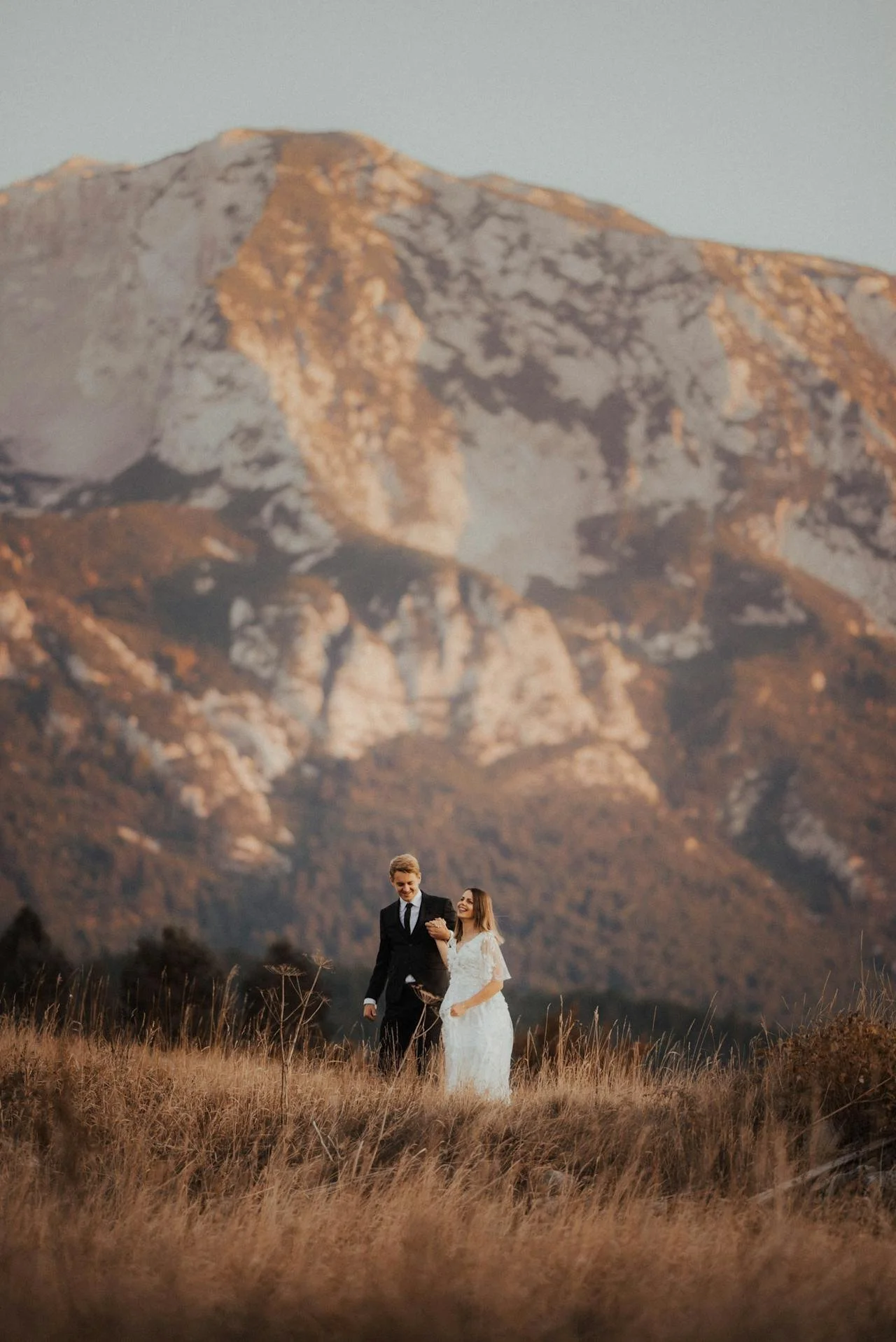
Elopement Ceremonies in Colorado / Photo: Sandro Crepulja
Why Colorado Elopements Feel Different
A Colorado elopement is not simply a smaller wedding. At its best, it is a ceremony with fewer distractions, more intention, and a setting that does part of the emotional work before a single word is spoken. That is why couples are drawn to the state’s mountain passes, red rock parks, alpine lakes, foothill trails, historic towns, and quiet overlooks. Colorado gives couples permission to strip away the parts of a wedding that never felt like them in the first place. There may be no aisle. There may be no seating chart. There may be no reception timeline built around other people’s expectations.
Instead, there is a place, a promise, and enough space to actually feel the moment.
Recent wedding research supports the shift toward more intentional celebrations. The Knot Worldwide’s 2025 Global Wedding Report found that couples are prioritizing personalization, purpose, and guest experience, based on insights from more than 33,000 couples married in 2024. Zola’s 2025 First Look Report, based on data from nearly 6,000 couples planning 2025 weddings, also points to wedding choices shaped by personal priorities rather than rigid tradition. For Colorado couples, that often means choosing a ceremony that feels intimate without feeling casual, scenic without feeling staged, and personal without becoming overly sentimental. That balance matters. A luxury elopement is not defined by how much you spend.
It is defined by how carefully the day is composed.
Table of Contents
Why Colorado Elopements Feel Different
What Counts as an Elopement in Colorado?
Colorado Marriage License Basics
Do You Need an Officiant for a Colorado Elopement?
How to Choose the Right Elopement Location
Permits, Public Lands, and Ceremony Rules
Best Colorado Elopement Ceremony Styles
What to Include in the Ceremony
Weather, Altitude, and Seasonal Planning
Guest Count: Just Us or a Few Loved Ones?
Photography, Timing, and the Feel of the Day
A Practical Colorado Elopement Planning Checklist
Local Ceremony Support in Denver, Golden, Boulder, and Beyond
Related Articles
What Counts as an Elopement in Colorado?
An elopement used to mean running away in secret. That definition is too narrow now. Today, a Colorado elopement can be:
A private vow exchange on a trail near Boulder.
A two-person ceremony at sunrise in Rocky Mountain National Park.
A small family gathering in Golden before dinner downtown.
A mountain ceremony near Breckenridge, Vail, Aspen, or Telluride.
A legal signing with meaningful vows and portraits afterward.
A planned micro-wedding with 6–20 guests and no formal reception.
The common thread is not secrecy. It is intimacy.
A Colorado elopement usually works best when the ceremony is the center of the day, not a formality squeezed between photography and dinner. That is especially important for couples hiring a professional officiant. The words spoken in that setting should feel worthy of the landscape, but still sound like the couple. For couples who want a ceremony crafted with that kind of attention, Michael Moody offers Colorado elopement ceremonies for those drawn to intimate, personal, outdoor celebrations across the state.
Colorado Marriage License Basics
Colorado is one of the most flexible states for getting legally married, which makes it especially attractive for elopements. A marriage license can be purchased through a Colorado county clerk and recorder. Jefferson County states that marriage and civil union licenses cost $30, may be used immediately within Colorado, and are valid for 35 days from the date of issue. Denver also notes that a license must be signed in Colorado within 35 days and returned for recording within 63 days of the marriage to avoid extra fees.
That timing matters for elopements because many couples travel to Colorado from another state. Do not get the license too early. Do not leave the return step as an afterthought. Build the legal paperwork into your itinerary with the same seriousness you give the ceremony location. Colorado law also allows couples to solemnize their own marriage. The statute states that a marriage may be solemnized by several authorized parties, including “the parties to the marriage.” In plain terms: you can marry yourselves in Colorado. That does not mean every couple should skip a wedding officiant. It only means Colorado gives you options.
Do You Need a Wedding Officiant for a Colorado Elopement?
Legally, not always. Emotionally and ceremonially, many couples still want one. Colorado self-solemnization is useful for couples who want a private vow exchange without anyone else present. It can be beautiful. It can also feel surprisingly abrupt if you are standing in an extraordinary place with no one to hold the moment's structure. A strong elopement wedding officiant does more than pronounce you married. The wedding officiant can:
Shape the ceremony around your relationship.
Give the moment a calm beginning, middle, and ending.
Help vows feel integrated rather than awkwardly inserted.
Create breathing room so the ceremony does not feel rushed.
Bring a polished presence to an outdoor setting.
Guide family or guests if a few people are attending.
Honor the tone you want: romantic, grounded, spiritual, secular, humorous, reflective, or understated.
Create an unforgettable, unique experience that takes all of the planning out of your hands.
This is especially important for couples who want an intimate ceremony but not an improvised one. A private ceremony can still feel refined. A mountain ceremony can still have elegance. A simple elopement can still carry emotional weight. Couples planning a Front Range ceremony can explore Denver wedding officiant services, Golden wedding officiant services, and Boulder wedding officiant services, depending on where the day begins.
Quick Summary List: What Couples Should Remember
Colorado allows self-solemnization, but an officiant can make the ceremony feel more personal and complete.
Marriage licenses are valid for 35 days and must be signed in Colorado.
Many public outdoor locations require permits or special activity agreements.
Rocky Mountain National Park requires a Special Use Permit for wedding and elopement ceremonies.
State park rules vary by park; check the specific location.
Guest count affects permits, parking, access, and privacy.
Weather, altitude, and road conditions should shape the timeline.
Keep the ceremony simple, specific, and emotionally grounded.
Follow Leave No Trace principles at every outdoor site.
Build the day around how it should feel, not just how it should photograph.
How to Choose the Right Elopement Location
Location is the decision that shapes almost every other decision. Do not start with the most photographed place on Instagram. Start with the experience you want to have. Ask these questions first:
Do we want mountains, red rocks, forest, water, city views, or foothills?
Are we comfortable hiking in wedding clothes?
Do we want privacy, or are we comfortable with people nearby?
Will guests attend?
Does anyone have mobility limitations?
Are we planning sunrise, sunset, midday, or winter conditions?
Do we need a backup location?
Is the location legal for a ceremony?
Will professional photography require a separate permit?
A scenic place is not always a good ceremony place. Some trails are too narrow. Some overlooks are too crowded. Some alpine spots are fragile. Some locations look peaceful in photos but feel chaotic in person because of parking, wind, road closures, tourists, or timed-entry rules. For couples who want beauty without unnecessary complications, the Front Range can be an excellent place to begin. Denver offers urban gardens, historic architecture, and nearby foothill access. Golden brings Clear Creek, Lookout Mountain, tablelands, and a warm small-town feel. Boulder offers iconic Flatirons views, Chautauqua access, and trail-based ceremony possibilities.
Permits, Public Lands, and Ceremony Rules
Permits are one of the easiest parts of elopement planning to underestimate. Public lands are not interchangeable. A city open space, state park, national park, county park, and national forest may all have different rules. Guest count, chairs, arches, amplified sound, photography, parking, flowers, pets, and commercial vendor activity may be regulated. Rocky Mountain National Park, for example, requires a Special Use Permit for weddings, elopements, vow renewals, and other ceremonies. The National Park Service states that permits are issued for designated ceremony locations, with limits on groups and vehicles. Colorado Parks and Wildlife also notes that weddings or events in state parks may require a special activity agreement and/or permit, and professional portrait photography may require a photography permit, depending on the specific park.
The safest approach is simple: decide who manages permit research before you fall in love with a location. That person may be your planner, photographer, officiant, or you as a couple. What matters is that someone checks the current rules directly with the managing agency. Do not rely on old blog posts, social media captions, or assumptions from another couple’s wedding. Permit rules change.
Best Colorado Elopement Ceremony Styles
The best ceremony style depends on the couple, the setting, and the emotional tone of the day.
The private vow ceremony
This is the most intimate option. It may be just the couple, an officiant, and a photographer. It works well for sunrise mountain settings, quiet overlooks, and couples who want the ceremony to feel protected from outside attention.
The family micro-ceremony
This format includes a small number of parents, siblings, or close friends. It works best when the location has easy access, predictable parking, and enough physical space for guests to stand comfortably.
The hiking elopement
A hiking elopement can be extraordinary, but it requires honesty. Wedding clothes, altitude, trail conditions, mud, wind, snow, and changing light can all affect the experience. Choose a trail because it matches your actual comfort level, not because it looks dramatic in a gallery.
The two-part ceremony day
Some couples exchange private vows in nature, then hold a short legal or family ceremony later. This works well when couples want privacy and family inclusion without forcing one moment to do everything.The city-to-mountain elopement
This is a strong option for couples in Denver, Golden, or Boulder. You can begin with getting ready photos at a boutique hotel, hold a ceremony near the foothills, and finish with dinner at a favorite restaurant. The day feels elevated without becoming overproduced.
What to Include in the Elopement Ceremony
An elopement ceremony should not feel like a shortened version of a traditional wedding script. It needs its own rhythm. A strong structure might include:
A brief welcome that names the place and the purpose of the day.
A few words about why this ceremony fits the couple.
A personal story or reflection.
A reading, if it genuinely belongs.
Private or public vows.
Ring exchange.
A closing reflection.
Pronouncement or self-solemnization language.
A quiet pause before portraits begin.
That pause is underrated.
Many couples move too quickly from the ceremony into the photography session. Give yourselves one minute after the final words. Stand there. Breathe. Look around. Let the place become part of the memory. For vows, keep them specific. “You are my best friend” is fine, but it will not carry the same force as naming the ordinary life you have built together: the Sunday coffee, the long drives, the way one of you steadies the other before hard conversations, the private jokes no one else will understand. Colorado elopements reward specificity. The landscape is already grand. The words do not need to compete with it.
Weather, Altitude, and Seasonal Planning
Colorado weather is not background detail. It is part of the plan. A bluebird morning can become a windy afternoon. Mountain storms can build quickly. Snow can linger on shaded trails long after Denver feels like spring. High-elevation roads may have seasonal closures. Wildfire smoke can affect views. Summer weekends can bring crowds. Winter can bring privacy, but also ice, road delays, and temperature swings.
Build a ceremony plan around the least glamorous details:
Where will you park?
Is there cell service?
Is there a restroom?
What happens if the trailhead is full?
What if it is too windy to hear vows?
Can older guests safely reach the location?
Is there a backup indoor or sheltered option?
Are dogs allowed?
Are flowers, confetti, rugs, arches, or chairs permitted?
Altitude deserves special attention for out-of-state couples. A ceremony at 9,000 or 10,000 feet can feel different from a ceremony in Denver. Drink water, eat real food, allow extra time, and avoid packing too many location changes into the day. The goal is not to control the outdoors. The goal is to plan with enough care that the outdoors does not control the entire experience.
Guest Count: Just Us or a Few Loved Ones?
Guest count is one of the most important elopement decisions. A “just us” ceremony gives you privacy and flexibility. You can move more easily, choose more remote locations, and keep the emotional focus completely on the two of you. A small guest ceremony gives you a shared memory. Parents, children, siblings, or closest friends can witness the moment. That can be deeply meaningful, especially if the ceremony is followed by dinner, champagne, cake, or a relaxed gathering nearby.
The tradeoff is logistics. Guests change the location requirements. You need more parking, clearer directions, safer terrain, and more predictable timing. You also need to consider whether the ceremony will feel intimate with people watching and determine if they have the fitness to complete the trek on a trail. For many couples, the sweet spot is 0–10 guests. That number keeps the day flexible while allowing the people closest to you to be present.
Photography, Timing, and the Feel of the Day
The best elopement days are planned around feeling first and photography second. That does not mean photography is unimportant. It means the images should document a day that actually felt good to live. Sunrise can offer privacy, softer light, and calmer public spaces. Sunset can feel romantic, but it may be busier in popular locations. Midday can work beautifully in winter or shaded areas, though summer sun may be harsh at exposed sites.
Talk with your photographer and wedding officiant about the ceremony timing together. A five-minute timing mismatch can matter if you are working around alpenglow, trail access, weather, or park rules. Also consider what happens after the ceremony. Many couples plan portraits, then dinner. Others include a picnic, private chef, first dance, letters from family, a short hike, or a toast back at their lodging. Luxury is often found in pacing. Do not cram the day so tightly that there is no room to feel it.
A Practical Colorado Elopement Planning Checklist
Use this as a working checklist, not a rigid template.
Three to nine months before
Choose your general Colorado region.
Decide whether guests will attend.
Hire your wedding officiant, photographer, and planner if using one.
Research permit requirements.
Choose lodging close to the ceremony area.
Build a weather-aware Plan B.
One to three months before
Confirm the ceremony location and access rules.
Apply for permits if required.
Finalize ceremony style and tone.
Begin writing vows.
Confirm travel, hair and makeup, attire, florals, and dinner plans.
Check whether professional photography permits are needed.
One to four weeks before
Get your Colorado marriage license within the valid timing window.
Confirm driving times and parking.
Review weather and trail conditions.
Print or save offline maps.
Pack layers, water, snacks, vow books, rings, marriage license, and comfortable shoes.
The day of
Leave earlier than you think you need to.
Keep the ceremony site simple.
Follow all permit and Leave No Trace rules.
Take a quiet moment after the ceremony.
Sign the license correctly.
Return the completed license within the required window.
Leave No Trace principles should guide every outdoor ceremony. The Colorado Leave No Trace state page highlights ongoing training, hot spots, and stewardship efforts in Colorado, serving as a reminder that popular outdoor places need care from everyone who uses them. For elopements, that means staying on durable surfaces, packing out everything, avoiding confetti, respecting wildlife, keeping guest counts appropriate, and choosing locations that can handle the impact of a ceremony.
Local Ceremony Support in Denver, Golden, Boulder, and Beyond
A Colorado elopement can happen almost anywhere, but local knowledge makes the day smoother. For couples beginning in the city, Denver wedding officiant services work well for ceremonies that blend refined urban settings with foothill access. Denver can be ideal for couples who want strong lodging, dining, transportation, and vendor options without giving up mountain views. For couples drawn to foothills, creeks, mesas, and small-town character, Golden wedding officiant services offer a natural fit. Golden can feel close to Denver while still giving couples a strong sense of place. For couples who want Flatirons views, open space, trails, and a relaxed but elevated ceremony atmosphere, Boulder wedding officiant services are a strong match.
For couples planning beyond the Front Range, Colorado elopement ceremonies can support intimate ceremonies in mountain towns and scenic destinations across the state. Michael Moody offers personal wedding ceremonies and Colorado elopement ceremonies for couples in Denver, Boulder, Golden, and throughout Colorado, with ceremonies shaped around warmth, composure, language, and genuine connection. That matters for elopements because the ceremony cannot hide behind a large production. The words, pacing, tone, and presence carry the moment.
Related Articles
From the Michael Moody Officiant wedding blog directory:
How to Get Married in Colorado: Marriage License Guide for 2026
Colorado Front Range Elopement Guide: Hiking-In Wedding Ceremonies and Scenic Trails
Colorado Elopement Hikes Near Denver: North Table Mountain West Loop
Spring Wedding Guide for Golden, Colorado: Venues, Permits, and Planning Tips
Boulder Wedding Ceremony Venues for Intimate and Scenic Weddings
The directory includes ceremony planning articles, wedding-specific planning guidance, Front Range elopement content, and relationship-focused resources for couples planning meaningful Colorado ceremonies.
About the Author: Michael Moody, Wedding Officiant
Michael Moody is a Colorado wedding officiant serving Denver, Boulder, Golden, Larkspur, and mountain communities throughout the state. Since 2012, he has officiated more than 300 weddings, bringing a calm presence, thoughtful guidance, and emotionally grounded ceremony writing to couples seeking a meaningful experience. He also offers Colorado elopement ceremonies for couples who want something intimate, intentional, and beyond the boundaries of a traditional wedding day. His work is shaped by a lifelong interest in connection, reflection, and personal growth. Michael is the author of the self-improvement book Redefine Yourself: The Simple Guide to Happiness and host of The Elements of Being podcast. As a wedding officiant, he draws from that same foundation: the belief that our relationships, words, and everyday interactions help shape a life rooted in love, empathy, and purpose. Michael’s ceremony work has been recognized across Colorado. He is a 2023 WeddingWire Couples’ Choice Award winner in Denver, marking his eighth consecutive year receiving the honor. He was also named “Best Business of 2024, 2025, and 2026” by Three Best Rated and earned “The Best Wedding Officiant in Commerce City, Colorado for 2024” from Quality Business Awards USA.
Beyond weddings, Michael and his wife, Sammy, have sponsored an annual student scholarship for more than 10 years. They also founded Civic Growth Alliance, a 501(c)(4) nonprofit dedicated to strengthening communities through civic advocacy, resident engagement, strategic partnerships, public safety initiatives, neighborhood vitality, and community well-being.
Wedding locations: Michael officiates wedding ceremonies in the Denver neighborhoods of LoDo, River North, Washington Park, Cherry Creek, City Park, Central Park, Capitol Hill, Cheesman Park, Park Hill, Lower Highlands, and Sloan Lake. Michael also serves as an ordained minister in Larkspur, Littleton, Golden, Boulder, Breckenridge, Frisco, Aspen, Vail, Estes Park, and more. If your Denver neighborhood or Colorado town isn’t listed here, no worries! Please contact Michael to propose a wedding ceremony location in a different area!
Wedding Planning Tips
Michael Moody creates personal wedding ceremonies and Colorado elopement ceremonies for couples in Denver, Boulder, Golden, Larkspur, and throughout the Front Range. His ceremony work is built around thoughtful language, calm presence, and a genuine understanding of how wedding vows, setting, and story shape the emotional center of the day. Whether a couple is exchanging wedding vows in a Denver venue, near the Flatirons in Boulder, in the foothills around Golden, or during an intimate Colorado elopement, the ceremony is designed to feel personal, grounded, and unmistakably their own.
Wedding Vow Examples That Actually Sound Real
Summary
Write wedding vows that sound personal, honest, and natural. Explore real wedding vow examples, short vows, funny vows, modern vows, editing tips, and guidance from a Colorado wedding officiant serving Denver, Boulder, Golden, and elopements.
What are wedding vows that actually sound real?
Real wedding vows are specific, spoken in your natural voice, and built around honest promises rather than perfect poetry. The best vows usually include one true story, two or three grounded promises, a little emotional contrast, and language you would actually say out loud to your partner.
Frequently Asked Questions (FAQ)
What are good examples of wedding vows?
Good wedding vows include one personal memory, a few sincere promises, and language that sounds natural when spoken. The strongest examples are specific rather than generic. Instead of saying only “I love your kindness,” describe how your partner shows kindness in everyday life.
How do I write wedding vows that sound real?
Write the way you actually speak. Start with a real moment, name what you admire about your partner, and make promises you can realistically keep. Then read the vows aloud and remove any sentence that sounds too formal, vague, or unlike you.
How long should wedding vows be?
Most wedding vows work best at about one to two minutes per person. That usually equals 150 to 300 spoken words. Longer vows can still work, but they should be carefully edited so the ceremony keeps its emotional rhythm.
Are funny wedding vows okay?
Yes, funny wedding vows can be meaningful when the humor is affectionate and balanced with sincere promises. Avoid embarrassing your partner, sharing private conflict, or turning the vows into a comedy routine. One or two personal jokes can make vows feel warm and real.
Should we exchange private vows?
Private vows are a good option if you want to say something deeply personal without sharing every detail in front of guests. Many couples exchange private vows during a first look and use shorter public vows during the ceremony.
Can a wedding officiant help with vows?
Yes. A wedding officiant can help you shape your vows, decide how long they should be, choose between private and public vows, and make sure the vow exchange fits naturally into the ceremony.
What should I avoid in wedding vows?
Avoid clichés, overly dramatic language, inside jokes guests cannot follow, promises no one can keep, and copied examples that do not sound like your relationship. The best vows are honest, specific, and spoken in your own voice.
Key Topics
wedding vow examples
wedding vows that sound real
real wedding vow examples
personal wedding vows
how to write wedding vows
short wedding vow examples
modern wedding vows
funny wedding vows
emotional wedding vows
non-religious wedding vows
private wedding vows
Colorado wedding officiant vows
Denver wedding officiant vows
Boulder wedding officiant vows
Golden wedding officiant vows
Colorado elopement vows
Wedding Vows / Photo: nourabiad
Why Real-Sounding Wedding Vows Matter
There is a particular kind of wedding vow that sounds beautiful on paper and strangely hollow when spoken out loud. You have probably heard it before: sweeping language, forever-and-always phrasing, a few dramatic adjectives, and a promise to love someone through every sunrise and every storm. There is nothing technically wrong with it. It may even be sincere. But it could belong to almost anyone.
The vows that stay with people are different.
They sound like a person speaking to the person they love. They have breath in them. They have the uneven texture of real life: the first apartment, the mountain drive that went sideways, the way one person makes coffee, the private joke that somehow becomes a lifelong language. They are not trying to win the ceremony. They are trying to tell the truth. That matters even more now because couples are surrounded by vow templates, AI-generated examples, social-media captions, and polished wedding content. Zola’s 2025 wedding trends report, based on data from nearly 6,000 couples getting married in 2025, points to a planning culture in which couples are balancing inspiration, personalization, budget pressures, and digital tools. The Knot Worldwide’s 2025 Global Wedding Report also describes a shift toward intentionality, personalization, and authenticity across modern weddings.
That is exactly where wedding vows should live: not in performance, but in intention.
Whether you are planning a full wedding ceremony in Denver, a quiet celebration in Golden, a Boulder ceremony near the foothills, or a Colorado elopement in the mountains, your vows do not need to sound literary. They need to sound like you. For couples who want the whole ceremony to feel personal and grounded, Michael Moody offers Denver wedding officiant services, Boulder wedding officiant services, Golden wedding officiant services, and Colorado elopement ceremonies shaped around the couple’s story, tone, and setting.
Table of Contents
Why “Real-Sounding” Wedding Vows Matter
What Makes Vows Feel Authentic Instead of Generic?
A Simple Wedding Vow Formula That Works
Wedding Vow Examples That Actually Sound Real
Short Wedding Vow Examples
Funny Wedding Vows That Still Feel Meaningful
Emotional Wedding Vows Without Sounding Overwritten
Modern Wedding Vows for Non-Religious Ceremonies
Private Vows Versus Ceremony Vows
How to Edit Your Vows So They Sound Like You
Common Vow Mistakes to Avoid
Working With a Wedding Officiant on Your Vows
Related Articles
What Makes Vows Feel Authentic Instead of Generic?
Authentic vows usually have four qualities: specificity, proportion, voice, and promise.
Specificity means you are not just saying “you are kind.” You are showing what that kindness looks like. Maybe your partner warms up the car before an early appointment. Maybe they know when to make you laugh and when to sit quietly beside you. Maybe they remember the small things other people miss.
Proportion means you do not try to fit your entire relationship into two minutes. The Knot’s vow guidance includes a reminder from a professional officiant that vows over two minutes often need editing, especially because nerves and emotion can make them take longer during the ceremony. That is practical advice. A wedding ceremony already carries emotional weight. Your vows do not need to explain every chapter.
Voice means the words should sound natural when you say them out loud. If you would never say “my beloved” in real life, you probably do not need to say it in your vows. If you are funny together, let a little humor in. If you are quiet and understated, do not force drama.
Promise is the part that makes vows different from a love letter. A love letter says what you feel. A vow says what you will practice.
The most grounded vows often move like this:
This is what I have seen in you.
This is how loving you has changed me.
This is what I promise to keep choosing.
This is the life I want to build with you.
A Simple Wedding Vow Formula That Works
Use this structure if you are staring at a blank page:
Opening truth:
“Before I met you, I thought love would feel like ______. With you, it feels like ______.”
One specific memory:
“I still think about ______ because it showed me ______.”
What you admire:
“I love the way you ______.”
Three promises:
“I promise to ______. I promise to ______. I promise to ______.”
Closing line:
“I choose you today, and I will keep choosing you ______.”
That is enough. You can make it romantic, funny, spiritual, practical, poetic, or simple. But the bones are strong because they prevent the vows from drifting into vague emotion. Zola’s vow-writing guide similarly recommends using a structured process, starting early, and shaping vows with intention rather than improvising the entire thing under wedding-week pressure.
Wedding Vow Examples That Actually Sound Real
Use these examples as starting points, not scripts to copy. The goal is to hear the difference between vows that sound like a real person and vows that sound like a greeting card.
Example 1: Warm and Grounded
I used to think love would feel like one big moment. Something obvious. Something cinematic.
But with you, love has felt quieter and stronger than that. It has felt like Sunday mornings, shared errands, long walks when neither of us knows exactly what to say, and the relief of coming home to someone who truly knows me.
I love your patience. I love your curiosity. I love the way you notice when I am carrying too much, even when I am trying to pretend I am fine.
I promise to keep paying attention. I promise to tell the truth kindly. I promise to make room for your dreams, not just the ones that are easy or convenient, but the ones that ask us both to grow.
I choose you today with a full heart and a clear mind. And I will keep choosing you on ordinary days, because those are the days that make a marriage.
Example 2: Light, Personal, and Honest
I love that you know exactly how I take my coffee, even though you still think my order is ridiculous.
I love that you can make a grocery store trip feel like a date. I love that you laugh at your own jokes before anyone else has a chance to. I love that when life gets complicated, you do not disappear. You stay. You talk. You try.
You have made my life funnier, steadier, and much more full.
I promise to be your teammate when things are easy and when they are not. I promise to listen before I start solving. I promise to keep building a home with you that feels safe, honest, and slightly overstocked with snacks.
You are my favorite person. You are my best decision. And yes, I promise to keep pretending I do not like the shows you made me watch, even though we both know I do.
Example 3: Romantic Without Being Overdone
You have taught me that love is not just something we feel. It is something we make.
We have made it in small ways: in late-night talks, in apologies, in road trips, in quiet mornings, in the way we have learned each other’s fears and stayed gentle with them.
I love the way you move through the world with care. I love your courage. I love your loyalty. I love the part of you that still believes good things are worth waiting for and working toward.
I promise to protect the trust between us. I promise to speak to you with respect, even in hard conversations. I promise to celebrate who you are now and make space for who you are still becoming.
I do not expect every day to be perfect. I do expect us to keep choosing honesty, humor, forgiveness, and each other.
Example 4: Simple and Direct
I love you for who you are and for how I feel when I am with you.
You make me feel known. You make me feel steady. You make ordinary life feel like something I do not want to miss.
I promise to be honest with you. I promise to support you. I promise to laugh with you, grow with you, and stand beside you through whatever comes next.
Today, I choose you as my partner, my family, and my home.
Start with one real memory, not a grand romantic statement.
Use your natural speaking voice.
Make promises you can actually keep.
Include one detail that only your partner would recognize.
Balance humor with sincerity.
Keep vows around one to two minutes.
Avoid copying examples word for word.
Read them aloud before the wedding day.
Short Wedding Vow Examples
Short vows can be powerful because they leave space around the words. They are especially effective for intimate ceremonies, elopements, private vow exchanges, or couples who know they will be emotional.
Short Vow Example 1
I promise to love you in the life we plan and in the life that surprises us. I promise to be honest, patient, and present. I promise to keep choosing you, not only in the big moments, but in the small daily ones that become our life.
Short Vow Example 2
You are my calm, my laughter, and my favorite place to return to. I promise to support your dreams, tell you the truth, and build a marriage with you that feels honest, joyful, and deeply ours.
Short Vow Example 3
I do not promise perfection. I promise effort. I promise care. I promise to listen, to grow, to forgive, and to keep finding my way back to you.
Short Vow Example 4
I choose you today because I love who you are, who we are together, and who we are becoming. I promise to stand with you, laugh with you, and build a life that feels like home.
Funny Wedding Vows That Still Feel Meaningful
Humor works best when it reveals affection. It should never humiliate your partner, expose private conflict, or turn your vows into a stand-up routine. The safest funny vows usually come from everyday life: chores, snacks, driving habits, pet voices, shared shows, travel quirks, or the small negotiations of living together.
Funny Vow Example 1
I promise to love you even when you ask me what I want for dinner and then reject my first five answers.
I promise to be your calm when life feels loud, your backup singer in the car, and your emergency contact for every strange plan that somehow becomes one of our best memories.
I promise to keep laughing with you, especially when the only other option is taking ourselves too seriously.
And most of all, I promise to build a life with you that feels honest, warm, and full of the kind of stories we will still be telling years from now.
Funny Vow Example 2
I promise to share the fries, or at least to order extra because we both know how this ends.
I promise to listen when you need comfort and not immediately turn every problem into a spreadsheet.
I promise to love you through the beautiful moments, the boring moments, the stressful moments, and the moments when one of us is definitely right but we are both pretending it is still up for debate.
You are my favorite person to do life with. I choose you today and every day after this.
Emotional Wedding Vows Without Sounding Overwritten
Emotional wedding vows do not need to be dramatic. In fact, the most moving lines are often the plainest. Try this: instead of saying, “You are the light of my life,” say what your partner actually did when you were in the dark. That might sound like:
“When I lost confidence in myself, you did not try to fix me. You reminded me who I was until I could remember it again.”
Or:
“You have seen me in seasons when I was not easy to love, and you never made me feel like I had to earn your patience.”
That kind of language lands because it has evidence behind it.
Emotional Vow Example
You have loved me in ways I did not know I needed.
You have given me patience when I was frustrated, courage when I was uncertain, and laughter when I was taking everything too seriously. You have made me feel safe without making my life smaller. You have made me braver without ever asking me to be someone else.
I promise to love you with that same care. I promise to protect your heart, not just in public ways, but in the quiet private ways that matter most. I promise to notice you, to listen to you, and to keep learning how to love you well.
I am grateful for the life that brought us here. I am even more grateful for the life we get to build from here.
Modern Wedding Vows for Non-Religious Ceremonies
Modern wedding vows often feel less formal, less hierarchical, and more partnership-based. They may still be deeply sacred to the couple, but they do not rely on traditional religious language. Many couples now want vows that speak to equality, emotional safety, shared responsibility, chosen family, humor, adventure, and growth. The Knot’s examples of modern vows highlight teamwork, respect, acceptance, gratitude, and partnership as common themes.
Modern Vow Example 1
I choose you as my partner, not because life will always be simple, but because I trust the way we face life together.
I promise to make decisions with you, not around you. I promise to respect your independence and nurture our connection. I promise to stay curious about who you are, even after years of knowing you.
I will celebrate your joy as if it is my own. I will stand with you in uncertainty. I will do my part to make our home a place of honesty, rest, laughter, and repair.
Today, I choose the life we are building and the person I get to build it with.
Modern Vow Example 2
I promise to love you as a whole person: your strengths, your questions, your changing dreams, your quiet days, and your bold ones.
I promise to keep growing beside you, not in the same direction every second, but with the same commitment to finding each other again and again.
I promise to make space for joy. I promise to practice forgiveness. I promise to build a marriage where both of us can feel known, respected, and free.
Private Vows Versus Ceremony Vows
Some couples now choose to exchange private vows before the ceremony and simpler vows in front of guests. This can be a beautiful option if you want to say something deeply personal but do not want to share every detail publicly.
Private vows are ideal for:
Emotional stories that feel too intimate for guests.
Personal promises involving grief, family, healing, or hardship.
Couples who want a first-look vow exchange.
Elopements with no guests or very few guests.
Anyone who feels nervous speaking vulnerable words into a microphone.
Ceremony vows are ideal for:
Promises you want witnessed by loved ones.
Short, polished vows that fit the flow of the ceremony.
A shared vow format where both partners make similar commitments.
A public expression of the marriage you are entering.
You can also do both. The private vows can hold the long-form emotion; the ceremony vows can hold the public promise.
How to Edit Your Vows So They Sound Like You
After you write your first draft, do not ask, “Is this good?” Ask better questions:
Would I actually say this sentence out loud?
If not, rewrite it in your speaking voice.
Could this line be said by almost anyone?
If yes, add a detail.Is this a vow or just a compliment?
Compliments are beautiful, but vows need promises.
Is this too private for the room?
Some stories belong in a letter, not at the microphone.Where do I naturally want to pause?
Add line breaks there. Vows are spoken, not submitted as an essay.Can I read this in under two minutes?
If not, trim the background story and keep the strongest promise.
A helpful editing trick: read your vows once while standing. Then read them once while imagining your partner in front of you. The second version will show you which lines are real and which lines are decoration.
Common Vow Mistakes to Avoid
Mistake 1: Trying to Sound Like a Poet
You do not need to become a different person to write meaningful vows. If your relationship is playful, grounded, dry, tender, quiet, or practical, your vows can be too.
Mistake 2: Telling the Whole Relationship Story
You are not writing the complete history of your relationship. Choose one moment that reveals the whole thing.
Mistake 3: Making Promises No Human Can Keep
Avoid promises like “I will never disappoint you” or “I will always know what you need.” Marriage is stronger when vows are honest. Try “I promise to keep learning how to support you” instead.
Mistake 4: Using Too Many Inside Jokes
One inside joke can be charming. Six can make your guests feel like they walked into the middle of a conversation.
Mistake 5: Waiting Until the Night Before
Wedding-week emotion can be beautiful, but wedding-week panic is not a writing strategy. Start with messy notes early, even if you polish them later.
Mistake 6: Letting AI Write the Whole Thing
AI can help you brainstorm structure, but it cannot know the exact look your partner gives you when they are trying not to laugh. It cannot know the ordinary moments that made you trust this person. For vows, the human material is the point. Given that couples and vendors are increasingly using digital tools in wedding planning, the better approach is not to reject tools entirely, but to use them carefully: outline with help if needed, then replace generic lines with your own memories, speech patterns, and promises. This approach also fits Google’s broader preference for original, useful, people-first content rather than generic scaled production.
Working With a Wedding Officiant on Your Vows
A good wedding officiant does more than stand at the front and read a ceremony script. The right wedding officiant helps shape the emotional architecture of the ceremony: where the vows belong, how long they should be, whether private vows make sense, how to transition into the ring exchange, and how to keep the moment intimate even when guests are present. Michael Moody’s approach to the ceremony emphasizes personal storytelling, thoughtful language, calm delivery, and vows that feel natural when spoken. It’s the language, rhythm, presence, and process that help the ceremony feel personal rather than generic. That kind of guidance matters because vows do not exist in isolation. They are part of the ceremony’s full emotional rhythm. For example:
A city wedding in Denver may call for vows that feel polished, intimate, and composed.
A Boulder ceremony near the Flatirons may invite something more spacious, natural, and reflective.
A Golden wedding may blend warmth, mountain-town ease, and personal storytelling.
A Colorado elopement may allow vows to feel quieter, more private, and shaped by the landscape.
Couples looking for support can explore Michael’s Denver wedding officiant services, Boulder wedding officiant services, Golden wedding officiant services, or Colorado elopement ceremony packages.
Final Thought: The Best Vows Are Not Perfect
The best vows usually have one sentence that trembles a little. They are not flawless. They are not overly rehearsed. They do not sound like they were approved by a committee of wedding blogs. They sound like someone brave enough to be specific.
So write the real thing.
Write the way your partner makes ordinary life better. Write the promise you can keep on a Tuesday. Write the line that would make them smile even if no one else understood it. That is what makes vows last.
Not perfection. Just you.
Related Articles
From the Michael Moody Officiant wedding blog directory:
How to Personalize Your Wedding Ceremony Without Making It Awkward or Overlong
Preparing for Your Wedding Ceremony in Colorado: A Couple’s Guide
Common Wedding Ceremony Planning Challenges and How to Overcome Them
Colorado Front Range Elopement Guide: Hiking-In Wedding Ceremonies and Scenic Trails
Boulder Wedding Ceremony Venues for Intimate and Scenic Weddings
How to Get Married in Colorado: Marriage License Guide for 2026
Colorado Elopement Hikes Near Denver: North Table Mountain West Loop
The directory includes ceremony planning articles, wedding-specific planning guidance, Front Range elopement content, and relationship-focused resources for couples planning meaningful Colorado ceremonies.
About the Author: Michael Moody, Wedding Officiant
Michael Moody is a Colorado wedding officiant serving Denver, Boulder, Golden, Larkspur, and mountain communities throughout the state. Since 2012, he has officiated more than 300 weddings, bringing a calm presence, thoughtful guidance, and emotionally grounded ceremony writing to couples seeking a meaningful experience. He also offers Colorado elopement ceremonies for couples who want something intimate, intentional, and beyond the boundaries of a traditional wedding day. His work is shaped by a lifelong interest in connection, reflection, and personal growth. Michael is the author of the self-improvement book Redefine Yourself: The Simple Guide to Happiness and host of The Elements of Being podcast. As a wedding officiant, he draws from that same foundation: the belief that our relationships, words, and everyday interactions help shape a life rooted in love, empathy, and purpose. Michael’s ceremony work has been recognized across Colorado. He is a 2023 WeddingWire Couples’ Choice Award winner in Denver, marking his eighth consecutive year receiving the honor. He was also named “Best Business of 2024, 2025, and 2026” by Three Best Rated and earned “The Best Wedding Officiant in Commerce City, Colorado for 2024” from Quality Business Awards USA.
Beyond weddings, Michael and his wife, Sammy, have sponsored an annual student scholarship for more than 10 years. They also founded Civic Growth Alliance, a 501(c)(4) nonprofit dedicated to strengthening communities through civic advocacy, resident engagement, strategic partnerships, public safety initiatives, neighborhood vitality, and community well-being.
Wedding locations: Michael officiates wedding ceremonies in the Denver neighborhoods of LoDo, River North, Washington Park, Cherry Creek, City Park, Central Park, Capitol Hill, Cheesman Park, Park Hill, Lower Highlands, and Sloan Lake. Michael also serves as an ordained minister in Larkspur, Littleton, Golden, Boulder, Breckenridge, Frisco, Aspen, Vail, Estes Park, and more. If your Denver neighborhood or Colorado town isn’t listed here, no worries! Please contact Michael to propose a wedding ceremony location in a different area!
Wedding Planning Tips
Michael Moody creates personal wedding ceremonies and Colorado elopement ceremonies for couples in Denver, Boulder, Golden, Larkspur, and throughout the Front Range. His ceremony work is built around thoughtful language, calm presence, and a genuine understanding of how wedding vows, setting, and story shape the emotional center of the day. Whether a couple is exchanging wedding vows in a Denver venue, near the Flatirons in Boulder, in the foothills around Golden, or during an intimate Colorado elopement, the ceremony is designed to feel personal, grounded, and unmistakably their own.
Golden Wedding Ceremony Venues and Outdoor Ceremony Locations
Summary
Explore Golden wedding ceremony venues and outdoor locations near Denver, including Lookout Mountain, Clear Creek, historic venues, intimate hotels, breweries, parks, permits, and planning tips for a personalized Colorado wedding.
What are the best Golden wedding ceremony venues and outdoor ceremony locations?
Golden offers mountain-view venues, historic mansions, creekside settings, parks, hotels, breweries, and intimate outdoor ceremony locations near Denver. Couples often choose Golden for Lookout Mountain views, Clear Creek access, foothills scenery, guest-friendly lodging, and flexible Colorado marriage rules that support personalized weddings and elopements.
Frequently Asked Questions (FAQ)
What are the best wedding ceremony venues in Golden, Colorado?
Some of the best Golden wedding ceremony venues include Boettcher Mansion, The Pines by Wedgewood Weddings, The Golden Hotel, Table Mountain Inn, The Eddy Taproom and Hotel, Golden History Museum and Park, and local restaurants, breweries, and taprooms.
Where can you have an outdoor wedding ceremony in Golden?
Couples often consider Lookout Mountain, Clear Creek-adjacent areas, Golden parks, park pavilions, private outdoor venues, and nearby foothills locations. Always confirm permits, reservations, photography rules, alcohol policies, and guest-count limits before planning an outdoor ceremony.
Do you need a permit for a Golden outdoor wedding ceremony?
You may need a permit if the ceremony uses public space, has 50 or more guests, includes alcohol, uses amplified sound, involves vendors, uses temporary structures, affects traffic, or impacts public use of a park or natural resource. Rules depend on whether the location is managed by the City of Golden, Jefferson County Open Space, Colorado Parks and Wildlife, or a private venue.
Is Golden a good place for an intimate wedding?
Yes. Golden is excellent for intimate weddings because it offers mountain scenery, creekside settings, boutique hotels, historic venues, restaurants, breweries, and easy access from Denver. It works especially well for micro weddings, elopements, and personalized ceremonies with close family and friends.
What is the best season for a Golden wedding?
Fall and summer are popular for outdoor ceremonies, while spring offers softer availability, and winter can be intimate and elegant. Each season requires a backup plan because Golden weather can shift quickly, especially in foothills and mountain-adjacent locations.
Is Golden better than Denver for a mountain-view wedding?
Golden is usually better than Denver for couples who want foothills scenery, mountain views, and a smaller-town Colorado feel. Denver is better for urban hotels, rooftops, museums, restaurants, and downtown guest logistics. Many couples combine both by hosting guests in Denver and holding the ceremony in Golden.
Can out-of-state couples get married in Golden, Colorado?
Yes. Out-of-state couples can get married in Colorado. A Colorado marriage license can generally be used anywhere in the state, but couples should confirm the current application process with the county clerk where they plan to apply.
Do you need a wedding officiant in Golden, Colorado?
Colorado allows self-solemnization, so couples can legally marry themselves. However, many couples still hire a wedding officiant to create a more personal, polished, emotionally grounded ceremony and to help guide the flow of the wedding day.
Key Topics
Golden wedding ceremony venues
Secondary KeGolden Colorado wedding venues
Golden wedding venues
Golden CO wedding venues
outdoor wedding locations Golden, Colorado
Golden outdoor wedding ceremony
Golden wedding officiant
wedding officiant Golden, CO
Golden Colorado elopement
intimate wedding venues Golden, CO
Lookout Mountain wedding ceremony
Boettcher Mansion wedding
Clear Creek wedding ceremony
Colorado foothills wedding venues
mountain wedding venues near Denver
Denver and Golden wedding officiant
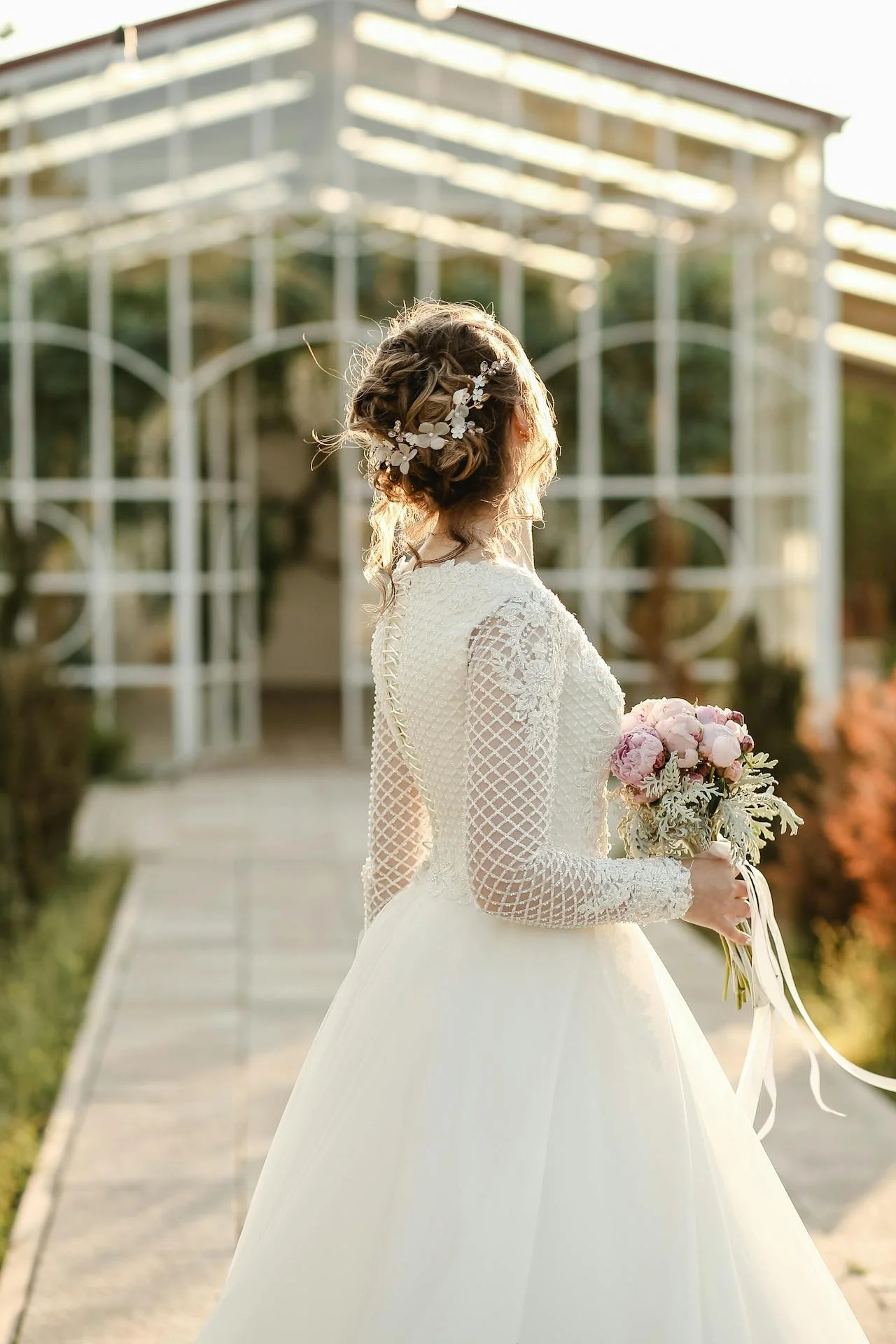
Golden Wedding Officiant / Photo: Melike B
Boulder Wedding Ceremony Venues for Intimate and Scenic Weddings
Boulder is one of Colorado’s most memorable places to hold a wedding ceremony because it gives couples something many destinations cannot: mountain scenery, urban convenience, and an intimate sense of place on the same day. You can exchange vows with the Flatirons behind you, gather your closest people in a refined garden setting, or choose a downtown venue where your ceremony flows naturally into dinner, cocktails, and a full wedding weekend.
For couples who want a ceremony that feels personal rather than overly produced, Boulder is especially compelling. The city’s best wedding ceremony venues are not limited to large ballrooms or traditional event halls. They include historic landmarks, stone amphitheaters, cultural institutions, restaurants, gardens, rooftops, and foothill spaces, helping the ceremony feel grounded in the landscape. That matters because the ceremony is not just a formality. It is the emotional center of the wedding day. The right venue should support the words being spoken, the guest experience, the photography, the weather plan, and the overall tone of the celebration.
Recent wedding research supports this shift toward more personal, place-based celebrations. The Knot’s 2025 Real Weddings Study analyzed responses from 16,956 U.S. couples who married in 2024, and its broader 2025 Global Wedding Report emphasized personalization and purpose as defining priorities for weddings. Zola’s 2025 First Look Report also found that couples are heavily influenced by visual inspiration, but many are balancing that inspiration with real-life budgets and meaningful choices. Boulder fits that moment well: it gives couples beauty, intimacy, and flexibility without needing to turn the day into an oversized production. For a ceremony designed around your relationship, your vows, and the feeling you want your guests to remember, consider working with a Boulder wedding officiant who understands both the emotional rhythm of the ceremony and the practical realities of Colorado venues.
Table of Contents
Why Golden Is One of Colorado’s Best Wedding Ceremony Locations
What Makes Golden Different From Denver, Boulder, and the High Country
Best Golden Wedding Ceremony Venues
Outdoor Ceremony Locations in and Around Golden
Golden Wedding Venues for Intimate Weddings and Elopements
Ceremony Planning Tips for Golden Couples
Permits, Park Rules, and Outdoor Ceremony Logistics
Golden Wedding Guest Experience: Hotels, Dining, and Weekend Flow
Best Seasons for a Golden Wedding Ceremony
Sample Golden Wedding Ceremony Timeline
How a Golden Wedding Officiant Helps Personalize the Ceremony
Final Planning Checklist
Related Articles
What Makes Golden Different From Denver, Boulder, and the High Country
Golden’s ceremony appeal starts with location. It sits at the edge of the mountains, close enough to Denver for convenience but close enough to the foothills to feel visually distinct. Couples can create a ceremony with natural Colorado texture—rock formations, creek paths, pine trees, mountain views, and historic architecture—without making guests navigate a long mountain pass or remote trailhead. Compared with Denver, Golden feels smaller, more outdoors-oriented, and more relaxed. Denver is ideal for modern hotels, art museums, restaurants, rooftops, and urban guest logistics. Golden is better for couples who want mountain-adjacent scenery but still need practical access to hotels, restaurants, parking, and rehearsal dinner options.
Compared with Boulder, Golden feels a little more compact and Western in personality. Boulder has iconic Flatirons views, Chautauqua, Pearl Street, and a larger university-town feel. Golden has Clear Creek, Lookout Mountain, historic downtown blocks, breweries, foothill trails, and a more intimate gateway-to-the-mountains character. Compared with the high country, Golden is usually easier for guests. Couples can still create a Colorado outdoor ceremony, but they avoid some of the logistical stress of altitude, mountain weather volatility, limited lodging, and long shuttles. That makes Golden especially strong for families with older relatives, out-of-town guests, and wedding parties who want a beautiful setting without turning the entire weekend into a transportation puzzle.
Best Golden Wedding Ceremony Venues
1. Boettcher Mansion
Boettcher Mansion is one of Golden’s signature wedding venues. Located on Lookout Mountain, it offers a historic estate setting with indoor and outdoor options, including the Mansion, Carriage House, and Gazebo. Jefferson County describes Boettcher Mansion as a historic event venue for weddings, receptions, rehearsal dinners, and social events, with dedicated event staff and multiple event spaces. Visit Golden also highlights Boettcher Mansion as a “vows with a view” location, noting its Lookout Mountain setting, indoor and outdoor venues, gazebo option, fireside room, patio, and historic house experience. Boettcher Mansion is a strong fit for couples who want:
A mountain setting without a long drive into the Rockies
A historic, refined atmosphere
Indoor and outdoor ceremony flexibility
A formal venue structure with planning support
A ceremony and reception in one location
Because mountain weather can shift quickly, Boettcher Mansion is especially useful for couples who love outdoor views but still want a credible indoor contingency.
2. The Pines by Wedgewood Weddings
The Pines is a good fit for couples who want a forested foothills ceremony with a more traditional full-service wedding venue experience. The venue describes itself as a Golden location in the Rocky Mountain foothills with forest ceremony spaces, modern wood arbors, evergreen and aspen scenery, meadow and mountain views, terraces, fireplaces, built-in bars, and grand halls with panoramic windows. This type of venue works well for couples who want natural scenery but do not want to manage every detail themselves. It can also be helpful for out-of-town couples who want a single central location for the ceremony, reception, vendor coordination, and guest flow.
3. The Golden Hotel and Downtown Golden Hotels
For couples who want a ceremony weekend centered around walkability, downtown Golden hotels can be an excellent base. The advantage is not just the ceremony space itself—it is the entire guest experience. Guests can stay near restaurants, coffee shops, Clear Creek, and downtown activities. That makes the weekend feel more relaxed, especially for guests who arrive without a car. Hotel-based ceremonies can be ideal for:
Smaller weddings
Welcome parties
Rehearsal dinners
Brunch weddings
Indoor/outdoor wedding weekends
Couples who want guests to stay close to the celebration
A downtown hotel can also serve as a practical backup if an outdoor ceremony is planned nearby, but the weather becomes an issue.
4. Table Mountain Inn
Table Mountain Inn is one of the most recognizable downtown Golden hospitality properties. It works well for couples who want a warm, Southwestern-inspired, guest-friendly setting near restaurants, bars, shops, and lodging. It can be especially appealing for couples planning a wedding weekend rather than a single ceremony. For ceremony planning, Table Mountain Inn and similar downtown venues are best positioned as intimate wedding, rehearsal dinner, welcome party, or reception-adjacent options. Couples should confirm current capacity, private event spaces, food and beverage minimums, ceremony rules, and noise policies directly with the venue.
5. The Eddy Taproom and Hotel
The Eddy Taproom and Hotel is a good option for couples who want a less conventional Golden wedding feel. The venue positions itself as an outdoor wedding venue in Golden with a mountain wedding experience and a more relaxed approach than a standard ballroom. This kind of venue can work well for couples who want:
A relaxed reception atmosphere
On-site lodging or nearby lodging
A taproom/hotel setting
Outdoor ceremony energy without a remote location
A Colorado weekend feel for guests
6. Golden History Museum and Park
Golden History Museum and Park can be appealing to couples seeking history, character, and a location close to downtown. The rental page notes that Golden History Park can accommodate private events and lists policies around alcohol permits, event duration, portable restroom requirements for events longer than 90 minutes, and rental rates. This is the type of location where details matter. Couples should confirm availability, rental rules, alcohol policies, restroom requirements, catering access, setup time, cleanup requirements, and whether the ceremony layout fits their guest count.
7. Breweries, Taprooms, and Restaurants
Golden’s brewery and restaurant scene is part of its appeal for weddings. Visit Golden specifically mentions local breweries and taprooms as options for intimate indoor-outdoor spaces and larger lawn or rooftop-style gatherings. These venues are best for couples who want the ceremony to feel casual, social, and celebratory rather than highly formal. A brewery or restaurant ceremony may be ideal for:
Micro weddings
Second weddings
Welcome-dinner-style ceremonies
Casual elopements with family
Couples who want a short ceremony followed immediately by food and drinks
The key is to clarify whether the location allows an actual ceremony, not just a reception or private dinner. Ask about chairs, microphones, music, rain plans, vendor access, photography timing, and privacy from the general public.
Outdoor Ceremony Locations in and Around Golden
Clear Creek and Downtown Golden
Clear Creek is one of Golden’s defining features. For couples imagining a simple outdoor ceremony, the creek corridor offers a natural sense of place. It is scenic, walkable, and close to downtown restaurants and hotels. However, a creekside ceremony requires careful planning. Public spaces are not the same as private venues. Couples need to think through guest count, accessibility, parking, sound, seating, weather, public foot traffic, and whether their event triggers a permit requirement. The City of Golden explains that some events need permits, including events involving alcohol, amplified sound, vendors, temporary structures, street impacts, or impacts on public use of a park or natural resource.
Lookout Mountain
Lookout Mountain is one of the most iconic areas near Golden for views and foothills scenery. It works especially well for couples who want the emotional experience of a mountain ceremony without having to drive hours from Denver. Lookout Mountain is also where planning discipline matters. Some locations are managed by Jefferson County Open Space or other agencies, and public land use may require permits depending on the activity. Jefferson County states that activities in Jeffco Parks and Open Space that conflict with park regulations require a permit, including events, organized activities, and commercial activities. The county also asks applicants to allow processing time. For couples, that means a simple “we will just meet there and get married” plan may not be enough. Confirm who manages the land, what rules apply, whether professional photography requires permission, and whether the location can legally and practically support the ceremony.
North Table Mountain and South Table Mountain
North Table Mountain and South Table Mountain give Golden some of its most recognizable terrain. These areas can be beautiful for portraits, hiking engagement sessions, and adventurous elopement-style imagery. For actual ceremonies, couples should be conservative. Trails, trailheads, and open space areas can be busy, windy, exposed, and regulated. They may not be ideal for larger guest counts, chairs, arches, amplified sound, florals, or elderly guests. For an elopement with only the couple, an officiant, and a photographer, they may be more realistic—but permission and land-management rules still need to be checked.
Golden Gate Canyon State Park
Golden Gate Canyon State Park is often considered by couples searching for mountain ceremony locations near Golden. It is not downtown Golden, but it is close enough to be relevant for couples planning a foothills or mountain wedding weekend. Colorado Parks and Wildlife maintains wedding and special event information for state parks, and couples should work directly with the park for current permit, reservation, and site rules. This type of location is best for couples who want a stronger nature-first experience and are willing to manage the additional logistics of park rules, travel time, weather, and guest comfort.
Park Pavilions and City-Managed Spaces
For smaller gatherings, Golden Park pavilions may be a practical option. The City of Golden notes that pavilion rentals are managed through Parks and Recreation, with rentals available mid-May through mid-September; outside that period, pavilions are generally first-come, first-served. A pavilion can be useful for a simple ceremony, a casual reception, a picnic-style celebration, or a post-elopement family gathering. Couples should confirm whether the specific pavilion allows weddings, decorations, music, food, alcohol, professional vendors, and reserved seating.
Quick Summary: Best Golden Ceremony Location Ideas
Best mountain-view venue: Boettcher Mansion on Lookout Mountain
Best forested venue feel: The Pines by Wedgewood Weddings
Best downtown Golden experience: Table Mountain Inn, The Golden Hotel, restaurants, breweries, and taprooms
Best creekside atmosphere: Clear Creek-adjacent parks, paths, hotels, and gathering spots
Best intimate wedding style: Restaurant, brewery, hotel patio, park pavilion, or simple outdoor ceremony
Best guest-friendly advantage: Easy access from Denver, Boulder, Lakewood, and the western suburbs
Best planning reminder: Confirm permits, pavilion rentals, alcohol rules, sound restrictions, photography permissions, and backup plans before choosing an outdoor location
Golden Wedding Venues for Intimate Weddings and Elopements
Golden is especially strong for intimate weddings. Not every couple wants a 150-person ballroom reception. Many couples want twenty people, a meaningful ceremony, a beautiful backdrop, excellent food, and a relaxed evening. For intimate weddings, the best Golden ceremony options usually fall into five categories:
Historic venue: Boettcher Mansion or Golden History Museum and Park.
Hotel-based celebration: The Golden Hotel, Table Mountain Inn, The Eddy, or another downtown property.
Restaurant ceremony: A private dining room, patio, or buyout.
Brewery or taproom: A social, informal setting with Colorado character.
Outdoor ceremony: A park, creekside area, pavilion, or open-space-adjacent location with proper permission.
The smaller the guest count, the more flexible the ceremony can feel. A small wedding also allows the ceremony itself to become more personal. Couples can include a short welcome, a story about how they met, family acknowledgments, personalized vows, a ring exchange, a unity ritual, or a closing toast without the event feeling overproduced. For couples who want help shaping that kind of experience, a Golden wedding officiant can adapt the ceremony to the location, guest count, sound conditions, and the day's emotional tone.
Ceremony Planning Tips for Golden Couples
Match the Location to the Ceremony Tone
Golden can support many different ceremony styles, but not every location fits every tone. A formal black-tie ceremony may feel right at a historic mansion or refined hotel. A barefoot, creekside vow exchange may feel better as an elopement or micro wedding. A brewery ceremony may be perfect for couples who want laughter, informality, and immediate celebration. Before booking, decide what you want guests to feel during the ceremony. Quiet? Elegant? Adventurous? Relaxed? Spiritual? Playful? That answer should guide the location.
Prioritize Accessibility
Golden’s foothills and trails are beautiful, but guests need to be able to arrive comfortably. Consider older relatives, guests in dress shoes, children, guests with mobility limitations, and anyone traveling from sea level. Parking, bathrooms, shade, seating, and walking distance matter. A scenic location loses its magic if guests are stressed before the ceremony begins.
Build in a Weather Plan
Outdoor ceremonies in Golden should always have a backup plan. Spring can bring sudden temperature swings, summer can bring afternoon storms, fall can bring wind, and winter can bring ice or snow. Even a ceremony that lasts only fifteen minutes needs a realistic contingency. For private venues, ask about indoor backup spaces. For parks or other public locations, decide whether to move to a pavilion, hotel, restaurant, or covered area.
Keep the Ceremony Sound Simple
Outdoor ceremonies can be difficult to hear. Wind, creek noise, traffic, and distance all matter. For more than a small group, consider a discreet sound system or confirm what the venue provides. If amplified sound is used in a public space, check whether that affects permit requirements.
Avoid Overdecorating Natural Spaces
Golden’s scenery does much of the work. A few florals, a handheld bouquet, or a simple ground arrangement may be enough. Large arches, rugs, aisle markers, candles, chairs, and installations can raise permit concerns, complicate setup, and compete with the landscape.
Permits, Park Rules, and Outdoor Ceremony Logistics
Permits are among the most important planning considerations for Golden outdoor wedding ceremonies. Rules vary depending on whether the space is managed by the City of Golden, Jefferson County Open Space, Colorado Parks and Wildlife, a private venue, or another public agency. The City of Golden lists several event features that may require a Special Event Permit, including attendance of 50 or more, alcohol, amplified sound, vendors, temporary structures, traffic impacts, or impacts on public use of a park or natural resource. Jefferson County Open Space also states that permits are required for activities that conflict with park regulations, including events, organized activities, and commercial activities. It’s 2026 photography guidance notes that professional photography on managed land requires permission, and drones are prohibited. Couples should confirm:
Who manages the ceremony site
Whether a wedding ceremony is allowed
Whether a reservation or permit is required
Whether professional photography needs a permit
Whether chairs, arches, rugs, florals, or props are allowed
Whether amplified sound is allowed
Whether alcohol is allowed
Whether drones are prohibited
Whether restrooms are available
Whether the site is accessible for all guests
Whether there is a rain, snow, or wind backup plan
Golden is a beautiful place to marry, but outdoor ceremonies work best when couples treat the setting with care and confirm the rules in advance.
Golden Wedding Guest Experience: Hotels, Dining, and Weekend Flow
Golden is not just a ceremony location. It is a weekend destination. Guests can explore downtown, walk along Clear Creek, visit breweries, dine locally, hike nearby trails, or use Golden as a base for Denver and foothills activities. That matters for destination weddings. A ceremony may last 20 minutes, but the guest experience lasts 2 or 3 days. Golden gives couples a guest-friendly structure:
Friday: Welcome drinks, rehearsal dinner, or casual brewery gathering.
Saturday: Ceremony, portraits, cocktail hour, dinner, and reception.
Sunday: Brunch, coffee, creek walk, or optional hike.
Because Golden is close to Denver, couples can also use the city as a travel hub. Out-of-town guests can fly into Denver International Airport, stay in Denver or Golden, and still reach the ceremony without a long transfer to the mountains.
Couples considering a broader Front Range wedding weekend may benefit from comparing Golden with Denver wedding officiant services and Boulder wedding officiant services, especially if they are still deciding where to host the ceremony, rehearsal dinner, and guest lodging.
Best Seasons for a Golden Wedding Ceremony
Spring
Spring in Golden can be beautiful, especially for couples who want mild temperatures, foothills color, and earlier-season availability. It can also be unpredictable. Couples should prepare for wind, mud, rain, late snow, and temperature swings. A spring ceremony works best with a strong backup plan.
Summer
Summer is popular for outdoor weddings because of longer days, warmer evenings, and easier travel for guests. It is also a busy season in parks, trails, downtown areas, and venues. For outdoor ceremonies, consider morning or early evening to avoid heat and harsh midday light.
Fall
Fall is one of Golden’s strongest wedding seasons. The light is softer, temperatures are often comfortable, and the foothills can look beautiful. It is also competitive, so couples should book venues, officiants, photographers, and lodging early.
Winter
Winter weddings in Golden can be intimate, elegant, and quiet. A winter ceremony works best at a venue with indoor warmth and outdoor portrait access. Couples should plan for icy paths, shorter daylight, and weather-related travel delays.
Sample Golden Wedding Ceremony Timeline
Intimate Golden Wedding Timeline
2:00 p.m. Couple gets ready in downtown Golden or nearby lodging
3:00 p.m. First look and portraits
3:45 p.m. Immediate family photos
4:15 p.m. Guests arrive at the wedding ceremony location
4:30 p.m. Wedding ceremony begins
4:50 p.m. Marriage license signing and group photo
5:15 p.m. Cocktail hour or restaurant transition
6:00 p.m. Dinner, toasts, and celebration
Outdoor Elopement Timeline
3:30 p.m. Meet at a trailhead, park, venue, or hotel
4:00 p.m. Private first look or couple portraits
4:30 p.m. Ceremony with the wedding officiant
4:50 p.m. Vows, rings, pronouncement, and license signing
5:15 p.m. Sunset portraits
6:15 p.m. Dinner in downtown Golden
A Golden elopement does not need to be complicated. The strongest ceremonies are often simple, intentional, and well-timed to the light, weather, privacy, and guest comfort.
How a Golden Wedding Officiant Helps Personalize the Ceremony
A wedding officiant does more than stand at the front and read a script. For a Golden ceremony, the officiant can help shape the ceremony around the couple, the location, the guest count, and the emotional tone of the day. For example, a ceremony at Boettcher Mansion may call for a more elegant, polished structure. A creekside ceremony may call for something shorter, warmer, and more conversational. A brewery wedding may call for humor and informality. A private elopement may call for a script that gives the couple room to breathe, exchange personal vows, and take in the setting. A personalized ceremony can include:
A custom welcome
A short version of the couple’s story
Meaningful readings
Family acknowledgments
Personal vows
Ring exchange language
A unity ritual
A moment of remembrance
Inclusive, non-religious, spiritual, or interfaith wording
A closing blessing or final reflection
The best ceremony feels like it belongs to the couple—not like it could be dropped into any wedding in any city.
Final Planning Checklist
Before choosing a Golden wedding ceremony location, confirm:
Your ideal guest count
Indoor vs. outdoor preference
Ceremony tone and formality
Weather backup plan
Venue capacity
Parking and accessibility
Restroom access
Sound needs
Permit or reservation requirements
Photography rules
Alcohol rules
Setup and cleanup time
Marriage license timing
Officiant availability
Lodging and restaurant options nearby
Colorado’s marriage process remains flexible for couples. A Colorado marriage license can generally be used anywhere in the state, is valid for 35 days, and must be returned after the ceremony; Denver’s official clerk page also confirms that its Recording Division issues and records marriage and civil union licenses. For couples marrying in Golden, the legal process is usually straightforward. The planning complexity is more often about the location: who manages it, what rules apply, what the weather might do, and how guests will experience the day.
Related Articles
From the Michael Moody Officiant wedding blog directory:
How to Get Married in Colorado: Marriage License Guide for 2026
Preparing for Your Wedding Ceremony in Colorado: A Couple’s Guide
How to Personalize Your Wedding Ceremony Without Making It Awkward or Overlong
Denver Rehearsal Dinner Venues: Elegant and Upscale Restaurant Options for Your Wedding Weekend
Common Wedding Ceremony Planning Challenges and How to Overcome Them
Spring Wedding Guide for Golden, Colorado: Venues, Permits, and Planning Tips
Boulder Fall Wedding Guide: Venues, Permits, License, and Tips
Boulder Wedding Ceremony Venues for Intimate and Scenic Weddings
Summer Wedding Guide for Evergreen, Colorado: Venues, Travel, and Planning Tips
Colorado Front Range Elopement Guide: Hiking-In Wedding Ceremonies and Scenic Trails
Summer Wedding Guide for Larkspur, Colorado: Venues, Travel, and Planning Tips
Colorado Elopement Hikes Near Denver: North Table Mountain West Loop
Colorado Elopement: Elk Falls Lookout and Pond at Staunton State Park
Colorado Elopement Wedding Hikes: Nymph Lake and Lake Haiyaha Loop via Fire Trail
The directory includes ceremony planning articles, Golden-specific planning guidance, Front Range elopement content, and relationship-focused resources for couples planning meaningful Colorado ceremonies.
About the Author: Michael Moody, Wedding Officiant
Michael Moody is a Colorado wedding officiant serving Denver, Boulder, Golden, Larkspur, and mountain communities throughout the state. Since 2012, he has officiated more than 300 weddings, bringing a calm presence, thoughtful guidance, and emotionally grounded ceremony writing to couples seeking a meaningful experience. He also offers Colorado elopement ceremonies for couples who want something intimate, intentional, and beyond the boundaries of a traditional wedding day. His work is shaped by a lifelong interest in connection, reflection, and personal growth. Michael is the author of the self-improvement book Redefine Yourself: The Simple Guide to Happiness and host of The Elements of Being podcast. As a wedding officiant, he draws from that same foundation: the belief that our relationships, words, and everyday interactions help shape a life rooted in love, empathy, and purpose. Michael’s ceremony work has been recognized across Colorado. He is a 2023 WeddingWire Couples’ Choice Award winner in Denver, marking his eighth consecutive year receiving the honor. He was also named “Best Business of 2024, 2025, and 2026” by Three Best Rated and earned “The Best Wedding Officiant in Commerce City, Colorado for 2024” from Quality Business Awards USA.
Beyond weddings, Michael and his wife, Sammy, have sponsored an annual student scholarship for more than 10 years. They also founded Civic Growth Alliance, a 501(c)(4) nonprofit dedicated to strengthening communities through civic advocacy, resident engagement, strategic partnerships, public safety initiatives, neighborhood vitality, and community well-being.
Wedding locations: Michael officiates wedding ceremonies in the Denver neighborhoods of LoDo, River North, Washington Park, Cherry Creek, City Park, Central Park, Capitol Hill, Cheesman Park, Park Hill, Lower Highlands, and Sloan Lake. Michael also serves as an ordained minister in Larkspur, Littleton, Golden, Boulder, Breckenridge, Frisco, Aspen, Vail, Estes Park, and more. If your Denver neighborhood or Colorado town isn’t listed here, no worries! Please contact Michael to propose a wedding ceremony location in a different area!
Wedding Planning Tips
Because Golden is only a short drive from Denver, it is one of the most practical foothills ceremony locations for couples who want Colorado scenery without sacrificing guest convenience. Many couples host guests in Denver, plan welcome dinners in the city, and then move west for a Golden wedding ceremony near Clear Creek, Lookout Mountain, or a historic venue. As a Denver-based wedding officiant serving Golden, Boulder, and the Front Range, Michael Moody helps couples create ceremonies that feel personal, polished, and grounded in the local flow of a Colorado wedding weekend.
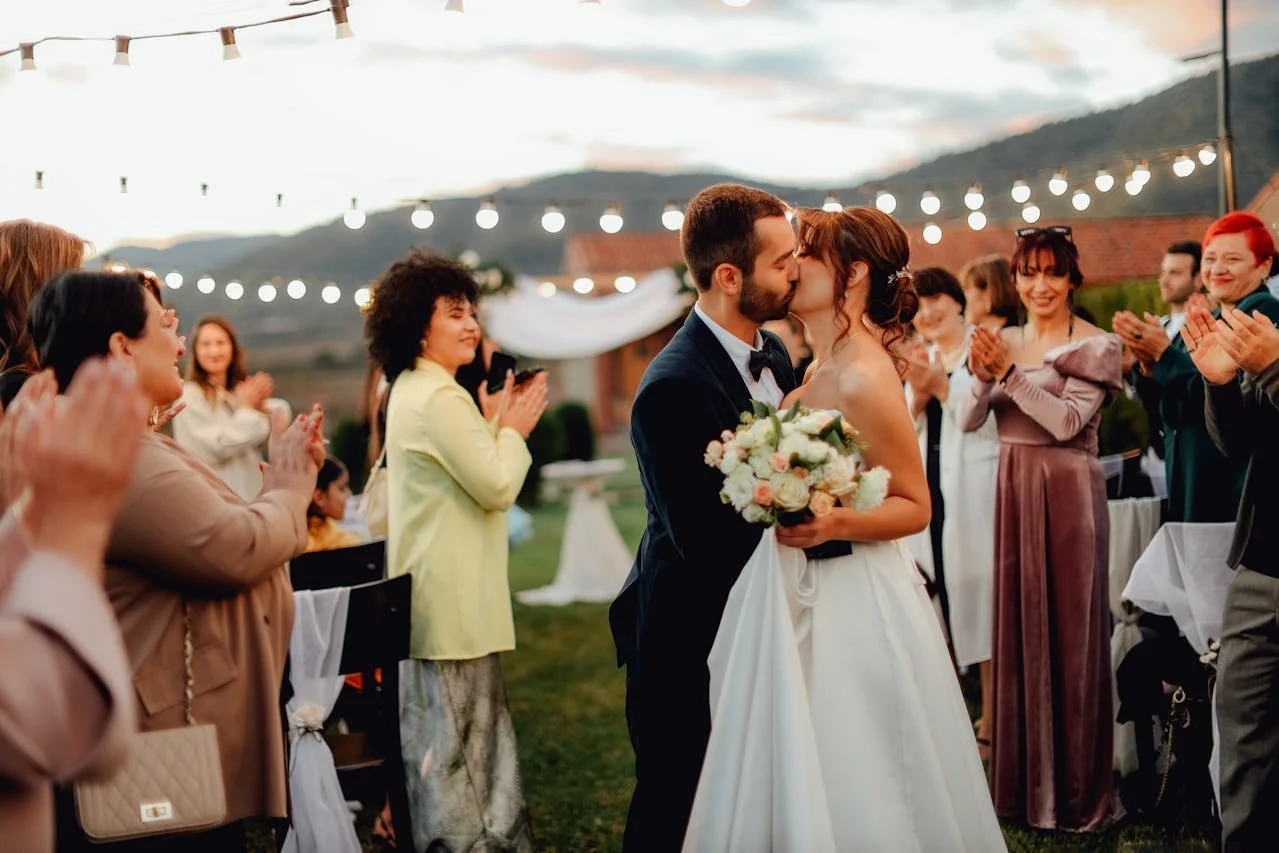
Boulder Wedding Ceremony Venues for Intimate and Scenic Weddings
Summary
Explore Boulder wedding ceremony venues for intimate and scenic weddings, including Chautauqua, Sunrise Amphitheater, downtown museums, garden venues, and planning tips from a Colorado wedding officiant.
What are the best Boulder wedding ceremony venues for intimate and scenic weddings?
The best Boulder wedding ceremony venues include Chautauqua, Sunrise Amphitheater, The Greenbriar Inn, Boulder Dushanbe Teahouse, Museum of Boulder, and Boulder Museum of Contemporary Art. Couples often choose Boulder for its Flatirons views, walkable downtown, foothill scenery, and intimate ceremony spaces.
Frequently Asked Questions (FAQ)
What are the best Boulder wedding ceremony venues for small weddings?
The best Boulder wedding ceremony venues for small weddings include Sunrise Amphitheater, Chautauqua, The Greenbriar Inn, Boulder Dushanbe Teahouse, Museum of Boulder, and Boulder Museum of Contemporary Art. Each offers a different balance of scenery, intimacy, guest comfort, and reception convenience.
Where can I get married in Boulder with mountain views?
Couples seeking mountain views should consider Sunrise Amphitheater, Chautauqua, Museum of Boulder’s rooftop, and foothills venues such as The Greenbriar Inn. Sunrise Amphitheater and Chautauqua are especially strong for couples who want the Boulder landscape to be central to the ceremony.
Do Boulder wedding ceremony venues require permits?
Some Boulder ceremony locations require reservations, permits, or facility rental approval, especially public parks, shelters, open-space areas, and amphitheaters. Couples should confirm current rules directly with the City of Boulder or the venue before announcing a location to guests.
Is Boulder a good place for an intimate wedding?
Yes. Boulder is excellent for intimate weddings because it combines dramatic scenery, walkable downtown amenities, strong restaurant options, cultural venues, and access from Denver. Couples can create a wedding day that feels scenic and personal without asking guests to travel deep into the mountains.
What is the best time of year for a Boulder wedding ceremony?
Late spring through early fall is popular for outdoor Boulder ceremonies, especially May through October for venues such as Sunrise Amphitheater. Fall can be beautiful, but couples should plan around weather changes, guest comfort, and seasonal access rules.
Should I hire a local Boulder wedding officiant?
A local Boulder wedding officiant can help with ceremony tone, outdoor logistics, pacing, guest experience, and location-specific considerations. This is especially helpful for intimate weddings where every word and moment feels more personal.
Key Topics
Boulder wedding ceremony venues
intimate wedding venues Boulder CO
scenic Boulder wedding venues
Boulder wedding officiant
Boulder elopement ceremony venues
small wedding venues Boulder
Flatirons wedding ceremony
Chautauqua wedding ceremony
Sunrise Amphitheater wedding Boulder
Boulder micro wedding venues
Colorado intimate wedding venues
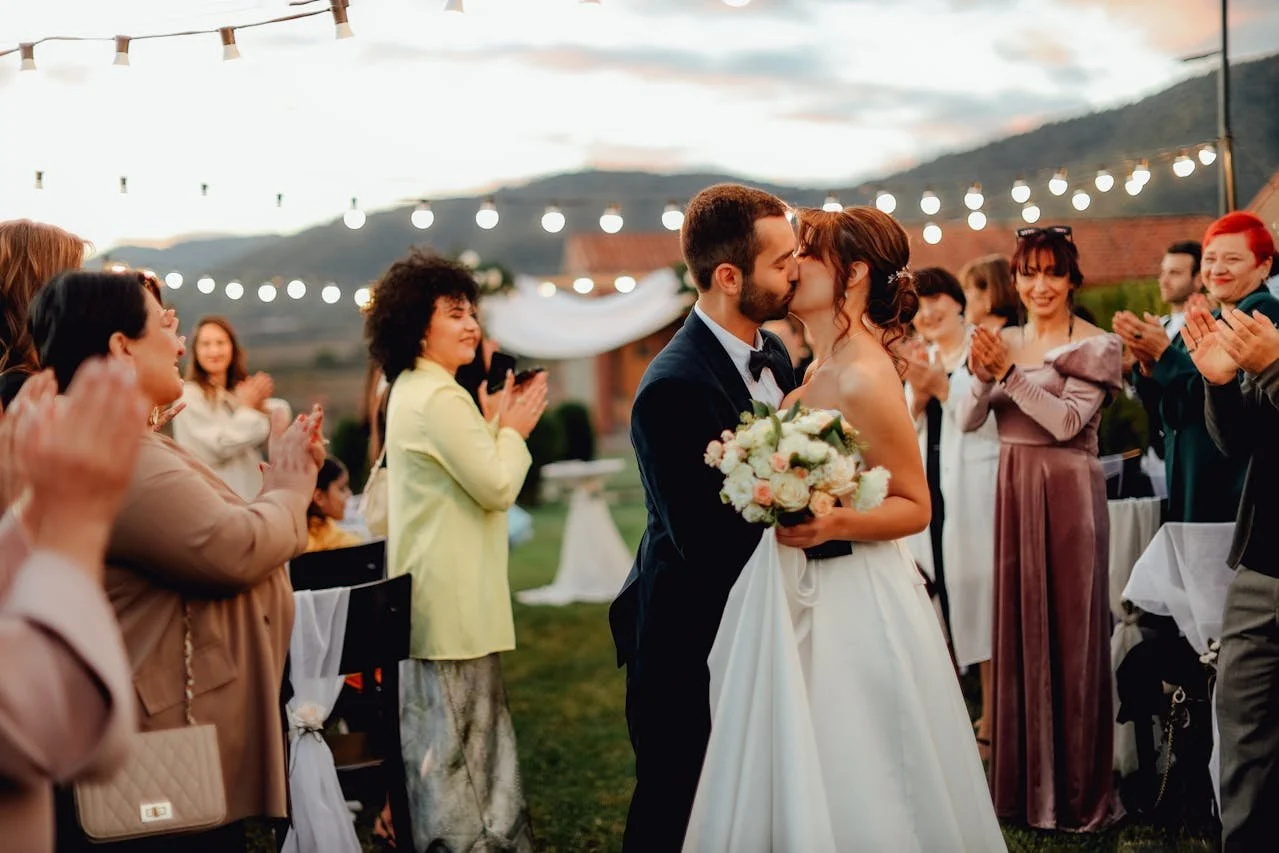
Boulder Wedding Venues / Photo: Photography Maghradze PH
Boulder Wedding Ceremony Venues for Intimate and Scenic Weddings
Boulder is one of Colorado’s most memorable places to hold a wedding ceremony because it gives couples something many destinations cannot: mountain scenery, urban convenience, and an intimate sense of place on the same day. You can exchange vows with the Flatirons behind you, gather your closest people in a refined garden setting, or choose a downtown venue where your ceremony flows naturally into dinner, cocktails, and a full wedding weekend.
For couples who want a ceremony that feels personal rather than overly produced, Boulder is especially compelling. The city’s best wedding ceremony venues are not limited to large ballrooms or traditional event halls. They include historic landmarks, stone amphitheaters, cultural institutions, restaurants, gardens, rooftops, and foothill spaces, helping the ceremony feel grounded in the landscape. That matters because the ceremony is not just a formality. It is the emotional center of the wedding day. The right venue should support the words being spoken, the guest experience, the photography, the weather plan, and the overall tone of the celebration.
Recent wedding research supports this shift toward more personal, place-based celebrations. The Knot’s 2025 Real Weddings Study analyzed responses from 16,956 U.S. couples who married in 2024, and its broader 2025 Global Wedding Report emphasized personalization and purpose as defining priorities for weddings. Zola’s 2025 First Look Report also found that couples are heavily influenced by visual inspiration, but many are balancing that inspiration with real-life budgets and meaningful choices. Boulder fits that moment well: it gives couples beauty, intimacy, and flexibility without needing to turn the day into an oversized production. For a ceremony designed around your relationship, your vows, and the feeling you want your guests to remember, consider working with a Boulder wedding officiant who understands both the emotional rhythm of the ceremony and the practical realities of Colorado venues.
Table of Contents
Why Boulder Works So Well for Intimate Wedding Ceremonies
What Makes a Boulder Ceremony Venue Feel Scenic and Personal?
Best Boulder Wedding Ceremony Venues for Intimate and Scenic Weddings
Chautauqua: Iconic Flatirons Backdrop
Sunrise Amphitheater: Mountain Views and a Built-In Ceremony Shape
The Greenbriar Inn: Foothills, Gardens, and Romantic Dining
Boulder Dushanbe Teahouse: Color, Craft, and Cultural Character
Museum of Boulder: Rooftop Views and Downtown Convenience
Boulder Museum of Contemporary Art: Artistic, Modern, and Urban
Boulder Open-Space Shelters and Small Outdoor Ceremony Sites
How to Choose the Right Boulder Venue for Your Ceremony Style
Boulder Ceremony Planning Tips: Permits, Weather, Timing, and Guest Comfort
Sample Boulder Ceremony Flow for an Intimate Wedding
When to Hire a Boulder Wedding Officiant
Related Articles
Why Boulder Works So Well for Intimate Wedding Ceremonies
Boulder is ideal for intimate weddings because the city naturally supports smaller, more intentional gatherings. The scenery does much of the design work. A simple floral arrangement, a thoughtful processional, and carefully written vows can feel complete when the backdrop is the Flatirons, Flagstaff Mountain, a garden, or a historic downtown setting.
The city also works well for guests. Boulder is close enough to Denver for easy access, but it still feels distinct. Couples can host a mountain-view ceremony without asking everyone to commit to a remote alpine destination. Guests can stay downtown, walk Pearl Street, visit local restaurants, or make a weekend of the celebration without extensive transportation logistics.
This is one reason Boulder appeals to couples planning micro weddings, elopements, and smaller guest-count celebrations. The setting feels special, but not inaccessible. The day can still feel elegant, refined, and logistically realistic. Boulder is also well-matched to current wedding-planning preferences. Vogue’s 2025 trend reporting noted that many planners are seeing renewed interest in hometown or locally meaningful weddings rather than default destination weddings. For Colorado couples, Boulder can serve that role beautifully: close to home, visually iconic, and emotionally resonant.
What Makes a Boulder Ceremony Venue Feel Scenic and Personal?
A scenic venue is not just a pretty background. For a wedding ceremony, it should also support sound, movement, seating, privacy, accessibility, weather planning, and the type of ceremony you want. Before choosing a Boulder ceremony venue, evaluate the setting through five questions:
1. Does the venue match the emotional tone of your ceremony?
A quiet vow exchange at Sunrise Amphitheater feels different from an art-filled ceremony at BMoCA or a garden ceremony at The Greenbriar Inn. None is automatically better. The right choice is the one that matches your relationship.
2. Will guests be comfortable?
Views matter, but so do shade, seating, restrooms, parking, walking distance, altitude, and weather exposure.
3. Is the ceremony site legally and logistically appropriate?
Public lands, shelters, and open space facilities may require reservations, permits, or strict rules. Always confirm directly with the venue or city office.
4. Does the space help or fight the ceremony audio?
Outdoor wind, traffic noise, and the couple's distance can affect whether people hear the ceremony. An officiant with experience in outdoor ceremonies can help adjust projection, positioning, and microphone placement.
5. Does the venue support the photos you actually want?
Some couples want dramatic mountain portraits. Others want candid downtown images, architectural interiors, gardens, or a simple documentary feel.
Best Boulder Wedding Ceremony Venues for Intimate and Scenic Weddings
1. Chautauqua: Iconic Flatirons Backdrop
Chautauqua is one of the most recognizable Boulder ceremony settings because it sits at the base of the Flatirons. The City of Boulder notes that Chautauqua Park is tied to Boulder’s early preservation history and dates back to the city’s 1898 bond purchase of 80 acres for Chautauqua use.
For couples, the appeal is obvious: natural beauty, historic context, and immediate Boulder identity. It is hard to imagine a more recognizable local backdrop for a ceremony. Chautauqua works especially well for couples who want the ceremony to feel connected to Boulder’s landscape without requiring a remote mountain drive. It can suit intimate ceremonies, elopements, and wedding weekends where guests are already staying nearby.
The Colorado Chautauqua also offers wedding spaces at a National Historic Landmark near the Flatirons, including the Community House and smaller cottage options for petite weddings. This makes the area especially flexible: couples can lean more natural and outdoorsy, more historic and architectural, or a combination of both.
Best for: Couples who want the most iconic Boulder backdrop.
Considerations: Parking, crowds, permits or venue rules, and seasonal weather should be reviewed early.
2. Sunrise Amphitheater: Mountain Views and a Built-In Ceremony Shape
Sunrise Amphitheater is one of Boulder’s strongest ceremony-specific venues because it already feels designed for the moment of exchange. The City of Boulder describes Sunrise Amphitheater as a rustic outdoor facility made of local stone, located at the summit of Flagstaff Mountain, featuring a circular area, a small stage, tiered stone seating, and magnificent views.
This is a major advantage for intimate weddings. Many outdoor locations are beautiful but awkward for ceremonies because they lack a natural focal point. Sunrise Amphitheater solves that problem. Guests understand where to sit. The couple has a defined place to stand. The setting frames the ceremony.
The City of Boulder lists Sunrise Amphitheater's capacity at 100 and notes that Summit Facilities have combined time-block attendance limits and seasonal closures. Reservations at Sunrise Amphitheater, Stone Shelter, and Wood Shelter are unavailable from October 31 through April 30, and Flagstaff Summit Road is closed to vehicles during that period. For couples planning a spring, summer, or early fall ceremony, Sunrise Amphitheater can be one of the best ceremony venues in the Boulder area.
Best for: Couples who want a structured outdoor mountain ceremony.
Considerations: Seasonal access, guest mobility, weather exposure, road limits, and reservation timing.
3. The Greenbriar Inn: Foothills, Gardens, and Romantic Dining
The Greenbriar Inn is a strong choice for couples seeking a scenic ceremony and a more traditional hospitality experience. Located just outside Boulder, the venue describes its property as 20 scenic acres surrounded by mountain ranges and foothills, with a romantic country inn atmosphere.
This venue is especially appealing for intimate weddings because it can support both the ceremony and reception in one location. Couples do not need to move guests from a remote ceremony site to a separate dinner venue. The atmosphere can feel elegant, private, and naturally Colorado without becoming rustic in a casual sense. The Greenbriar Inn also notes that its space can be arranged for events of different sizes and styles, including intimate cocktail-style gatherings and seated affairs. That flexibility is useful for couples who want a smaller wedding but still care deeply about food, service, and guest comfort.
Best for: Garden-forward ceremonies, refined dinners, and foothills scenery.
Considerations: Ask about ceremony site options, seasonal garden appearance, guest minimums, and reception flow.
4. Boulder Dushanbe Teahouse: Color, Craft, and Cultural Character
The Boulder Dushanbe Teahouse is one of Boulder’s most visually distinctive event spaces. For couples who want a ceremony venue with color, texture, and architectural personality, it offers something very different from a mountain overlook or blank event room. The Teahouse describes itself as one of Boulder’s most beautiful and unique event venues and notes that it supports private events and catering for parties of over 20 people.
This venue can be a smart option for couples who want intimacy without losing visual richness. The setting feels warm, artistic, and memorable. It can also work well for couples who want a downtown Boulder experience where the ceremony, meal, and guest gathering feel connected. Because the space has such a strong aesthetic identity, couples should let the venue guide the design. Overdecorating may not be necessary. A carefully written ceremony, thoughtful music, and a small floral plan may be enough.
Best for: Colorful, intimate, culturally rich ceremonies and private dining.
Considerations: Confirm guest count, indoor/outdoor options, privacy, catering requirements, and timing.
5. Museum of Boulder: Rooftop Views and Downtown Convenience
The Museum of Boulder is a strong fit for couples who want a downtown venue that still feels scenic. The museum describes its rentals as flexible spaces in the heart of downtown Boulder for meetings, celebrations, private events, and intimate weddings. Its rooftop terrace is especially relevant for a Boulder wedding ceremony. The museum notes that the rooftop offers expansive views of the Flatirons and surrounding foothills and is well-suited for wedding ceremonies, cocktail-style receptions, and seasonal gatherings.
This combination is valuable: downtown location, cultural setting, and mountain views. It is a good choice for couples who want the Boulder landscape present without committing to an open-space venue.
Best for: Rooftop ceremonies, downtown guest experience, and intimate receptions.
Considerations: Ask about capacity by layout, weather backup, elevator access, sound rules, and sunset timing.
6. Boulder Museum of Contemporary Art: Artistic, Modern, and Urban
Boulder Museum of Contemporary Art, often known as BMoCA, is ideal for couples who want an artful, urban ceremony rather than a purely nature-based setting. BMoCA describes its venue rental space as appropriate for weddings, mini weddings, rehearsal dinners, bridal showers, and other private events. For intimate weddings, an art museum can create a composed and memorable atmosphere. The space gives the ceremony a cultural frame. It works especially well for couples who value design, creativity, architecture, and a more editorial feel.
BMoCA is also in the heart of Boulder, which can simplify the guest experience. Couples can plan portraits, dinner, hotel blocks, and after-party options nearby rather than coordinating extensive transportation.
Best for: Art-loving couples, modern ceremonies, and downtown wedding weekends.
Considerations: Ask how current exhibitions affect layout, photography permissions, ceremony timing, and decor rules.
7. Stone Shelter, Wood Shelter, Halfway House, Green Mountain Lodge, and Bluebell Shelter
For couples who want a simpler Boulder open-space ceremony or picnic-style gathering, City of Boulder shelter rentals are worth reviewing. The City lists several facilities with different capacities, including Stone Shelter, Wood Shelter, Halfway House, Green Mountain Lodge, and Bluebell Shelter. These spaces may suit couples who want a pared-back, nature-connected ceremony rather than a full-service venue. They can be especially useful for elopements, micro weddings, and small celebrations where the priority is the vows, the setting, and a relaxed gathering afterward.
However, these venues require extra planning discipline. Couples should confirm rules around reservations, alcohol, amplified sound, setup, restrooms, parking, and accessibility. Outdoor simplicity is beautiful, but it is rarely effortless.
Best for: Simple, intimate wedding ceremonies, nature-based gatherings, and budget-conscious couples.
Considerations: Reservation rules, seasonal access, amenities, guest comfort, and weather backup.
How to Choose the Right Boulder Venue for Your Wedding Ceremony Style
The best Boulder wedding ceremony venue depends less on popularity and more on fit. Use your ceremony style as the filter.
For a private, emotional vow exchange:
Choose a space where guests can hear easily, stand or sit comfortably, and feel close to the couple. Smaller guest counts often work best at Sunrise Amphitheater, the Museum of Boulder rooftop, BMoCA, or a private room at a restaurant-style venue.
For a scenic mountain ceremony:
Prioritize views, access, and weather timing. Sunrise Amphitheater and Chautauqua are strong contenders, but they require more attention to logistics.
For a refined guest experience:
Choose a venue with built-in food, service, restrooms, parking, and reception flow. The Greenbriar Inn and Boulder Dushanbe Teahouse are useful options.
For an artful urban ceremony:
Look at BMoCA or the Museum of Boulder. These settings allow the ceremony to feel intentional without relying entirely on mountain scenery.
For a ceremony that feels unmistakably Boulder:
Choose Chautauqua, Sunrise Amphitheater, or a rooftop with Flatirons views. These settings immediately communicate a sense of place.
Couples planning across the Front Range may also compare Boulder with nearby ceremony locations in Denver and Golden. A Denver wedding officiant can be helpful for city-centered celebrations, while a Golden wedding officiant may be ideal for foothills weddings closer to Clear Creek, Lookout Mountain, or the Table Mountains.
Quick Summary List
Best mountain-view ceremony: Sunrise Amphitheater
Best iconic Boulder backdrop: Chautauqua
Best garden and foothills feel: The Greenbriar Inn
Best colorful indoor/outdoor setting: Boulder Dushanbe Teahouse
Best downtown rooftop option: Museum of Boulder
Best artistic urban ceremony: Boulder Museum of Contemporary Art
Best planning advice: Confirm guest count, access, permits, parking, weather backup, and ceremony timing before booking.
Boulder Ceremony Planning Tips: Permits, Weather, Timing, and Guest Comfort
Confirm permits before assuming a public location is available
Many scenic Boulder locations are managed public spaces, and public beauty does not automatically mean open wedding access. Before planning a ceremony in a park, shelter, open-space area, or amphitheater, confirm whether you need a reservation, permit, or special-use approval.
Plan for wind and sound
Boulder’s scenery is gorgeous, but outdoor ceremony audio can be unpredictable. Wind, distance, traffic, and guest placement all matter. For intimate ceremonies, fewer guests can make sound easier, but only if the group is positioned close enough to hear.
Build a weather backup
Even a small wedding needs a backup plan. If the ceremony is outdoors, decide in advance what happens in rain, lightning, high wind, snow, smoke, or extreme heat.
Think carefully about the time of day
Morning ceremonies can feel quiet and fresh. Late afternoon and golden-hour ceremonies can be visually beautiful. Midday ceremonies may create harsher light and hotter conditions for guests in exposed spaces.
Match the ceremony length to the setting
At a scenic outdoor venue, a 15-25-minute ceremony often works well. It gives enough time for story, vows, rings, and a meaningful pronouncement without leaving guests exposed too long.
Keep decor intentional
Boulder venues often need less decoration than couples expect. The landscape, architecture, gardens, or gallery setting may already provide the atmosphere. Let the ceremony language carry the emotional weight.
Sample Boulder Ceremony Flow for an Intimate Wedding
A Boulder ceremony does not need to be elaborate to feel profound. A simple structure can work beautifully:
Guest arrival and quiet music
Processional
Welcome and acknowledgment of out-of-town guests
Short reflection on the couple’s relationship
Personal story or shared values
Vows
Ring exchange
Optional reading, unity ritual, or family acknowledgment
Pronouncement
Kiss and recessional
Group photos or celebratory toast
For intimate weddings, the most important detail is emotional precision. The ceremony should sound like the couple, not like a generic wedding template. That is especially true in Boulder, where the venue may be visually powerful. The words should rise to meet the setting without becoming overly dramatic or impersonal.
When to Hire a Boulder Wedding Officiant
Hire your officiant once you have a date, venue details, and a general vision for the ceremony. For smaller weddings, couples sometimes leave the officiant until late in the planning process because they assume the ceremony will be simple. In reality, intimate ceremonies often require more personalization, not less. With fewer guests, every word feels closer. The tone, pacing, and presence of the officiant matter. A skilled officiant helps the ceremony feel grounded, calm, inclusive, and specific to the couple.
Michael Moody serves couples in Boulder, Denver, Golden, and throughout Colorado with personalized ceremonies designed to feel warm, intentional, and true to the relationship at the center of the day. His Boulder service page notes that he serves couples across Downtown Boulder, Chautauqua, North Boulder, Mapleton Hill, University Hill, and nearby mountain towns. For Boulder weddings, connect with Michael through his Boulder wedding officiant page. For nearby Front Range celebrations, explore his Denver wedding officiant and Golden wedding officiant services as well.
Related Articles
From the Michael Moody Officiant wedding blog directory:
How to Get Married in Colorado: Marriage License Guide for 2026
Preparing for Your Wedding Ceremony in Colorado: A Couple’s Guide
How to Personalize Your Wedding Ceremony Without Making It Awkward or Overlong
Boulder Fall Wedding Guide: Venues, Permits, License, and Tips
Denver Wedding Ceremony Venues for Personalized Weddings | Denver Wedding Officiant Guide
Colorado Front Range Elopement Guide: Hiking-In Wedding Ceremonies and Scenic Trails
The directory includes ceremony planning articles, Boulder-specific planning guidance, Front Range elopement content, and relationship-focused resources for couples planning meaningful Colorado ceremonies.
About the Author: Michael Moody, Wedding Officiant
Michael Moody is a Colorado wedding officiant serving Denver, Boulder, Golden, Larkspur, and mountain communities throughout the state. Since 2012, he has officiated more than 300 weddings, bringing a calm presence, thoughtful guidance, and emotionally grounded ceremony writing to couples seeking a meaningful experience. He also offers Colorado elopement ceremonies for couples who want something intimate, intentional, and beyond the boundaries of a traditional wedding day. His work is shaped by a lifelong interest in connection, reflection, and personal growth. Michael is the author of the self-improvement book Redefine Yourself: The Simple Guide to Happiness and host of The Elements of Being podcast. As a wedding officiant, he draws from that same foundation: the belief that our relationships, words, and everyday interactions help shape a life rooted in love, empathy, and purpose. Michael’s ceremony work has been recognized across Colorado. He is a 2023 WeddingWire Couples’ Choice Award winner in Denver, marking his eighth consecutive year receiving the honor. He was also named “Best Business of 2024, 2025, and 2026” by Three Best Rated and earned “The Best Wedding Officiant in Commerce City, Colorado for 2024” from Quality Business Awards USA.
Beyond weddings, Michael and his wife, Sammy, have sponsored an annual student scholarship for more than 10 years. They also founded Civic Growth Alliance, a 501(c)(4) nonprofit dedicated to strengthening communities through civic advocacy, resident engagement, strategic partnerships, public safety initiatives, neighborhood vitality, and community well-being.
Wedding locations: Michael officiates wedding ceremonies in the Denver neighborhoods of LoDo, River North, Washington Park, Cherry Creek, City Park, Central Park, Capitol Hill, Cheesman Park, Park Hill, Lower Highlands, and Sloan Lake. Michael also serves as an ordained minister in Larkspur, Littleton, Golden, Boulder, Breckenridge, Frisco, Aspen, Vail, Estes Park, and more. If your Denver neighborhood or Colorado town isn’t listed here, no worries! Please contact Michael to propose a wedding ceremony location in a different area!
Wedding Planning Tips
Based in Denver, Michael Moody serves couples across neighborhoods including LoDo, RiNo, Highlands/LoHi, Cherry Creek, Washington Park, and Capitol Hill, and works with couples planning ceremonies throughout Denver, Boulder, and Golden. That local range matters when choosing a ceremony venue, because neighborhood character, traffic flow, guest accessibility, and venue atmosphere can all shape how personal and seamless the ceremony feels on the day itself.
Denver Wedding Ceremony Venues for Personalized Weddings | Denver Wedding Officiant Guide
Summary
Explore Denver wedding ceremony venues for personalized weddings, including historic, modern, intimate, and unique ceremony spaces. Learn how to choose the right Denver wedding venue for custom vows, meaningful ceremonies, and a guest experience that feels true to your relationship.
What are the best Denver wedding ceremony venues for a personalized wedding?
The best Denver wedding ceremony venues for a personalized wedding are the ones that fit your story, guest count, and ceremony style. In general, couples should look for:
flexible ceremony layouts
meaningful architecture or views
privacy and sound control
strong indoor backup options
room for custom vows, readings, and rituals
Frequently Asked Questions (FAQ)
What are the best Denver wedding ceremony venues for a personalized wedding?
The best Denver wedding ceremony venues for a personalized wedding are the ones that match your tone, guest count, and ceremony goals. Historic mansions, industrial venues, boutique hotels, arts spaces, and park-adjacent venues can all work well when they offer privacy, flexible layouts, and room for custom vows or meaningful traditions.
How do I choose a Denver wedding venue for a custom ceremony?
Start by choosing the emotional tone you want: elegant, modern, intimate, relaxed, or artistic. Then evaluate venue layout, acoustics, privacy, weather backup plans, and how much freedom you have to personalize the ceremony structure.
Are Denver wedding venues good for intimate weddings?
Yes. Denver has many venues that work well for intimate weddings, especially for couples who want a meaningful ceremony without a huge ballroom feel. Smaller historic venues, art spaces, restaurant-connected venues, and outdoor-adjacent settings are often strong choices.
Why does the ceremony venue matter so much?
The ceremony venue shapes the guest experience, the sound of the vows, the pacing of the processional, and the emotional focus of the wedding day. A beautiful reception venue cannot fully compensate for a ceremony space that feels noisy, rushed, or disconnected.
What makes a wedding ceremony feel personalized?
A personalized ceremony usually includes custom-written language, personal vows, meaningful readings, cultural or family traditions, and a venue that supports the couple’s style. The goal is for the ceremony to feel specific to the relationship, not borrowed from a template.
Should I choose my officiant before my wedding venue?
Ideally, these decisions should inform each other. Your officiant helps shape the ceremony, and your venue affects how that ceremony will feel in real life. When both choices align, the result is usually more natural, memorable, and guest-centered.
Are outdoor wedding ceremony venues in Denver risky?
They can be beautiful, but couples should always confirm a weather backup plan. Even in Denver, temperature shifts, wind, and rain can affect comfort and timing. A strong backup option protects the ceremony experience without sacrificing personalization.
What neighborhoods in Denver are popular for wedding ceremonies?
Popular areas include LoDo, RiNo, Cherry Creek, Washington Park, Capitol Hill, and the Highlands. Each has a different atmosphere, so the right neighborhood depends on whether you want urban energy, historic charm, relaxed greenery, or a more refined hospitality setting.
Key Topics
Denver wedding ceremony venues
Denver wedding venues for ceremonies
personalized wedding ceremony Denver
Denver wedding officiant
personalized weddings Denver
intimate wedding ceremony venues Denver
Denver ceremony venues
wedding ceremony venues in Denver
unique wedding venues Denver
Denver wedding ceremony ideas
Denver wedding officiant personalized ceremony
best Denver wedding ceremony venues
Denver Wedding Ceremonies / Photo: Isaac Hermar
How to Get Married in Colorado: Marriage License Guide for 2026
Denver offers something many wedding destinations struggle to balance: style, flexibility, and emotional range. You can host a ceremony in a historic mansion, an industrial-chic event space, a rooftop with skyline energy, a garden-adjacent setting, or a neighborhood venue that feels grounded in the city you actually live in and love. For couples who want more than a generic script in a pretty room, that matters.
It matters because the ceremony is not just the formal part before dinner. It is the emotional center of the wedding day. And increasingly, couples want weddings that feel unmistakably like their own. In The Knot Worldwide’s 2025 Global Wedding Report, 68% of respondents said they want guests to feel like they have never been to another wedding like theirs before, and personalized details ranked as the factor most likely to make a wedding memorable. Zola’s 2025 First Look Report similarly found that couples are moving away from extravagance for its own sake and toward hyper-personalized celebrations that feel uniquely theirs.
That shift is exactly why Denver is such a strong market for personalized wedding ceremonies. The city gives couples a broad menu of venue styles and neighborhood personalities, from LoDo and RiNo to Cherry Creek, Washington Park, Highland, and Capitol Hill. Michael Moody’s Denver service area explicitly spans these neighborhoods and other Denver locations, which makes the city especially workable for couples who want a ceremony that feels local rather than copy-and-paste
Table of Contents
Why Denver works so well for personalized weddings
What makes a wedding ceremony venue feel personal
Best types of Denver wedding ceremony venues for different couples
How to choose a Denver ceremony venue that fits your relationship
Questions to ask before you book
How your wedding officiant and venue should work together
Final thoughts
Why Denver works so well for personalized weddings
Denver is one of the best places in Colorado to build a ceremony around your actual relationship rather than forcing it into a prebuilt wedding formula. First, Denver offers venue diversity. On Michael’s Denver venues resource page, the city’s ceremony options range from industrial spaces like Moss Denver and Mile High Station to historic properties like Grant-Humphreys Mansion, hospitality venues like HALCYON in Cherry Creek, cultural or arts-forward spaces like Space Gallery, and outdoor-adjacent options like Washington Park Boathouse. That variety matters because personalization starts with context: the room, the architecture, the flow, the light, and the neighborhood all shape how the ceremony feels.
Second, Denver makes it easier to design a wedding that feels urban without feeling impersonal. Some couples want an elegant ceremony with a strong sense of place. Others want something intimate and relaxed. Others still want a refined but nontraditional setting that leaves room for custom vows, family stories, or a multicultural ceremony structure. Denver supports all three.
Third, Colorado wedding culture is already friendlier to customization than many states. Colorado couples can legally self-solemnize, which reflects the state’s broader openness to nontraditional wedding structures. Even when couples choose to work with an officiant, that flexibility often translates into ceremonies that feel less rigid and more intentional.
What makes a wedding ceremony venue feel personal
A venue does not become personal just because it looks beautiful online. A truly personal ceremony venue usually has five traits.
1. It matches the emotional tone of the relationship
A couple that is understated, thoughtful, and intimate often feels more at home in a historic mansion, boutique hotel, art space, or private dining-adjacent venue than in a massive ballroom. A couple that loves energy, design, and downtown movement may feel more aligned with an industrial or skyline-forward venue. The right venue should sound like you before anyone says a word.
2. It supports ceremony customization
Some venues look great in photos but create friction for personalization. The best ceremony venues allow room for:
custom processional structures
personal vows
family or friend readings
cultural traditions
live music
quiet pauses that do not feel rushed
layout changes that improve intimacy
If the venue is overly rigid, the ceremony often feels that way, too.
3. It has good acoustics, privacy, and guest focus
This is one of the most overlooked factors in ceremony planning. Personalized ceremonies rely on language. If your vows cannot be heard, if guests are distracted by noise, or if the ceremony space feels like a transitional zone rather than a focal point, even a well-written ceremony can lose its impact.
4. It fits your guest count honestly
A venue that is too large can make an intimate wedding feel sparse. A venue that is too tight can make a deeply personal ceremony feel logistically cramped. The right size helps guests stay emotionally present.
5. It offers a practical backup plan
Colorado weather is part of the beauty and part of the risk. Even for Denver weddings, couples should think carefully about sun, wind, temperature shifts, and rain contingencies. A personalized ceremony is easier to enjoy when you are not worried about last-minute chaos. Michael’s Colorado ceremony-planning guidance explicitly emphasizes backup plans because the weather can change quickly.
Best types of Denver wedding ceremony venues for different couples
Rather than chasing a single “best” venue, couples usually do better by choosing the best type of venue for their ceremony style.
Historic mansions for elegant, story-driven ceremonies
Venues such as Grant-Humphreys Mansion often appeal to couples who want warmth, architecture, and a sense of occasion without feeling too conventional. Historic venues work especially well for ceremonies that include carefully written welcome remarks, meaningful readings, and vows that deserve a quieter, more composed setting. They often photograph beautifully and help guests settle into a more reflective tone from the start.
Industrial venues for modern, design-forward weddings
Spaces like Mile High Station, Moss Denver, Ironworks, SKYLIGHT, and blanc are strong fits for couples who want a stylish city wedding with clean lines, texture, and room to build atmosphere. These venues are often ideal for modern ceremonies that still feel emotional, especially when paired with custom-written language, strong music cues, and a ceremony layout that brings guests physically closer.
Boutique hotel and hospitality venues for seamless guest experience
Venues such as HALCYON, a hotel in Cherry Creek, Moxy, and hospitality-centered spaces can be a smart choice for couples who care about flow. If guests are arriving from different parts of Colorado or from out of town, a hotel-based ceremony often reduces friction and keeps the day calm. It also makes it easier to create a more immersive wedding weekend experience instead of treating the ceremony as a separate event.
Outdoor or park-adjacent spaces for relaxed, intimate weddings
For couples who want nature without fully leaving the city, a place like Washington Park Boathouse can support a ceremony that feels simple, sincere, and local. These settings often work best when the ceremony language is heartfelt but not overly formal. The tone can feel relaxed while still being deeply meaningful.
Arts and culture venues for creative couples
Venues such as Space Gallery, Seawell Ballroom at the DCPA, or other visually expressive event spaces can be especially appealing to couples who value originality. These settings often pair well with unconventional ceremony structures, collaborative readings, or a ceremony that leans editorial, artistic, or intentionally nontraditional.
Restaurant and experience-driven venues for intimate celebrations
For smaller weddings, restaurant-connected or experience-forward venues can make the whole event feel more personal because guests stay in one setting and share a single atmosphere. Couples often feel less pressure to perform and more freedom to host. That can be a major advantage when the real priority is connection.
How to choose a Denver ceremony venue that fits your relationship
The strongest venue decisions are not made from aesthetics alone. They come from alignment. Start with these questions:
What should guests feel during the ceremony?
Do you want the ceremony to feel calm and elegant? Warm and conversational? Deeply intimate? Playful and modern? Your answer should quickly narrow the venue field.
What part of your story should the venue reinforce?
Maybe you two love city architecture. Maybe you spend weekends in Cherry Creek or Washington Park. Maybe you want a venue that feels refined but not stiff. Maybe you want a place where family traditions can be included naturally. The venue should support the emotional message of the ceremony.
How much flexibility do you want?
Some couples want a fairly classic structure with room for a few custom touches. Others want a fully bespoke ceremony with original language, personalized vows, cultural traditions, or a unique processional. The more customized the ceremony, the more important venue flexibility becomes.
How important is guest intimacy?
Many couples say they want a personal ceremony, but then choose a layout that creates distance. Personalization works best when guests can actually hear, see, and feel what is happening.
Does the venue work with your wedding officiant instead of against them?
A wedding officiant should not be adapting a meaningful ceremony to a space that is noisy, awkwardly shaped, rushed, or emotionally flat. The venue and officiant should support each other.
For couples who are still refining their ceremony vision, Michael’s service pages for Denver Wedding Officiant, Golden Wedding Officiant, and Boulder Wedding Officiant are useful internal next steps because they position the ceremony as a tailored, non-religious, highly personal experience rather than a standard add-on. The Denver page emphasizes service across Denver neighborhoods; the Golden page highlights warm, personal ceremonies and cultural inclusivity; and the Boulder page emphasizes tailored scripts, readings, and vows.
Questions to ask before you book
Before signing with any Denver wedding ceremony venue, ask:
Is the ceremony space private during our time slot?
What is the rain or weather backup plan?
How much time do we actually have for ceremony setup and transitions?
Can we arrange the seating to improve intimacy?
Are there sound restrictions or microphone limitations?
Can we include personalized vows, readings, or cultural elements without time pressure?
What does the venue require from our officiant?
Are there photo restrictions during the ceremony?
Is the ceremony area distinct enough to feel emotionally separate from the cocktail hour or dinner?
These questions are practical, but they are also strategic. Personalized weddings are rarely undone by a lack of inspiration. More often, they are weakened by avoidable logistics.
Related Articles
How to Get Married in Colorado: Marriage License Guide for 2026
Preparing for Your Wedding Ceremony in Colorado: A Couple’s Guide
How to Personalize Your Wedding Ceremony Without Making It Awkward or Overlong
Denver Rehearsal Dinner Venues: Elegant and Upscale Restaurant Options for Your Wedding Weekend
Common Wedding Ceremony Planning Challenges and How to Overcome Them (Expert Guide for Couples)
Spring Wedding Guide for Golden, Colorado: Venues, Permits, and Planning Tips
Boulder Fall Wedding Guide: Venues, Permits, License, and Tips
How your wedding officiant and venue should work together
The venue sets the frame. The wedding officiant brings the ceremony to life inside it. That is why venue and wedding officiant choices should not be made in separate silos. A personalized wedding ceremony depends on both. The right wedding officiant understands how to read the room, pace the ceremony, adjust to the space, and write language that feels appropriate to the setting. A historic venue may invite more gravitas. A modern industrial venue may support a crisp, contemporary tone. A garden-adjacent ceremony may call for something lighter and more organic.
This is also where current wedding trends matter. Zola’s 2025 report notes that couples are favoring private vow exchanges and moving away from empty extravagance toward celebrations that feel uniquely theirs. The Knot Worldwide’s 2025 report similarly found that personalized details are the biggest driver of memorability. In practice, that means the best Denver ceremony venues are not just photogenic. They are venues that give couples room to speak in their own voice.
A personalized wedding ceremony does not need to be overly long, theatrical, or unconventional to be memorable. In fact, one of the strongest outcomes of the ceremony is when guests leave saying, “That felt exactly like them.” That comes from fit: fit between the couple, the venue, the wedding officiant, and the ceremony design.
Final thoughts
There is no single best Denver wedding ceremony venue for every couple. The best one is the venue that helps your ceremony sound, feel, and unfold like your relationship. For some couples, that is a historic Denver mansion with timeless architecture. For others, it is an industrial venue with a city character. For others, it is a hotel, arts venue, park-adjacent setting, or even a private home celebration. The point is not to copy a trend. The point is to choose a Denver ceremony venue that provides the right setting for your story. If you want your ceremony to feel intentional from the first welcome to the last pronouncement, start by choosing a venue that supports personalization instead of just decoration. Then pair it with an officiant who knows how to make the space, the words, and the moment all work together.
About the Author: Michael Moody, Wedding Officiant
Michael Moody is a Colorado wedding officiant serving Denver, Boulder, Golden, Larkspur, and mountain communities throughout the state. Since 2012, he has officiated more than 300 weddings, bringing a calm presence, thoughtful guidance, and emotionally grounded ceremony writing to couples seeking a meaningful experience. He also offers Colorado elopement ceremonies for couples who want something intimate, intentional, and beyond the boundaries of a traditional wedding day. His work is shaped by a lifelong interest in connection, reflection, and personal growth. Michael is the author of the self-improvement book Redefine Yourself: The Simple Guide to Happiness and host of The Elements of Being podcast. As a wedding officiant, he draws from that same foundation: the belief that our relationships, words, and everyday interactions help shape a life rooted in love, empathy, and purpose. Michael’s ceremony work has been recognized across Colorado. He is a 2023 WeddingWire Couples’ Choice Award winner in Denver, marking his eighth consecutive year receiving the honor. He was also named “Best Business of 2024, 2025, and 2026” by Three Best Rated and earned “The Best Wedding Officiant in Commerce City, Colorado for 2024” from Quality Business Awards USA.
Beyond weddings, Michael and his wife, Sammy, have sponsored an annual student scholarship for more than 10 years. They also founded Civic Growth Alliance, a 501(c)(4) nonprofit dedicated to strengthening communities through civic advocacy, resident engagement, strategic partnerships, public safety initiatives, neighborhood vitality, and community well-being.
Wedding locations: Michael officiates wedding ceremonies in the Denver neighborhoods of LoDo, River North, Washington Park, Cherry Creek, City Park, Central Park, Capitol Hill, Cheesman Park, Park Hill, Lower Highlands, and Sloan Lake. Michael also serves as an ordained minister in Larkspur, Littleton, Golden, Boulder, Breckenridge, Frisco, Aspen, Vail, Estes Park, and more. If your Denver neighborhood or Colorado town isn’t listed here, no worries! Please contact Michael to propose a wedding ceremony location in a different area!
Wedding Planning Tips
Based in Denver, Michael Moody serves couples across neighborhoods including LoDo, RiNo, Highlands/LoHi, Cherry Creek, Washington Park, and Capitol Hill, and works with couples planning ceremonies throughout Denver, Boulder, and Golden. That local range matters when choosing a ceremony venue, because neighborhood character, traffic flow, guest accessibility, and venue atmosphere can all shape how personal and seamless the ceremony feels on the day itself.

How to Get Married in Colorado: Marriage License Guide for 2026
Summary
Learn how to get married in Colorado in 2026 with this complete marriage license guide. Find Colorado marriage license rules, self-solemnization steps, fees, deadlines, and tips for Denver, Golden, and Boulder wedding ceremonies.
Frequently Asked Questions (FAQ)
1. Can you get married in Colorado without a wedding officiant?
Yes. Colorado allows couples to self-solemnize, which means they can legally marry themselves without an officiant.
2. Do you need witnesses to get married in Colorado?
No. Witnesses are not required under Colorado’s marriage process.
3. How much does a marriage license cost in Colorado?
Most Colorado counties list the marriage license fee as $30.
4. How long is a Colorado marriage license valid?
A Colorado marriage license must be used within 35 days of issue.
5. Is there a waiting period to get married in Colorado?
No. Colorado does not require a waiting period, so the license may be used immediately.
6. Can out-of-state couples get married in Colorado?
Yes. You do not have to be a Colorado resident to obtain a marriage license and marry in the state, though county application processes vary.
7. Do you have to apply in the same county where you get married?
No. A Colorado marriage license can be used anywhere in the state.
8. What happens after the wedding ceremony?
The completed license/certificate must be returned to the issuing county clerk for recording, generally within 63 days after solemnization.
Key Topics
how to get married in Colorado
Colorado marriage license
Colorado Marriage License Guide 2026
how to get a marriage license in Colorado
Colorado self solemnization
Colorado self solemnize marriage
Colorado elopement marriage license
Colorado marriage laws 2026
Colorado wedding license requirements
Denver marriage license
Boulder marriage license
Golden Colorado wedding officiant
Denver wedding officiant
Boulder wedding officiant
Colorado wedding officiant

How to Get Married in Colorado / Photo: Alexander Mass
How to Get Married in Colorado: Marriage License Guide for 2026
Colorado remains one of the most straightforward places in the United States to get legally married, which is one reason it continues to be so popular for weddings, micro weddings, and elopements. In 2026, couples can still benefit from Colorado’s unusually flexible rules: there is no waiting period, the license can be used immediately, witnesses are not required, and couples can legally self-solemnize their own marriage. Official county guidance also confirms that applicants do not need to be Colorado residents to marry here.
That flexibility matters whether you are planning a full wedding weekend in the city, a quiet legal ceremony, or a mountain elopement. It also means couples can focus less on red tape and more on creating a meaningful ceremony. If you are still deciding where your celebration should happen, you can explore options with these internal pages for Denver wedding officiant services, Golden wedding officiant services, and Boulder wedding officiant services.
Table of Contents
Why Colorado is one of the easiest states to get married in
Who can legally marry in Colorado
What you need to get a Colorado marriage license
Where to apply for a marriage license in Colorado
How much a Colorado marriage license costs
How long the license is valid
Can you self-solemnize in Colorado?
Do you need witnesses or an officiant?
What happens after the ceremony
Common mistakes couples make
Colorado marriage license tips for out-of-state couples
Planning your ceremony in Denver, Golden, or Boulder
Final checklist for 2026 couples
Why Colorado is one of the easiest states to get married in
Colorado stands out because the state gives couples more autonomy than many other places. Under Colorado law, a marriage may be solemnized by a judge, certain public officials, religious representatives, or by the parties themselves. In practice, that means self-solemnization is legal. Couples can marry themselves without hiring an officiant and without bringing witnesses.
For many couples, that makes Colorado especially appealing for:
destination weddings
private elopements
same-day legal ceremonies
intimate ceremonies in the mountains
low-stress celebrations with minimal paperwork
Recent wedding-industry guidance has continued to emphasize the difference between a marriage license and a marriage certificate, and that distinction matters here too. The license is the document that allows you to marry; the completed and recorded certificate is what proves the marriage happened. Brides highlighted this distinction in 2025, which is helpful because couples often use the terms interchangeably and then get confused about what they need before versus after the wedding.
Who can legally marry in Colorado
Most adult couples can legally marry in Colorado, provided the marriage is not otherwise prohibited by law. Colorado law prohibits marriages involving close blood relatives such as ancestors and descendants, siblings, and certain aunt/uncle-niece/nephew relationships. The state also prohibits entering into a new marriage before a prior marriage or civil union has been legally dissolved.
Age rules are important in 2026 because Colorado lawmakers have continued to scrutinize and tighten marriage-age exceptions. County guidance still reflects that 18 is the standard legal age, while younger applicants may be subject to court-order requirements depending on the governing statute and timing of implementation. Because this area is actively changing, couples under 18 should verify the current rule directly with the county clerk before making plans.
Quick summary list:
Apply in any Colorado county
Bring valid identification
Pay the marriage license fee
Get married within 35 days
Return the completed license within 63 days
Self-solemnization is allowed in Colorado
What you need to get a Colorado marriage license
In most cases, couples should expect to provide valid identification, basic personal information, and payment. County clerk offices commonly ask for information such as names, addresses, birthplaces, parents’ names, and details of any prior divorce. Jefferson County, for example, states that Social Security numbers are required on the application, and if an applicant does not have one, an affidavit may be used.
A practical rule for 2026: check the exact county process before you go. Even though state law is broad, county workflows vary. Some offices are appointment-only; some offer online or remote appointments; some mail licenses; and some have pickup requirements for out-of-state couples. Denver and Boulder both have process details that can affect your timeline.
Zola’s Colorado marriage-license guide, updated in 2024, also reinforces a useful planning point: both partners generally need to be present, bring valid identification, and be prepared to pay the fee at the time of application.
Where to apply for a marriage license in Colorado
You may apply for a marriage license through a Colorado county clerk and recorder. The license is valid statewide, which means you do not have to marry in the same county where you obtained it. Weld County explicitly notes that a marriage or civil union license can be used anywhere in Colorado.
That statewide flexibility is extremely useful. A couple might apply in Denver because it fits their travel schedule, then use the license for a ceremony in Boulder, Golden, Rocky Mountain National Park, or another Colorado destination. For out-of-state couples flying in, this can significantly simplify logistics. Official Denver guidance also states that applicants do not need to be Colorado residents.
A few examples of 2026 county processes:
Denver: In-person services are appointment-only, and appointments can be booked up to 7 days in advance. Denver also offers online appointments, but warns that if your ceremony is within two weeks, an in-person appointment is safer because mailed licenses may not arrive in time.
Boulder County: Boulder uses a remote process for obtaining a marriage license. Both parties must be together, in Colorado, and on video for the application. Boulder also notes that it cannot mail an issued license outside Colorado, and same-day pickup is required for out-of-state applicants in certain cases.
These county-level details are exactly why couples should not assume that “Colorado is easy” means “every clerk’s office works the same way.”
How much a Colorado marriage license costs
Colorado marriage licenses are widely listed by counties at $30. Recent county guidance from multiple Colorado offices reflects this amount, and Zola’s 2024 guide says the same.
The smarter move is to also confirm accepted payment methods before your appointment. Denver accepts cash, check, or credit card for appointments. Some counties are more limited. San Miguel County, for example, states that the license fee is $30 and notes specific payment-method constraints.
How long is the Colorado marriage license valid?
Colorado does not have a waiting period, so the license may be used immediately after issuance. But it is not open-ended. Official guidance from Denver states that the certificate must be signed in Colorado within 35 days from the date the license was issued, and the completed marriage certificate and attached license must be returned for recording within 63 days after solemnization.
This is one of the most important legal deadlines to understand:
no waiting period
valid immediately
must be used within 35 days
return the completed paperwork within 63 days after the ceremony
If you are planning a destination wedding, do not apply too early. A good rule is to choose a license appointment that gives you enough buffer for travel issues, but not so much time that you risk running past the 35-day validity period.
Can you self-solemnize in Colorado?
Yes. Colorado is one of the few states where couples may legally self-solemnize, meaning they can solemnize their own marriage without an officiant. Colorado’s statute expressly allows the parties to solemnize the marriage themselves.
This is one of the most searched and most misunderstood Colorado wedding questions. Self-solemnization does not mean “skip the paperwork.” It means you still obtain the legal license, hold your ceremony in Colorado, and complete the certificate properly, but you do not need a third-party officiant to make the marriage legal.
That said, many couples still choose a professional officiant even when they could self-solemnize. The reason is rarely legal. It is usually experiential. A skilled officiant helps the ceremony feel intentional, calm, personal, and memorable. For couples who want that structure and presence, these pages are the natural internal links to include: Denver wedding officiant services, Golden wedding officiant services, and Boulder wedding officiant services.
Do you need witnesses or an officiant?
No witnesses are required in Colorado. Official county guidance and secondary wedding-law summaries both confirm that witnesses are not needed. Colorado also allows self-solemnization, so an officiant is not legally required either.
Still, “not required” and “not helpful” are not the same thing. Couples often want:
a professional to guide the ceremony flow
help with custom vows or readings
someone experienced with timing and guest management
a grounding presence during a high-emotion moment
That is especially true for larger gatherings, destination weddings, or ceremonies in public or outdoor spaces where coordinating timing, weather, and logistics matters.
What happens after the ceremony?
After the ceremony, the marriage certificate portion of the license must be completed correctly and returned to the issuing clerk for recording. This is where many couples get tripped up. They assume the marriage is complete once the ceremony ends, and then forget about the return deadline. Denver clearly states that the completed marriage certificate and attached license must be returned within 63 days of solemnization, and that late fees apply thereafter.
This is also where the distinction Brides discussed becomes useful: the license is the pre-wedding legal authorization, while the recorded certificate is the proof you will later use for name changes and legal records.
Common mistakes couples make
The most common Colorado marriage-license mistakes are avoidable:
1. Applying too early.
The 35-day validity window is generous, but not unlimited. Do not get the license months ahead.
2. Assuming all counties use the same process.
Denver’s appointment and mailing guidance differ from Boulder’s remote workflow.
3. Forgetting that online appointments can affect timing.
If your ceremony is close, Denver specifically recommends in-person rather than online because of mailing delays.
4. Confusing the license with the certificate.
This can delay name-change or administrative steps later.
5. Not checking permit or site rules for the ceremony location.
The marriage license makes the marriage legal, but parks, open spaces, venues, and mountain locations may still require permits or have guest restrictions. Your legal paperwork and your ceremony logistics are not the same thing. This is especially relevant for Boulder, Golden, and Front Range elopement areas covered elsewhere on your site.
Colorado marriage license tips for out-of-state couples
Colorado is very welcoming to destination couples, but a little planning can prevent stress.
First, verify the county process before you travel. Denver says applicants need not be Colorado residents, while Boulder requires both parties to be in Colorado for the remote application process and notes special pickup requirements for out-of-state applicants.
Second, do not schedule your legal appointment at the last possible minute. Recent wedding-industry guidance continues to recommend building margin into all legal paperwork tasks, and Colorado county processes support that advice. If you are using Denver’s online process and your ceremony is less than two weeks away, Denver itself advises booking an in-person appointment instead.
Third, remember that the ceremony itself must occur in Colorado if you are using a Colorado marriage license. County guidance consistently states that the license is for marriages performed within the state.
Planning your ceremony in Denver, Golden, or Boulder
Once the legal side is handled, the next question is usually where and how to hold the ceremony.
Denver works well for couples who want urban convenience, easier lodging, restaurants, transportation, and a straightforward courthouse or city-centered celebration. If your guests are flying in, Denver is often the simplest home base. See the internal page for Denver wedding officiant services.
Golden is ideal for couples who want a scenic foothills feel without going too far from the city. It is a strong option for intimate weddings, outdoor celebrations, and couples who want mountain-adjacent views with accessible logistics. See Golden wedding officiant services.
Boulder appeals to couples who want a polished-meets-natural setting, often with iconic Flatirons views, trail access, and elegant small-event potential. See Boulder wedding officiant services.
Final checklist for 2026 couples
Before your wedding day, make sure you have done all of the following:
chosen a Colorado county clerk process that fits your timeline
confirmed appointment requirements
gathered valid identification and required information
confirmed the marriage-license fee and payment method
applied close enough to the ceremony date to stay inside the 35-day window
decided whether you will self-solemnize or work with an officiant
checked venue or permit rules for your ceremony location
made a plan to return the completed license within 63 days after the ceremony
Colorado makes the legal side of marriage unusually accessible. The real key for 2026 is not complexity. It is precision. Follow the county process carefully, meet the deadlines, and give yourselves enough margin so the paperwork supports the day rather than distracting from it.
Related Articles
Preparing for Your Wedding Ceremony in Colorado: A Couple’s Guide
Boulder Fall Wedding Guide: Venues, Permits, License, and Tips
Spring Wedding Guide for Golden, Colorado: Venues, Permits, and Tips
Colorado Front Range Elopement Guide: Hiking-In Wedding Ceremonies and Logistics
Colorado Elopement Hikes Near Denver: North Table Mountain West Loop (Golden)
About the Author: Michael Moody, Wedding Officiant
Michael Moody is a Colorado wedding officiant serving Denver, Boulder, Golden, Larkspur, and mountain communities throughout the state. Since 2012, he has officiated more than 300 weddings, bringing a calm presence, thoughtful guidance, and emotionally grounded ceremony writing to couples seeking a meaningful experience. He also offers Colorado elopement ceremonies for couples who want something intimate, intentional, and beyond the boundaries of a traditional wedding day. His work is shaped by a lifelong interest in connection, reflection, and personal growth. Michael is the author of the self-improvement book Redefine Yourself: The Simple Guide to Happiness and host of The Elements of Being podcast. As a wedding officiant, he draws from that same foundation: the belief that our relationships, words, and everyday interactions help shape a life rooted in love, empathy, and purpose. Michael’s ceremony work has been recognized across Colorado. He is a 2023 WeddingWire Couples’ Choice Award winner in Denver, marking his eighth consecutive year receiving the honor. He was also named “Best Business of 2024, 2025, and 2026” by Three Best Rated and earned “The Best Wedding Officiant in Commerce City, Colorado for 2024” from Quality Business Awards USA.
Beyond weddings, Michael and his wife, Sammy, have sponsored an annual student scholarship for more than 10 years. They also founded Civic Growth Alliance, a 501(c)(4) nonprofit dedicated to strengthening communities through civic advocacy, resident engagement, strategic partnerships, public safety initiatives, neighborhood vitality, and community well-being.
Wedding locations: Michael officiates wedding ceremonies in the Denver neighborhoods of LoDo, River North, Washington Park, Cherry Creek, City Park, Central Park, Capitol Hill, Cheesman Park, Park Hill, Lower Highlands, and Sloan Lake. Michael also serves as an ordained minister in Larkspur, Littleton, Golden, Boulder, Breckenridge, Frisco, Aspen, Vail, Estes Park, and more. If your Denver neighborhood or Colorado town isn’t listed here, no worries! Please contact Michael to propose a wedding ceremony location in a different area!
Wedding Planning Tips
Michael Moody serves couples across Colorado, including those in Denver, and understands both the legal and practical aspects of planning a ceremony here. With Denver as a central hub for county access, guest travel, restaurants, hotels, and nearby mountain wedding routes, couples can handle license logistics efficiently while still creating a personalized ceremony experience in the city, foothills, or Front Range.
Summer Wedding Guide for Evergreen, Colorado: Venues, Travel, and Planning Tips
Summary
Planning a summer wedding in Evergreen, Colorado? This guide covers some of the most popular Evergreen-area venues, travel and lodging tips for guests, marriage-license basics through Jefferson County, and practical day-of ideas for mountain weather, timing, and guest comfort. Evergreen combines lake views, pine forests, and easy access from Denver, making it a strong fit for couples who want a Colorado mountain feel without sending everyone deep into the high country.
Frequently Asked Questions About Getting Married in Evergreen, Colorado
What is the best time for a summer wedding in Evergreen, Colorado?
For most couples, the best window is late June through early September. That stretch usually offers the most greenery, long daylight, and the easiest conditions for outdoor ceremonies and portraits. Evergreen’s wedding and visitor resources also position the area as a sunny mountain destination with strong summer appeal.
What are the best wedding venues in Evergreen, Colorado?
Some of the most recognizable options in and around Evergreen include Evergreen Lake House, The Barn at Evergreen Memorial Park, Evergreen Red Barn, and nearby foothills venues couples often compare alongside Evergreen properties. Evergreen Lake House is one of the best-known local choices because it overlooks the lake and offers a rustic mountain setting with year-round event hosting.
How far is Evergreen from Denver International Airport?
A practical planning estimate is about an hour or a little more by car, depending on traffic, arrival time, and where guests are staying in Evergreen. Evergreen is commonly described as about 30 minutes from Denver, which makes it one of the more accessible mountain-style wedding destinations near the city.
How do you get a marriage license for an Evergreen wedding?
Most couples getting married in Evergreen use Jefferson County. Jefferson County says the marriage license costs $30, can be used immediately in Colorado, and remains valid for 35 days from the date of issue. The county also explains that both parties should typically appear in person, although one party may appear with a completed, notarized absentee affidavit and the absent party’s original identification, if needed.
Do you need an officiant to get married in Colorado?
Not strictly. Colorado allows self-solemnization, meaning a couple can legally marry without a traditional officiant and without witnesses. Even so, many couples still hire a wedding officiant because it provides a more personal ceremony, better structure, and smoother guidance through the processional, vows, and the overall flow of the ceremony.
What should out-of-town guests know before attending a wedding in Evergreen?
Guests should know that Evergreen is easier to reach than many mountain towns, yet it still feels like a Colorado destination wedding location. It also sits at about 7,074 feet, so hydration, sunscreen, layers, and pacing alcohol are all smart recommendations for visitors arriving from lower elevations. Lodging options in the area include cabins, cottages, and other mountain-style stays that work well for full wedding weekends.
What time should a summer wedding ceremony start in Evergreen?
A strong planning range is late afternoon to early evening, often around 5:00 to 6:00 p.m., for outdoor weddings. That timing usually gives you softer light for photos, cooler temperatures for guests, and a more comfortable ceremony experience than a mid-afternoon start. This is a best-practice recommendation based on the mountain setting, not a legal requirement. Evergreen’s outdoor wedding appeal and scenic venues make light and weather timing especially important.
Is Evergreen a good location for a destination wedding in Colorado?
Yes — Evergreen is a strong option for couples who want a mountain wedding feel without sending guests too far from Denver. It combines foothills scenery, local lodging, outdoor recreation, and recognizable wedding venues, while still being much easier for guests to access than many deeper resort-town destinations.
How do you plan an outdoor wedding ceremony in Evergreen?
Start with the basics: confirm your venue’s weather backup plan, think through guest shade and hydration, and schedule the ceremony for a time with better light and comfort. Because Evergreen is a mountain setting at over 7,000 feet, outdoor weddings benefit from practical details like water stations, layers, microphone wind protection, and a backup plan for afternoon weather changes.
What does a wedding officiant in Evergreen, Colorado do?
A wedding officiant helps create and lead the ceremony itself. That usually includes creating a personalized script, helping with vows, guiding the processional and recessional, running the rehearsal, and ensuring the ceremony feels clear, calm, and meaningful on the day of the wedding. In a place like Evergreen, where couples often want a personal mountain ceremony rather than a generic one, the officiant also helps connect the setting to the couple’s story. This final point is a professional planning judgment rather than a county rule.
Key Topics
Evergreen wedding officiant
wedding officiant Evergreen, CO
Evergreen Colorado wedding
summer wedding, Evergreen, Colorado
Evergreen wedding venues
Evergreen Lake House wedding
The Barn at Evergreen Memorial Park wedding
Evergreen Red Barn wedding
mountain wedding Evergreen, CO
Evergreen, Colorado wedding ceremony
Colorado mountain wedding officiant
Jefferson County marriage license wedding
destination wedding, Evergreen, Colorado
personalized wedding ceremony Evergreen
Denver and Evergreen wedding officiant
Photo: Blackstone Rivers Ranch
Summer Wedding Guide for Evergreen, Colorado: Venues, Travel, and Planning Tips
Planning a summer wedding in Evergreen, Colorado? This guide covers some of the most popular Evergreen-area venues, travel and lodging tips for guests, marriage-license basics through Jefferson County, and practical day-of ideas for mountain weather, timing, and guest comfort. Evergreen combines lake views, pine forests, and easy access from Denver, making it a strong fit for couples who want a Colorado mountain feel without sending everyone deep into the high country.
Why Evergreen Works for Summer “I Do’s”
A mountain-town setting without requiring guests to travel all the way into a resort market.
A strong mix of venue styles, from lakefront and rustic log architecture to barn and canyon-view settings.
Quick access from Denver for local couples and easier logistics for out-of-town guests.
A summer season that is ideal for outdoor ceremonies, with enough mountain variability that a thoughtful rain and temperature backup plan still matters.
Best Months and Day-Of Timing
For an Evergreen summer wedding, late June through early September is usually the sweet spot for green scenery, longer daylight, and a strong balance between comfort and mountain atmosphere. The best ceremony window is often later in the day, when direct sun softens and temperatures become more comfortable for guests in formalwear. Because mountain weather can still turn quickly, ask your venue about covered ceremony options, wind exposure, and storm procedures before finalizing your timeline. This timing advice is a planning judgment based on the local setting and venue style rather than a government rule
Ceremony and Reception Ideas for an Evergreen Wedding
Lakefront elegance: A ceremony with water views, wood tones, and soft neutral florals works especially well in Evergreen. Evergreen Lake House is known for lake views and rustic log-cabin character.
Classic mountain barn style: Evergreen Red Barn and The Barn at Evergreen Memorial Park both lean rustic and scenic, with forested or meadow-style surroundings.
Foothills panorama: Mount Vernon Canyon Club is a good fit for couples who want dramatic views while staying close to Denver.
River-and-pines atmosphere: Blackstone Rivers Ranch, though not in Evergreen proper, is close enough to fit many foothills wedding searches and offers a strong indoor-outdoor mountain event feel.
Venues In and Near Evergreen to Consider
These are the kinds of venues couples often compare when planning an Evergreen-area wedding weekend:
Evergreen Lake House — A year-round event venue overlooking Evergreen Lake, known for mountain views, deck access, and rustic log-cabin character.
The Barn at Evergreen Memorial Park — A mountain venue surrounded by evergreens and wildlife, with a historic, rustic feel.
Evergreen Red Barn — A venue set among pines with mountain views and an outdoor arbor option.
Mount Vernon Canyon Club — A foothills venue about 20 minutes west of Denver with canyon and city-light views.
Blackstone Rivers Ranch — A nearby foothills option with riverfront, forest, and mountain ambiance, located about 35 minutes west of Denver.
Wedding Officiant Tip: Ask every venue about parking flow, shade at the ceremony site, wind on microphones, and what happens if thunderstorms build in the afternoon.
Out-of-Town Couples: Practical Guide
Getting here
Evergreen is marketed as a mountain destination that is still close to Denver, which is one of its biggest wedding-planning advantages. Downtown Evergreen is typically around 30 to 40 minutes from downtown Denver, while airport pickups usually need a larger time buffer.
Where to stay
The Evergreen chamber’s visitor resources emphasize a range of lodging styles, including cabins, cottages, and local stays that fit a full wedding weekend. This works well for couples who want a rehearsal dinner, welcome drinks, ceremony, and day-after brunch all within the same foothills area.
Getting around
Evergreen is easier than many mountain markets, but it is still smart to coordinate transportation if guests are unfamiliar with foothills roads, especially after dark. For weddings with hotel blocks, consider a shuttle or rideshare plan instead of assuming everyone will drive themselves back late at night. This is a best-practice recommendation based on the mountain location.
Guest comfort
Because Evergreen sits around 7,000-plus feet, couples should think through hydration, sunscreen, layered clothing, and pacing for guests coming from lower elevation. Small details like water stations, parasols, fans, or blankets can make the ceremony feel much more hospitable.
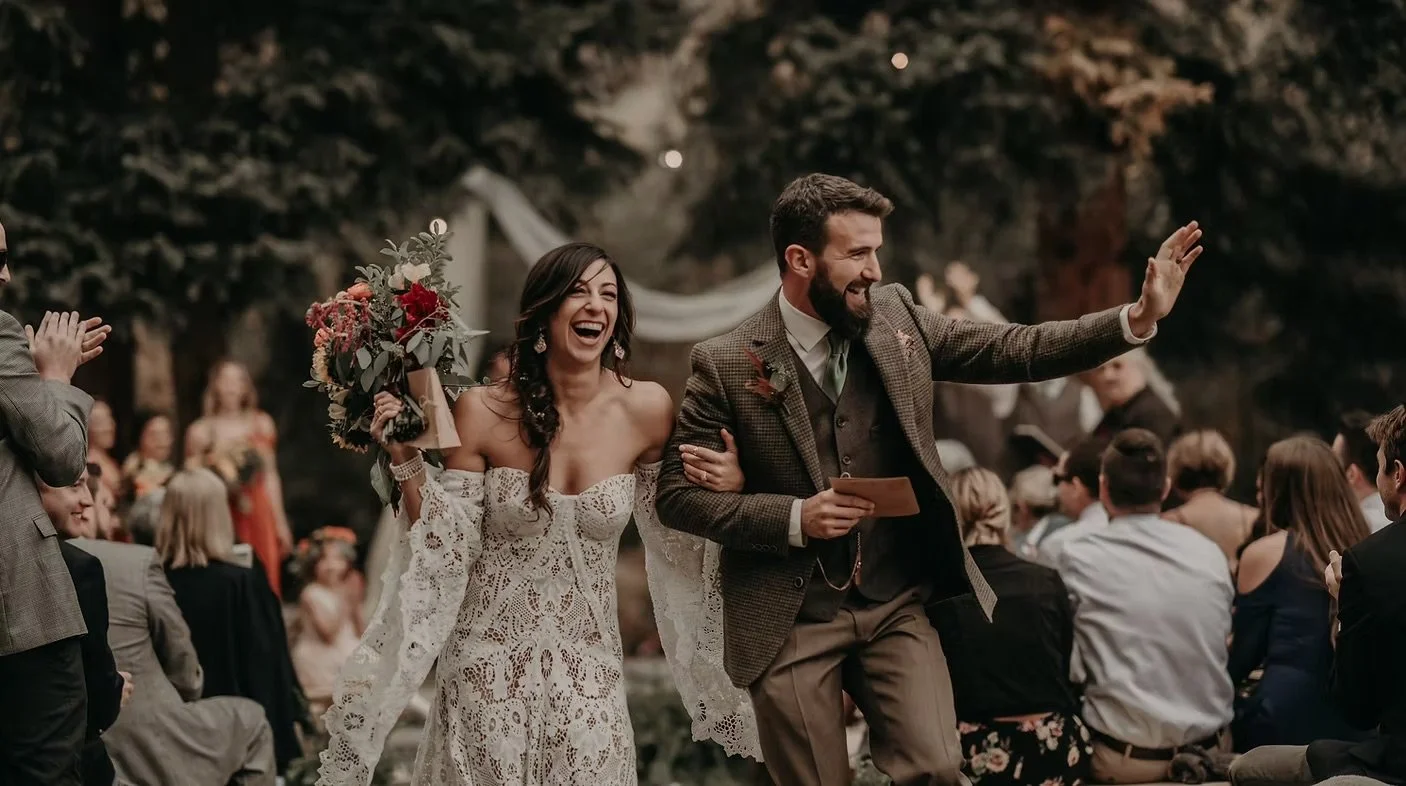
Evergreen Wedding Ceremonies / Photo: Blackstone Rivers Ranch
Marriage License for an Evergreen Wedding
For most Evergreen weddings, Jefferson County is the most relevant county office. Jefferson County says couples must gather the required information, complete the application, and come into the Records and Licensing office to purchase the license. The county also states that both people should be present to apply. The license fee is currently $30, and the license is valid for 35 days.
Colorado is also one of the few states that allows self-solemnization, and Jefferson County notes that witnesses are not required. Even if you choose to hire a professional wedding officiant for a more personal, polished, and guided ceremony experience, this flexibility is one reason Colorado weddings are so appealing for both traditional weddings and intimate celebrations.
Sample Summer Wedding Timeline (5:00 p.m. to 10:00 p.m.)
2:00 p.m. Getting ready, detail photos, and final touchpoints with planner and officiant
4:00 p.m. First look and wedding party portraits
5:30 p.m. Ceremony
6:00 p.m. Family photos and cocktail hour
6:45 p.m. Golden-hour portraits
7:30 p.m. Dinner and toasts
8:45 p.m. First dances and open dance floor
10:00 p.m. Grand exit or final private moment together
This kind of timeline usually fits Evergreen well because it protects guests from peak afternoon sun and tends to produce more flattering ceremony light in outdoor or deck-facing settings. That is a planning recommendation based on venue style and foothills conditions.
Preferred Vendor Shortlist: What to Ask For
Planner or coordinator: Ask how they handle ceremony transitions, guest arrival flow, and weather pivots for mountain venues.
Photography and video: Ask about sunset timing, shade, and the travel time needed between portrait spots.
Catering: Ask about hydration stations, seasonal menus, and any service constraints outdoors.
Music: Ask whether the ceremony site needs battery-powered amplification and wind protection for microphones.
Wedding officiant: Ask whether your officiant helps customize the script, guides rehearsal, times the processional well, and coordinates with your planner, photographer, and DJ.
How Michael Can Help Personalize Your Evergreen Wedding Ceremony
As a Colorado wedding officiant, Michael can help turn an Evergreen wedding from “beautiful setting” into a ceremony that actually feels like you. That includes learning your story, shaping a ceremony tone that fits your relationship, helping with vows, guiding rehearsal, and coordinating with your vendor team so the ceremony feels calm, clear, and meaningful. Evergreen is especially well-suited for couples who want something personal and mountain-forward without losing convenience for guests. Your existing site already positions Michael as serving Evergreen and other Colorado locations, which makes an Evergreen-specific planning post a strong fit for local service visibility.
About the Author: Michael Moody, Wedding Officiant
Michael Moody is a Colorado wedding officiant serving Denver, Boulder, Golden, Larkspur, and mountain communities throughout the state. Since 2012, he has officiated more than 300 weddings, bringing a calm presence, thoughtful guidance, and emotionally grounded ceremony writing to couples seeking a meaningful experience. He also offers Colorado elopement ceremonies for couples who want something intimate, intentional, and beyond the boundaries of a traditional wedding day. His work is shaped by a lifelong interest in connection, reflection, and personal growth. Michael is the author of the self-improvement book Redefine Yourself: The Simple Guide to Happiness and host of The Elements of Being podcast. As a wedding officiant, he draws from that same foundation: the belief that our relationships, words, and everyday interactions help shape a life rooted in love, empathy, and purpose. Michael’s ceremony work has been recognized across Colorado. He is a 2023 WeddingWire Couples’ Choice Award winner in Denver, marking his eighth consecutive year receiving the honor. He was also named “Best Business of 2024, 2025, and 2026” by Three Best Rated and earned “The Best Wedding Officiant in Commerce City, Colorado for 2024” from Quality Business Awards USA.
Beyond weddings, Michael and his wife, Sammy, have sponsored an annual student scholarship for more than 10 years. They also founded Civic Growth Alliance, a 501(c)(4) nonprofit dedicated to strengthening communities through civic advocacy, resident engagement, strategic partnerships, public safety initiatives, neighborhood vitality, and community well-being.
Wedding locations: Michael officiates wedding ceremonies in the Denver neighborhoods of LoDo, River North, Washington Park, Cherry Creek, City Park, Central Park, Capitol Hill, Cheesman Park, Park Hill, Lower Highlands, and Sloan Lake. Michael also serves as an ordained minister in Larkspur, Littleton, Golden, Boulder, Breckenridge, Frisco, Aspen, Vail, Estes Park, and more. If your Denver neighborhood or Colorado town isn’t listed here, no worries! Please contact Michael to propose a wedding ceremony location in a different area!
Wedding Planning Tips
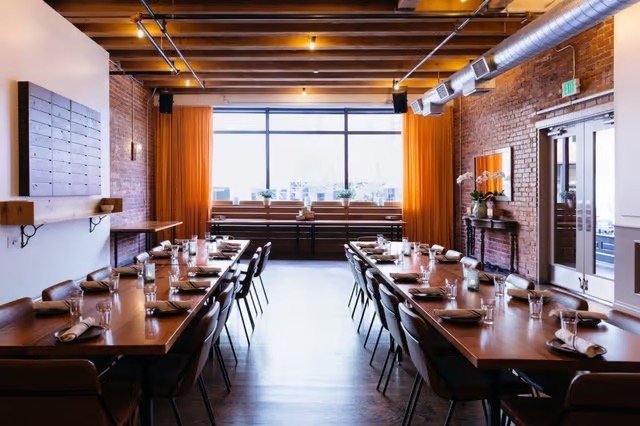
Denver Rehearsal Dinner Venues: Elegant and Upscale Restaurant Options for Your Wedding Weekend
Summary
Planning a rehearsal dinner in Denver? Explore upscale restaurants such as The Kitchen, Tavernetta, and Guard & Grace. Learn about ambiance, private dining spaces, guest capacity, and standout menu items to choose the perfect rehearsal dinner setting for your wedding weekend.
Frequently Asked Questions
What is the best rehearsal dinner venue in Denver?
The best venue depends on your guest count and style, but The Kitchen, Tavernetta, and Guard and Grace are among the most popular upscale options.
How many people typically attend a rehearsal dinner?
Most rehearsal dinners include 15–50 guests, though larger gatherings are becoming more common.
Do Denver restaurants offer private dining for rehearsal dinners?
Yes, many higher-end Denver restaurants offer private or semi-private dining rooms specifically for rehearsal dinners.
How far in advance should we book a rehearsal dinner venue in Denver?
Six to nine months in advance is recommended, especially for popular wedding weekends.
Key Topics
Denver rehearsal dinner venues
Rehearsal dinner Denver restaurants
Upscale rehearsal dinner Denver
The Kitchen Denver rehearsal dinner
Denver wedding rehearsal dinner ideas
Private dining Denver wedding events
Denver wedding weekend planning
The Kitchen American Bistro in Denver
Denver Rehearsal Dinner Venues: Upscale Restaurant Options for Your Wedding Weekend
As a Denver wedding officiant, I often work with couples who want their rehearsal dinner to feel intentional, elevated, and reflective of the overall wedding experience. The rehearsal dinner sets the tone for the weekend, bringing together close family and friends in a relaxed yet meaningful way before the ceremony.
Denver offers an impressive range of high-end restaurants with private dining spaces, exceptional cuisine, and polished ambiance—ideal for hosting a memorable rehearsal dinner. Below are some of the most popular upscale rehearsal dinner venues in Denver, along with details on décor, space size, and signature dishes to help you find the right fit.
The Kitchen – Downtown Denver
Best for: Couples who value seasonal cuisine, warm design, and an intimate yet refined atmosphere.
The Kitchen is one of Denver’s most sought-after rehearsal dinner venues, especially for couples planning a downtown wedding. The space blends modern farmhouse design with thoughtful craftsmanship—exposed wood beams, soft lighting, and an open, welcoming layout. Email Sammy at sammy@thekitchen.com to schedule a visit!
Private Dining and Space
Multiple private and semi-private dining options
Ideal for rehearsal dinners ranging from 20 to 60 guests
Can accommodate cocktail and hors d’oeuvres receptions and seated family-style dinners
Cuisine Highlights
Seasonal, ingredient-driven menus
Popular dishes include handmade pastas, wood-roasted meats, and farm-fresh vegetable plates
Wine and cocktail program focused on quality and sustainability
Overall Feel
Elevated but comfortable—perfect for couples who want sophistication without formality.
Tavernetta – Union Station Area
Best for: A stylish, European-inspired rehearsal dinner with culinary flair.
Located next to Denver Union Station, Tavernetta offers a refined Italian dining experience that feels celebratory and polished. The décor is contemporary with subtle European influences—clean lines, soft textures, and an energetic yet intimate vibe.
Private Dining and Space
Dedicated private dining rooms
Best suited for 15–50 guests
Works well for seated, multi-course dinners
Cuisine Highlights
Handmade pastas and regional Italian specialties
Standout dishes often include agnolotti, crudo selections, and expertly prepared seafood
Strong wine list emphasizing Italian varietals
Overall Feel
Ideal for couples looking to impress out-of-town guests with a refined culinary experience
Guard and Grace – Downtown Denver
Best for: A bold, modern rehearsal dinner with a steakhouse experience.
Guard and Grace is a contemporary steakhouse with dramatic architectural elements—soaring ceilings, floor-to-ceiling windows, and sleek, modern finishes. It’s an excellent choice for larger rehearsal dinners that still feel upscale and intimate.
Private Dining and Space
Several private dining rooms of varying sizes
Can host 20–80+ guests, depending on configuration
Well-suited for formal seated dinners
Cuisine Highlights
Premium steaks, including dry-aged and Wagyu cuts
Seasonal seafood and inventive sides
Craft cocktails and an extensive wine list
Overall Feel
Modern luxury with a lively atmosphere—great for couples who want a high-energy evening.
Choosing the Right Denver Rehearsal Dinner Venue
When selecting your rehearsal dinner location, consider:
Guest count and private dining capacity
Proximity to your ceremony or wedding venue
Level of formality you want for the evening
Dietary flexibility for your guests
As your wedding officiant, I’ve seen how a well-chosen rehearsal dinner venue can foster meaningful connections and ease pre-wedding nerves—setting the stage for a smooth, joyful ceremony.
About the Author: Michael Moody, Wedding Officiant
Michael Moody is a Colorado wedding officiant serving Denver, Boulder, Golden, Larkspur, and mountain communities throughout the state. Since 2012, he has officiated more than 300 weddings, bringing a calm presence, thoughtful guidance, and emotionally grounded ceremony writing to couples seeking a meaningful experience. He also offers Colorado elopement ceremonies for couples who want something intimate, intentional, and beyond the boundaries of a traditional wedding day. His work is shaped by a lifelong interest in connection, reflection, and personal growth. Michael is the author of the self-improvement book Redefine Yourself: The Simple Guide to Happiness and host of The Elements of Being podcast. As a wedding officiant, he draws from that same foundation: the belief that our relationships, words, and everyday interactions help shape a life rooted in love, empathy, and purpose. Michael’s ceremony work has been recognized across Colorado. He is a 2023 WeddingWire Couples’ Choice Award winner in Denver, marking his eighth consecutive year receiving the honor. He was also named “Best Business of 2024, 2025, and 2026” by Three Best Rated and earned “The Best Wedding Officiant in Commerce City, Colorado for 2024” from Quality Business Awards USA.
Beyond weddings, Michael and his wife, Sammy, have sponsored an annual student scholarship for more than 10 years. They also founded Civic Growth Alliance, a 501(c)(4) nonprofit dedicated to strengthening communities through civic advocacy, resident engagement, strategic partnerships, public safety initiatives, neighborhood vitality, and community well-being.
Wedding locations: Michael officiates wedding ceremonies in the Denver neighborhoods of LoDo, River North, Washington Park, Cherry Creek, City Park, Central Park, Capitol Hill, Cheesman Park, Park Hill, Lower Highlands, and Sloan Lake. Michael also serves as an ordained minister in Larkspur, Littleton, Golden, Boulder, Breckenridge, Frisco, Aspen, Vail, Estes Park, and more. If your Denver neighborhood or Colorado town isn’t listed here, no worries! Please contact Michael to propose a wedding ceremony location in a different area!
Wedding Planning Tips
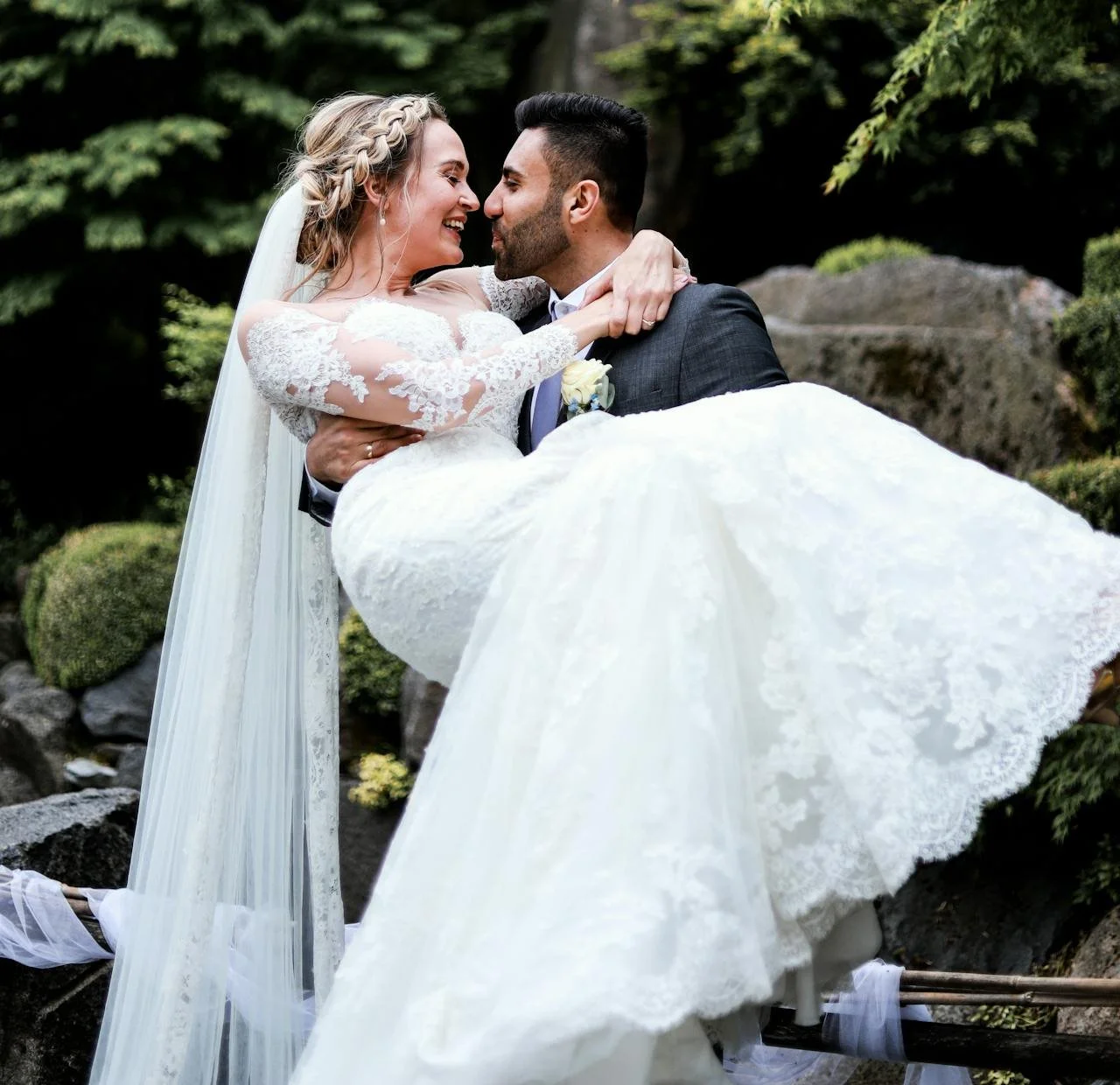
How to Personalize Your Wedding Ceremony Without Making It Awkward or Overlong
Summary
Wondering how to personalize your wedding ceremony without it feeling awkward, too long, or overly scripted? Learn what actually works—from meaningful wedding vows and readings to wedding ceremony flow and tone—plus expert tips from a professional wedding officiant on creating a ceremony that feels authentic and memorable.
Frequently Asked Questions
How do you personalize a wedding ceremony?
A wedding ceremony is personalized through custom wording, intentional wedding vows, meaningful readings or rituals, and a tone that reflects the couple’s relationship—all within a clear, well-paced structure.
Are personal wedding vows required for a personalized wedding ceremony?
No. Personalization can come from wedding ceremony language, readings, or symbolic elements. Many couples choose traditional wedding vows with customized introductions or reflections.
How long should personal wedding vows be?
Personal wedding vows are most effective when kept to 60–90 seconds per person, allowing emotion and meaning without losing momentum.
Can a wedding ceremony be personalized without being religious?
Yes. Many couples opt for secular or non-religious wedding ceremonies that still feel deeply meaningful through intentional language and personal storytelling.
Does personalization make a wedding ceremony feel less formal?
Not when done correctly. Personalization enhances formality when it is thoughtfully integrated and professionally delivered by a wedding officiant.
Key Topics
personalized wedding ceremony
wedding ceremony personalization ideas
custom wedding ceremony wording
personal wedding vows length
non-religious wedding ceremony ideas
modern wedding ceremony structure
wedding officiant ceremony customization
how to personalize a wedding ceremony
meaningful wedding ceremony ideas
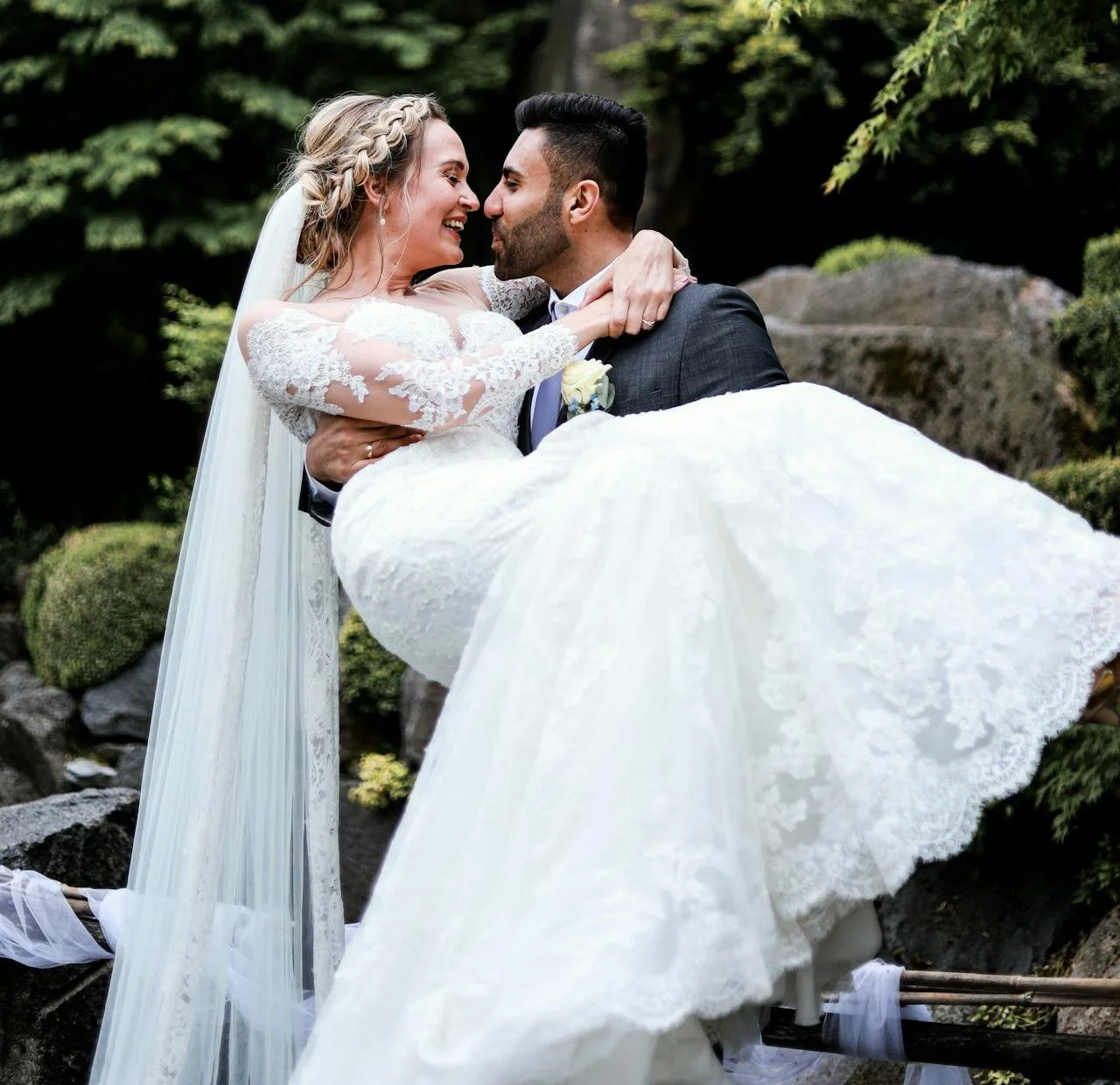
Wedding Planning Colorado / Photo: Filip Rankovic Grobgaard
How to Personalize Your Wedding Ceremony (Without Overthinking It)
One of the most common questions couples ask during the ceremony-planning process is:
“How do we make our wedding ceremony feel personal without making it uncomfortable, cheesy, or too long?”
The good news is that personalization does not require elaborate rituals, inside jokes, or writing a novel-length script. In fact, the most meaningful wedding ceremonies tend to be thoughtfully simple—structured, intentional, and grounded in the couple’s real story.
As a professional wedding officiant, Michael works closely with couples to strike that balance. Below is a breakdown of the most effective ways to personalize a wedding ceremony while keeping it elegant, engaging, and genuinely enjoyable for everyone present.
What “Personalized” Actually Means in a Wedding Ceremony
Personalization is not about reinventing the wedding ceremony format. Instead, it’s about infusing familiar structure with intentional details that reflect who you are as a couple.
A personalized wedding ceremony typically includes:
Language that sounds like you, not a generic template
A tone that matches your relationship (romantic, lighthearted, modern, or traditional)
Select moments of emphasis—rather than constant customization from start to finish
When done well, personalization feels natural and cohesive, not performative.
The Most Effective Ways to Personalize a Wedding Ceremony
1. Thoughtful, Concise Personal Wedding Vows
Personal wedding vows are often the emotional centerpiece of a wedding ceremony—but they don’t need to be long to be meaningful.
Best practices include:
Aiming for 60–90 seconds per person
Focusing on shared values and commitments, not a full relationship recap
Reading wedding vows aloud beforehand to ensure tone and pacing feel right
A good wedding officiant will help ensure both sets of wedding vows complement each other in length and tone.
2. Wedding Ceremony Language That Reflects Your Relationship
Small wording changes can dramatically shift how a wedding ceremony feels. This includes:
How the welcome is framed
How commitment is described
Whether the language is spiritual, secular, or neutral
Rather than writing everything from scratch, couples benefit most from custom-tailored wedding ceremony language within a proven structure.
3. One or Two Meaningful Readings (Not Five)
Readings can add depth—but too many slow the wedding ceremony down.
If you choose to include one or two:
Select a passage that reflects your values or outlook on partnership
Keep it under one minute
Assign it to someone who feels comfortable speaking in front of others
Poetry, modern essays, and short literary excerpts often resonate more than lengthy traditional readings.
4. Symbolic Rituals That Serve a Purpose
Unity rituals can be powerful—but only when they align with your story.
Examples that work well include:
Handfasting with a brief explanation
Wine or coffee rituals for couples who value shared traditions
Cultural or family-specific customs
The key is intentionality, not novelty.
What to Avoid When Personalizing Your Wedding Ceremony
Even well-intentioned personalization can backfire if overdone. Common pitfalls include:
Inside jokes that exclude guests
Overly casual language that undermines the moment
Excessive storytelling that disrupts pacing
Too many speakers or transitions
A polished wedding ceremony feels effortless because the personalization is curated—not layered on indiscriminately.
How Long Should a Personalized Wedding Ceremony Be?
For most weddings, the ideal wedding ceremony length is:
15–25 minutes total
Long enough to feel meaningful
Short enough to maintain guest engagement
Personalization should enhance the wedding ceremony—not extend it unnecessarily.
Why Your Choice of Wedding Officiant Matters
A professional wedding officiant acts as:
A guide through wedding ceremony options
An editor for tone, pacing, and clarity
A neutral voice ensuring balance between both partners
Michael’s goal is not just a personal wedding ceremony—but one that flows well, sounds natural aloud, and feels right in the moment.
About the Author: Michael Moody, Wedding Officiant
Michael Moody is a Colorado wedding officiant serving Denver, Boulder, Golden, Larkspur, and mountain communities throughout the state. Since 2012, he has officiated more than 300 weddings, bringing a calm presence, thoughtful guidance, and emotionally grounded ceremony writing to couples seeking a meaningful experience. He also offers Colorado elopement ceremonies for couples who want something intimate, intentional, and beyond the boundaries of a traditional wedding day. His work is shaped by a lifelong interest in connection, reflection, and personal growth. Michael is the author of the self-improvement book Redefine Yourself: The Simple Guide to Happiness and host of The Elements of Being podcast. As a wedding officiant, he draws from that same foundation: the belief that our relationships, words, and everyday interactions help shape a life rooted in love, empathy, and purpose. Michael’s ceremony work has been recognized across Colorado. He is a 2023 WeddingWire Couples’ Choice Award winner in Denver, marking his eighth consecutive year receiving the honor. He was also named “Best Business of 2024, 2025, and 2026” by Three Best Rated and earned “The Best Wedding Officiant in Commerce City, Colorado for 2024” from Quality Business Awards USA.
Beyond weddings, Michael and his wife, Sammy, have sponsored an annual student scholarship for more than 10 years. They also founded Civic Growth Alliance, a 501(c)(4) nonprofit dedicated to strengthening communities through civic advocacy, resident engagement, strategic partnerships, public safety initiatives, neighborhood vitality, and community well-being.
Wedding locations: Michael officiates wedding ceremonies in the Denver neighborhoods of LoDo, River North, Washington Park, Cherry Creek, City Park, Central Park, Capitol Hill, Cheesman Park, Park Hill, Lower Highlands, and Sloan Lake. Michael also serves as an ordained minister in Larkspur, Littleton, Golden, Boulder, Breckenridge, Frisco, Aspen, Vail, Estes Park, and more. If your Denver neighborhood or Colorado town isn’t listed here, no worries! Please contact Michael to propose a wedding ceremony location in a different area!
Wedding Planning Tips
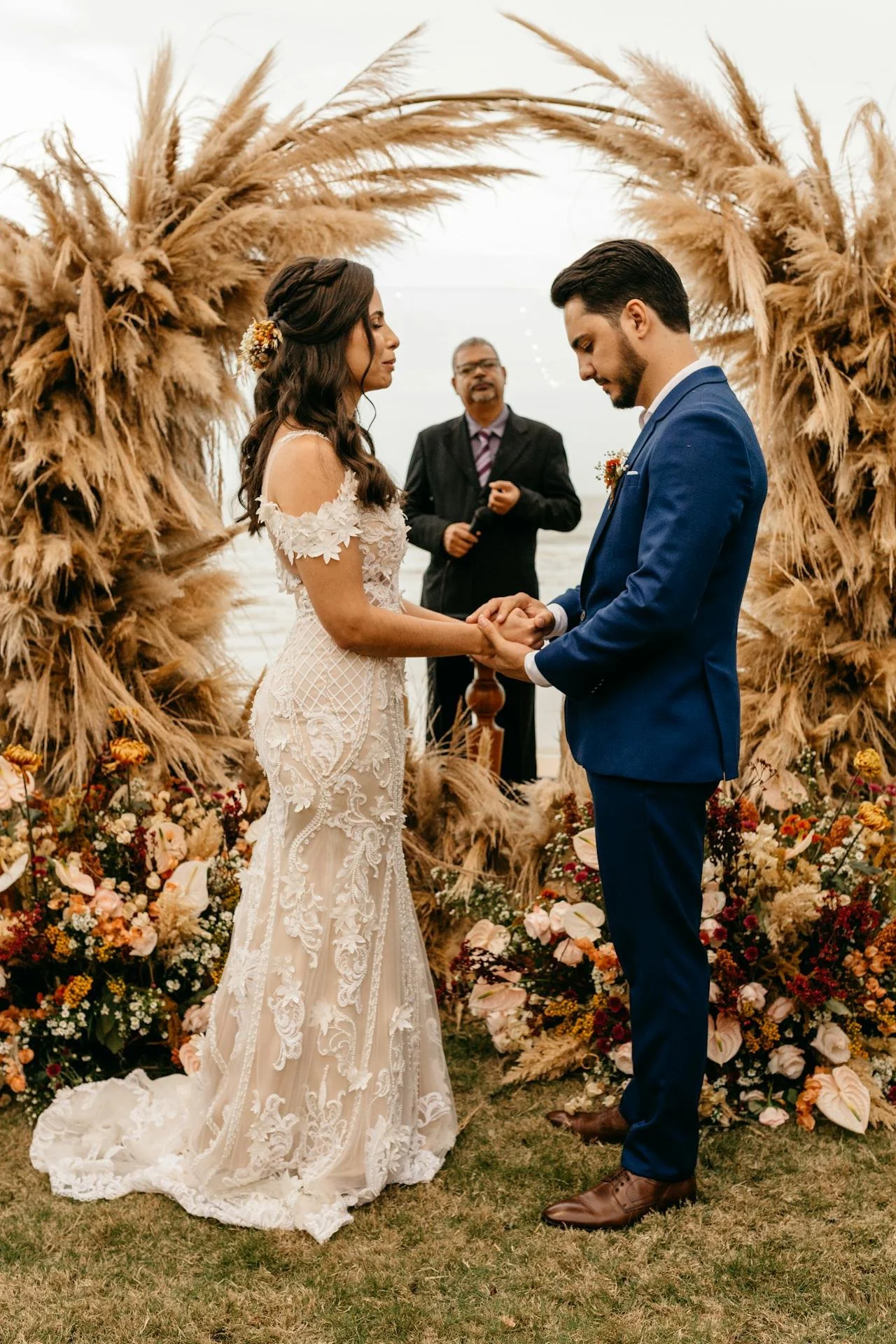
Common Wedding Ceremony Planning Challenges and How to Overcome Them (Expert Guide for Couples)
Summary
Planning your wedding ceremony shouldn’t be overwhelming. Discover the most common challenges couples face—from timing and vendor coordination to personalization and nerves—and learn practical, expert-verified strategies to overcome them for a beautiful, stress-managed wedding ceremony your guests will remember.
Frequently Asked Questions
What is the biggest challenge in planning a wedding ceremony?
Many couples find creating a timeline that balances all ceremony components and transitions to be the most challenging part of planning.How can we personalize our wedding ceremony without overwhelming guests?
Choose a few meaningful elements, like custom vows or a symbolic ritual, and lean on your officiant for structure and pacing.What should be included in a wedding ceremony checklist?
Key items include ceremony timeline, procession order, readings/rituals, officiant contact, microphones/music cues, and vendor arrival windows.How far in advance should vendors receive the ceremony timeline?
Ideally, vendors should receive the agenda 1–2 weeks before the wedding and be given a copy during the rehearsal.How do we manage family expectations during planning?
Communicate decisions early, clarify your priorities, and seek help from your officiant or planner to mediate difficult conversations.
Key Topics
wedding ceremony planning challenges
how to plan a wedding ceremony
wedding ceremony timeline tips
wedding officiant planning advice
common wedding ceremony problems and solutions
how to personalize your wedding ceremony
wedding ceremony vendor coordination tips
wedding ceremony stress management
wedding ceremony planning checklist
Denver wedding ceremony planning
Colorado wedding officiant tips
wedding ceremony planning advice for couples
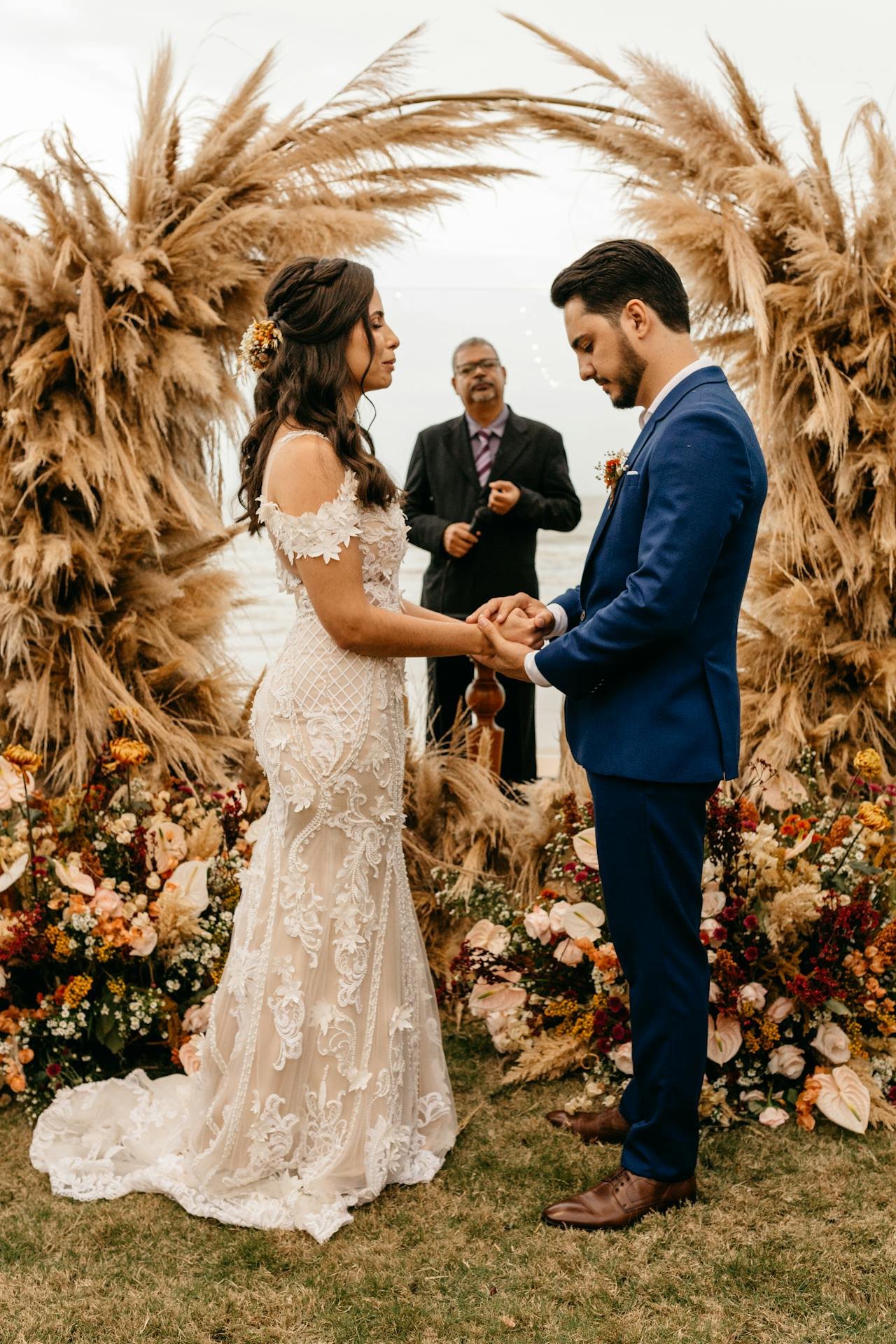
Wedding Planning Challenges / Photo: Jonathan Borba
Wedding Ceremony Planning Challenges and How to Overcome Them
Planning a wedding ceremony is one of the most meaningful parts of your wedding journey, but it can also bring unexpected stress, tough decisions, and logistical hurdles. Whether you’re just beginning to plan or are deep in the details, this guide will help you identify common ceremony planning challenges—and provide actionable solutions so your special moment feels seamless and joyful.
1. Setting the Right Ceremony Timeline
One of the most persistent planning challenges is building a timeline that balances ceremony flow, photography, travel time, and guest comfort.
Challenges
Coordinating multiple events in a limited window (processional, vows, rituals, recessional).
Accounting for light, weather, and venue restrictions.
Solutions
Start with an ideal wedding ceremony duration (typically 20–30 minutes).
Work backward from your reception start to build a clear flow.
Discuss lighting and space with your wedding officiant and photographer before setting a start time.
Outcome: A confident timeline that reduces day-of stress and avoids rushed moments.
2. Personalization Without Overwhelm
Couples often want their ceremony to reflect their personalities but struggle to make choices among readings, rituals, and script elements.
Challenges
Over-abundance of options for rituals (unity ceremonies, cultural traditions, vow formats).
Fear of offending guests versus authentic expression.
Solutions
Prioritize a few meaningful elements rather than many superficial ones.
Use your wedding officiant’s experience to refine readings and rituals that resonate with your story.
Create custom vows that reflect your relationship without forcing formality.
Outcome: A ceremony that feels uniquely yours and memorable for guests.
3. Vendor Communication and Coordination
Wedding vendors are crucial to supporting a smooth ceremony, but poor communication can lead to timing conflicts or unmet expectations.
Challenges
Misaligned expectations between the wedding officiant, florist, photographer, and venue staff.
Timing confusion for music cues and processional cues.
Solutions
Use a centralized wedding ceremony agenda shared with all key vendors.
Attend at least one pre-wedding walkthrough (virtual or in person).
Assign a coordinator or trusted friend as a day-of point person.
Outcome: Seamless coordination to keep your wedding ceremony on time.
4. Managing Nerves and Family Expectations
Emotional stress and family dynamics can create pressure on the big day, hindering your ability to enjoy the moment.
Challenges
Performance anxiety about speaking or walking down the aisle.
Conflicting opinions from the family about the wedding ceremony content.
Solutions
Practice ceremony components (like your vows or processional cues) in advance.
Set boundaries early—your wedding ceremony is about you, not others’ preferences.
Rely on your wedding officiant to guide difficult conversations and offer neutral phrasing.
Outcome: A calm, confident experience with clear emotional support.
5. Budget Constraints vs. Wedding Ceremony Priorities
Budget decisions often prioritize reception details, leaving the wedding ceremony feeling underplanned or under-resourced.
Challenges
Pressure to allocate funds to décor, music, or flowers.
Feeling like ceremony costs are “less important.”
Solutions
Decide on your top three wedding ceremony priorities (e.g., officiant experience, music, décor) early in the planning process.
Repurpose décor or florals from the wedding ceremony to the reception.
Keep your wedding ceremony space impactful with simple design choices that fit your budget.
Outcome: A wedding ceremony that feels intentional and beautiful without overspending.
Your Wedding Ceremony, Your Story
No two weddings are alike, and every couple will encounter their own unique challenges. What unites the best ceremonies is thoughtful preparation, intentional decision-making, and clear communication with your officiant and wedding team.
If you ever feel stuck, know that support is available—your wedding officiant, planner, and vendor team want your ceremony to be meaningful and stress-free.
About the Author: Michael Moody, Wedding Officiant
Michael Moody is a Colorado wedding officiant serving Denver, Boulder, Golden, Larkspur, and mountain communities throughout the state. Since 2012, he has officiated more than 300 weddings, bringing a calm presence, thoughtful guidance, and emotionally grounded ceremony writing to couples seeking a meaningful experience. He also offers Colorado elopement ceremonies for couples who want something intimate, intentional, and beyond the boundaries of a traditional wedding day. His work is shaped by a lifelong interest in connection, reflection, and personal growth. Michael is the author of the self-improvement book Redefine Yourself: The Simple Guide to Happiness and host of The Elements of Being podcast. As a wedding officiant, he draws from that same foundation: the belief that our relationships, words, and everyday interactions help shape a life rooted in love, empathy, and purpose. Michael’s ceremony work has been recognized across Colorado. He is a 2023 WeddingWire Couples’ Choice Award winner in Denver, marking his eighth consecutive year receiving the honor. He was also named “Best Business of 2024, 2025, and 2026” by Three Best Rated and earned “The Best Wedding Officiant in Commerce City, Colorado for 2024” from Quality Business Awards USA.
Beyond weddings, Michael and his wife, Sammy, have sponsored an annual student scholarship for more than 10 years. They also founded Civic Growth Alliance, a 501(c)(4) nonprofit dedicated to strengthening communities through civic advocacy, resident engagement, strategic partnerships, public safety initiatives, neighborhood vitality, and community well-being.
Wedding locations: Michael officiates wedding ceremonies in the Denver neighborhoods of LoDo, River North, Washington Park, Cherry Creek, City Park, Central Park, Capitol Hill, Cheesman Park, Park Hill, Lower Highlands, and Sloan Lake. Michael also serves as an ordained minister in Larkspur, Littleton, Golden, Boulder, Breckenridge, Frisco, Aspen, Vail, Estes Park, and more. If your Denver neighborhood or Colorado town isn’t listed here, no worries! Please contact Michael to propose a wedding ceremony location in a different area!
Wedding Planning Tips
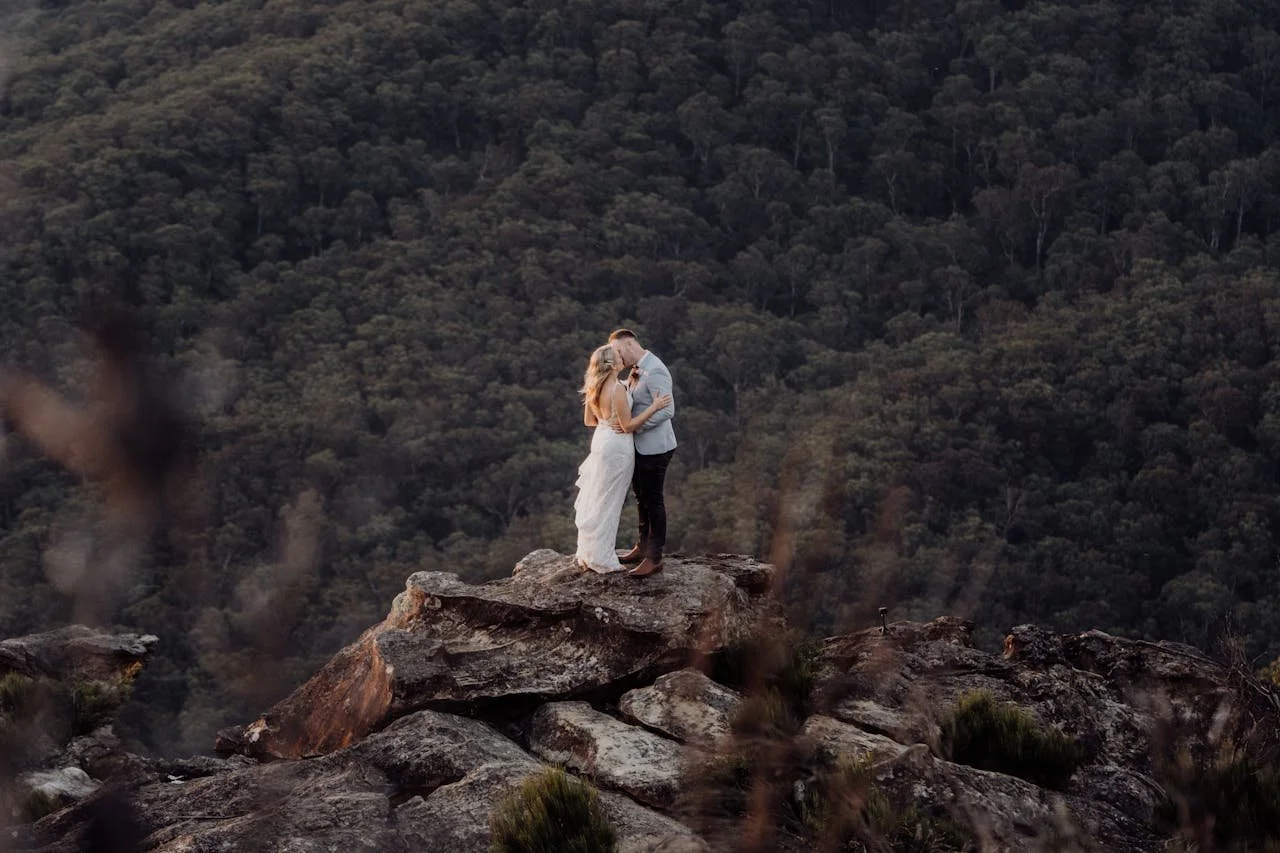
Colorado Front Range Elopement Guide: Hiking-In Wedding Ceremonies and Scenic Trails
Summary
Plan a Colorado Front Range elopement with a hiking-in ceremony on trails like Mount Bierstadt or Twin Cones via Second Creek. Learn about permits, marriage licenses, gear, and timelines for 1–5 mile hikes with a non-religious Colorado wedding officiant guiding your mountain vows.
Frequently Asked Questions
How do we legally elope in Colorado on the Front Range?
You will need a Colorado marriage license from any county clerk, valid statewide. Colorado allows self-solemnization, but you can also hire a professional officiant to lead your ceremony and handle logistics on the trail.Do we need a permit for our Colorado Front Range elopement?
Many parks require a special use or wedding permit and sometimes a separate photography permit. Requirements vary by location, group size, and whether you are on national park, state park, or national forest land.How hard are hikes like Mount Bierstadt or Twin Cones for an elopement?
Mount Bierstadt is a challenging 14er at roughly 7+ miles and 2,700–2,800 feet of gain, while Twin Cones via Second Creek is about 5+ miles with 1,400–1,500 feet of gain and rated moderate. Your location should match your group’s fitness and altitude comfort.What should we wear for a hiking elopement ceremony?
Most couples hike in comfortable layers and boots, then change into wedding attire at the ceremony spot. Plan for moisture-wicking base layers, a warm mid-layer, a shell, and accessories like gloves and a beanie, even in summer.Can we bring guests to a hiking-in Front Range elopement?
Yes, as long as the trail and permits allow. Smaller groups (often under 10–15 people) are usually best for 1–5 mile hikes at altitude. Your officiant can help you select trails and timing that work with your guest list.What happens if the weather is bad on our elopement day?
We will design backup plans—such as lower-elevation trail options, alternative overlooks, or flexible timing—to keep you safe while still giving you a meaningful ceremony.
Key Topics
Colorado Front Range elopement
Colorado hiking elopement
Colorado mountain elopement officiant
Front Range elopement guide
Colorado hiking-in wedding ceremony
Mount Bierstadt elopement
Twin Cones Second Creek Trail elopement
Colorado adventure elopement officiant
Non-religious Colorado wedding officiant
Denver mountain elopement
Colorado elopement permits and licenses
Small hiking wedding Colorado
Sunrise elopement Colorado Front Range
Scenic trail elopement Colorado
Colorado alpine wedding ceremony
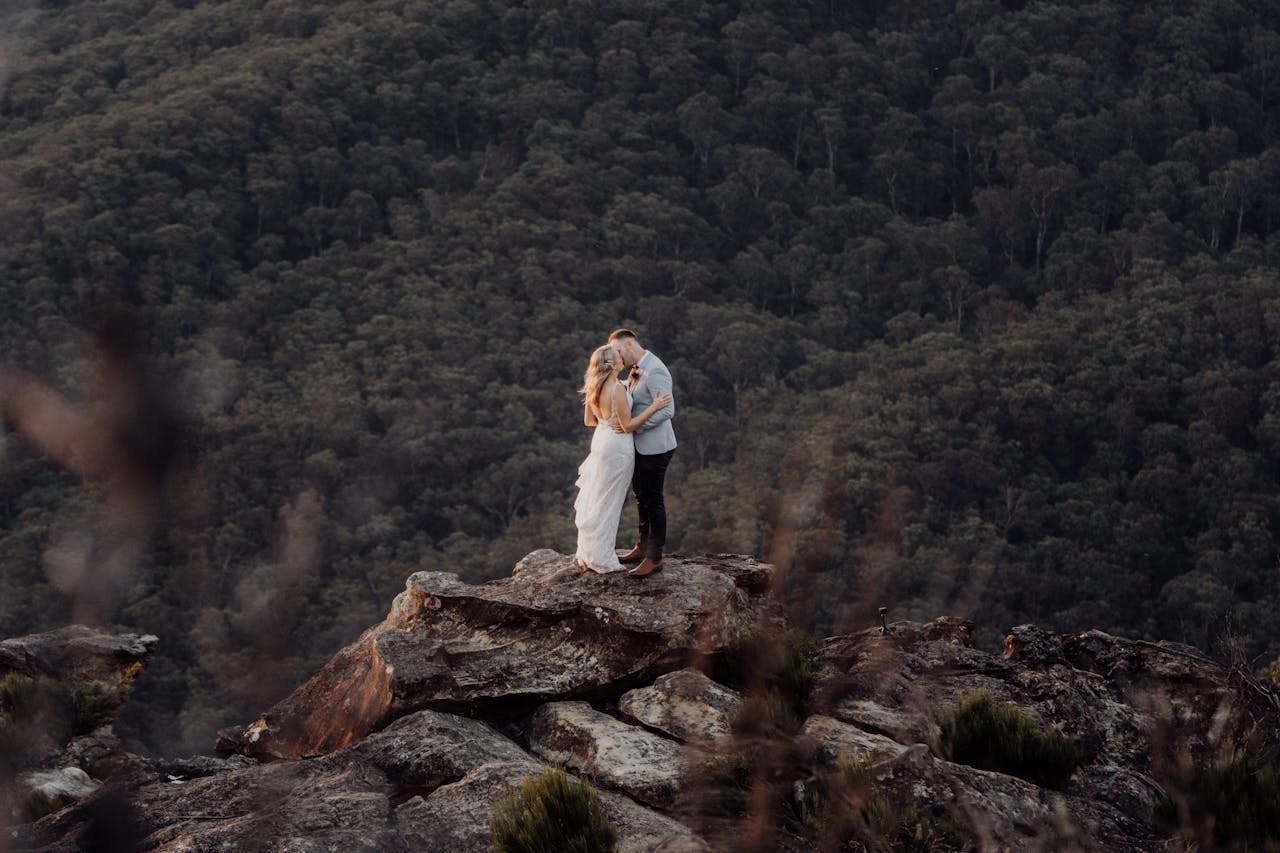
Elopement Wedding Colorado / Photo: Josh Withers
Colorado Front Range Elopement Guide: Hiking-In Wedding Ceremonies
If your dream wedding looks more like hiking boots at sunrise than ballrooms and buffets, the Colorado Front Range is made for you. From drive-up overlooks to 5-mile alpine hikes, you can say your vows above treeline with sweeping views and still be back in time for a celebratory dinner in town.
This guide walks you through planning a Front Range elopement—especially if you are hiking 1–5 miles to a scenic ceremony spot—with real-world examples like Mount Bierstadt and the Twin Cones via the Second Creek Trail. Not sure of a trail? Michael has completed over 129 hikes (all different routes) since February of 2022, including 15-14ers, 19-13ers, and 5-12ers. He will find the perfect scenic location for you!
Why Elope in the Colorado Front Range?
The “Front Range” is the dramatic mountain wall you see rising west of Denver, Boulder, and Colorado Springs. It is ideal for elopements because:
Easy access from major airports (DEN) and cities
Huge variety of landscapes—alpine tundra, evergreen forests, lakes, and rocky overlooks
Year-round options, from wildflower season to snowy winter elopements
Many couples still choose a professional wedding officiant to craft a meaningful, structured ceremony and manage the logistics on the trail.
Choosing Your Front Range Elopement Style
Think first about how much hiking (and adventure) you want baked into your day.
1. Drive-Up or Short Walk Ceremonies (0–1 mile)
Scenic passes and overlooks with minimal hiking
Great for guests with mobility limitations, young kids, or formal attire
Often easier for permitting and timing
2. Short to Moderate Hikes (1–3 miles round-trip)
Perfect “sweet spot” for many couples: enough effort to feel like an adventure, but still accessible to friends and family with moderate fitness
Ideal for sunrise or sunset lighting
Often through forests to an overlook, lake, or meadow
3. Bigger Hikes (3–5 miles round-trip)
More solitude and grander views
Best for small groups (or just the two of you) who are comfortable at altitude and have some hiking experience
4. High-Commitment Objectives (Like Mount Bierstadt, a 14er)
Mount Bierstadt via the popular West Slopes route is roughly 7–7.8 miles round-trip, with about 2,700–2,850 feet of elevation gain and a challenging effort that typically takes 5–7 hours.
This is a true “all-day” elopement, best for small groups who already hike at altitude.
What You Need to Know About Permits and Legalities
Marriage License and Legal Requirements
You can obtain your marriage license from any Colorado county clerk and use it anywhere in the state.
Expect a small fee and to bring valid ID; there is typically no waiting period, and licenses are usually valid for about a month.
Land Use and Ceremony Permits
Rules change by location, but in many parks, you may need:
A special-use or wedding ceremony permit.
A separate photography permit is required for professional photographers in national parks and some state or local parks.
Typically, a permit isn’t needed on standard trails, though.
As your wedding officiant, Michael will help you:
Identify whether a permit is needed for your chosen spot
Navigate the application process and timelines
Choose ceremony locations that fit your group size and leave minimal impact
Hiking-In Elopements: What 1–5 Miles Really Looks Like
If you envision hiking to your ceremony, here’s what to expect and what you will need.
Assessing Difficulty and Fitness
At altitude, even “short” hikes can feel intense.
Twin Cones via Second Creek Trail is about 5.2–5.4 miles round-trip with roughly 1,450–1,500 feet of elevation gain, rated moderate and starting around 10,500 feet.
The first mile climbs steeply—about 800 feet of gain—so planning for breaks and pacing is essential.
For couples and guests, Michael likes to:
Build in extra time for slower hikers
Discuss training walks or hikes leading up to the elopement
Plan for acclimatization if you are flying in from sea level
Season, Weather, and Timing
Best months for higher-elevation Front Range hikes: roughly July–September (depending on snowpack)
Summer afternoons often bring thunderstorms; sunrise or early-morning starts are usually safer on high ridges and summits.
Shoulder seasons (late spring, late fall) can mean snow patches, icy sections, or access issues on mountain passes.
Michael will help you choose a time of day and date that balances lighting, trail conditions, and your comfort with cold or heat.
Gear Checklist for a Hiking Elopement
For couples and guests:
Sturdy hiking shoes or boots with good traction
Layers (base layer, warm mid-layer, waterproof shell)
Warm accessories: beanie, gloves, extra socks—yes, even in summer
Water (at least 1–2 liters per person, more on longer hikes)
Snacks and/or picnic items
Headlamp with fresh batteries for sunrise or sunset
Small backpack (it is okay if you hike in hiking clothes and change at the top)
For the wedding ceremony:
Compact bouquet or boutonniere in a protective wrap
Vow books and rings are stored in a secure pouch
Lightweight blanket or shawl if it is chilly
A compact audio setup, if we are using music or a small speaker
High-altitude elopements are unforgettable—but the environment and the risks must be kept in mind.
As your wedding officiant, Michael will help you:
Choose backup locations in case of weather or trail closures
Plan for realistic turnaround times (especially on bigger hikes like Bierstadt)
Follow Leave No Trace principles—staying on the trail, packing out everything we pack in, and keeping the fragile tundra safe
Colorado Wedding Ceremony
Real Front Range Hike Ideas for Your Colorado Elopement
Mount Bierstadt (14,000+ ft Summit)
Best for: Very small groups, “just us” elopements, experienced hikers
Distance: Around 7–7.8 miles round-trip; elevation gain ~2,700–2,850 feet; difficulty: challenging
Vibe: Iconic 14er experience with panoramic views and a great sense of achievement
Considerations: Early start (often pre-dawn), strong fitness, acclimatization, and flexible expectations if the weather moves in
Twin Cones via Second Creek Trail
Best for: Couples or small groups wanting an alpine feel with a moderate effort
Distance: Roughly 5.2–5.4 miles round-trip; elevation gain about 1,450–1,500 feet; difficulty: moderate
Highlights: Forested start, Broome Hut, creek crossings, wildflowers, and open tundra with expansive views of Berthoud Pass
Considerations: Steep first mile, high-elevation starting point, rapidly changing weather. Don’t want to hike to the top of this 12er? Michael has an incredible spot, only a mile hike in.
Shorter Front Range Trails (1–3 Miles)
If your ideal day is a gentle hike plus a relaxed celebration in town, there are many shorter options near:
Boulder, Golden, Evergreen, and Idaho Springs
Trailheads with amazing views are only 1–1.5 miles from the car
Options for sunrise, sunset, or even weekday mid-morning ceremonies to avoid crowds
How a Wedding Officiant Fits Into a Hiking Elopement
Even in a state that allows self-solemnization, having an officiant join you on your hike can take the stress off your shoulders.
As your Colorado Front Range wedding officiant, Michael:
Helps you choose a fitting location based on your story, group size, and hiking comfort
Coordinates timing so we reach the ceremony spot with good light and without rushing
Designs a custom, non-religious wedding ceremony that feels intimate and personal—whether it is just the two of you or a small group of friends
Manages logistics on trail—from pacing to small route decisions—so you can stay present with each other
Guides the legal process, from confirming license details to making sure everything is signed correctly after your vows
When to Plan Your Colorado Front Range Elopement
Summer (July–August): Wildflowers and long daylight; higher risk of afternoon storms
Early Fall (September–early October): Crisp air, more stable weather, and golden aspens at lower elevations
Late Fall–Spring: Possible snow, microspikes or snowshoes may be needed, but you can have incredibly quiet trails and dramatic snowy backdrops
For higher-elevation trails like Bierstadt or Twin Cones, summer through early fall is typically the safest window, depending on yearly snowpack.
Travel and Lodging Tips for Out-of-Town Couples
Fly into Denver International Airport (DEN) and plan at least one night in Denver, Boulder, or Golden before heading to higher elevations to acclimate.
Choose lodging close to your trailhead (e.g., Georgetown, Idaho Springs, Winter Park, or the west side of the Front Range) to shorten your drive the morning of the hike.
Consider booking a rental house or boutique hotel where you can get ready and host a small post-hike celebration.
Sample Half-Day Hiking Elopement Timeline (3–5 Mile Hike)
7:30 am – Meet at the trailhead, quick gear check, and itinerary review
8:00 am–9:15 am – Hike to ceremony location with breaks and photos along the way
9:15–10:00 am – Sunlit ceremony with a mountain range backdrop, vows, ring exchange, photos
10:00–11:00 am – Champagne toast, picnic lunch, portraits
11:00–12:15 pm – Hike back to the trailhead
Early afternoon – Brunch, spa, or mini-reception in town
Every timeline is customizable to your trail, season, and vision.
Ready to Plan Your Colorado Front Range Elopement?
Whether you are dreaming of a 14er summit, a moderate alpine hike like Twin Cones, or a gentle forest trail with big views, the Colorado Front Range offers endless elopement possibilities.
On Michael’s wedding officiant website, you will find non-religious, personalized ceremonies that blend calm guidance with a sense of adventure. If you are ready to start planning—or just exploring whether a hiking-in ceremony is right for you—Michael is happy to help you design a day that feels like you.
About the Author: Michael Moody, Wedding Officiant
Michael Moody is a Colorado wedding officiant serving Denver, Boulder, Golden, Larkspur, and mountain communities throughout the state. Since 2012, he has officiated more than 300 weddings, bringing a calm presence, thoughtful guidance, and emotionally grounded ceremony writing to couples seeking a meaningful experience. He also offers Colorado elopement ceremonies for couples who want something intimate, intentional, and beyond the boundaries of a traditional wedding day. His work is shaped by a lifelong interest in connection, reflection, and personal growth. Michael is the author of the self-improvement book Redefine Yourself: The Simple Guide to Happiness and host of The Elements of Being podcast. As a wedding officiant, he draws from that same foundation: the belief that our relationships, words, and everyday interactions help shape a life rooted in love, empathy, and purpose. Michael’s ceremony work has been recognized across Colorado. He is a 2023 WeddingWire Couples’ Choice Award winner in Denver, marking his eighth consecutive year receiving the honor. He was also named “Best Business of 2024, 2025, and 2026” by Three Best Rated and earned “The Best Wedding Officiant in Commerce City, Colorado for 2024” from Quality Business Awards USA.
Beyond weddings, Michael and his wife, Sammy, have sponsored an annual student scholarship for more than 10 years. They also founded Civic Growth Alliance, a 501(c)(4) nonprofit dedicated to strengthening communities through civic advocacy, resident engagement, strategic partnerships, public safety initiatives, neighborhood vitality, and community well-being.
Wedding locations: Michael officiates wedding ceremonies in the Denver neighborhoods of LoDo, River North, Washington Park, Cherry Creek, City Park, Central Park, Capitol Hill, Cheesman Park, Park Hill, Lower Highlands, and Sloan Lake. Michael also serves as an ordained minister in Larkspur, Littleton, Golden, Boulder, Breckenridge, Frisco, Aspen, Vail, Estes Park, and more. If your Denver neighborhood or Colorado town isn’t listed here, no worries! Please contact Michael to propose a wedding ceremony location in a different area!
Wedding Planning Tips

Summer Wedding Guide for Larkspur, Colorado: Venues, Travel, and Planning Tips
Summary
Planning a summer wedding in Larkspur, Colorado? Explore top ranch and country club venues within 10 miles, travel and lodging tips for out-of-town guests, marriage license steps, timelines, and day-of strategies for Colorado’s warm, low-humidity summers. Get photo-ready golden-hour ideas and venue questions to ask.
Frequently Asked Questions
How far is Larkspur from Denver International Airport?
About 55–60 minutes by car, depending on traffic and route.
What are the key marriage license rules for Larkspur weddings?
Use the Douglas County Recording office; Colorado permits self-solemnization and does not require witnesses. Start online, finalize in person.
What time should a summer ceremony start?
After 5:00 p.m. to avoid peak heat and to capture better light, keep a covered backup space for pop-up showers (common but brief in summer).
Which Larkspur venues are closest?
Spruce Mountain Ranch, Crooked Willow Farms, Flying Horse Ranch, Perry Park Country Club, and Bear Dance (for events). All are in or immediately around Larkspur.
Is altitude an issue for guests?
Plan hydration and shade at ≈6,700–6,800 ft. Provide water and sunscreen, and advise guests to pace their alcohol.
Key Topics
Larkspur Colorado wedding
Larkspur wedding venues
summer wedding Larkspur
Spruce Mountain Ranch wedding
Crooked Willow Farms wedding
Perry Park Country Club wedding
Flying Horse Ranch wedding
Bear Dance Events Larkspur
Colorado ranch wedding
Denver to Larkspur wedding
Douglas County marriage license
Larkspur wedding planning
front range wedding venues
Colorado outdoor wedding
summer wedding timeline Colorado

Larkspur Wedding / Photo: Sandro Crepulja
Planning a Summer Wedding Ceremony in Larkspur, Colorado
Larkspur delivers Front Range scenery without the crowds—think rolling ranchland, Ponderosa pine, and wide-open skies. Summer brings warm days, cool evenings, and those painterly Colorado sunsets that make golden-hour photos pop.
Why Larkspur Works for Summer “I Do’s”
Iconic ranch and farm settings with polished amenities, reliable rain plans, and on-site suites.
Easy access from Denver and Colorado Springs, with flexible planning help from a local Denver wedding officiant.
Comfortable summer climate and big-sky sunsets—add shade, hydration, and a smart timeline.
Best Months and Day-Of Timing
Late June–early September is the peak green and flower-rich period.
Schedule ceremonies after 5:00 p.m. for softer light and cooler temps; keep a shade plan for mid-afternoon portraits. See the full rehearsal flow in the Wedding Rehearsal Checklist.
Ceremony and Reception Ideas for a Larkspur Wedding Ceremony
Ranch-chic with elevation-friendly florals (yarrow, roses, eucalyptus).
Alfresco cocktail hour with lawn games; pivot to barn or lodge interiors if storms pop up.
Personalize your script with the Examples of Wedding Ceremony Readings and Examples of Wedding Vows.
Venues Within ~10 Miles of Larkspur
All of these are in Larkspur proper (or immediate surrounds), keeping guest transit minimal:
Spruce Mountain Ranch — Multiple ceremony sites, manicured grounds, excellent indoor options.
Crooked Willow Farms — 90-acre property with pond backdrops and refined barns.
Flying Horse Ranch — Classic ranch house plus barn with sweeping meadows.
Perry Park Country Club — Lakeside ceremony lawn and red-rock vistas.
The Golf Club at Bear Dance (events) — Scenic foothills setting; confirm current wedding policies.
Tip: Ask each venue for power access maps, shade options, and lightning protocols for summer afternoons. For broader ideas beyond Larkspur, browse the Wedding Ceremony Venues in Denver.
Out-of-Town Couples: Practical Guide
Airports:
DEN and COS are the closest major airports; drive times are typically under an hour, depending on the route.
Where to Stay:
Nearby Castle Rock (north) and Monument (south) have branded hotels and vacation rentals. Ask venues for preferred lists and shuttle partners.
Getting Around:
Rideshare can be spotty late night—reserve charter shuttles or sprinter vans for hotel blocks and ranch venues.
Marriage License:
Colorado is famously flexible. Review statewide steps and self-solemnization details in Preparing for Your Wedding Ceremony in Colorado (see the section on license logistics):
→Colorado Wedding Ceremony Guide
Altitude and Comfort:
Provide water, sunscreen, and shade fans. Remind guests to pace alcohol and wear breathable fabrics.
Sample Summer Wedding Timeline (5:00–10:00 p.m.)
2:30 p.m. Getting ready and details
4:30 p.m. First look and wedding party portraits (backup: covered porch or interior)
5:30 p.m. Ceremony
6:00 p.m. Golden-hour photos; guests to cocktails
7:00 p.m. Dinner and toasts
8:30 p.m. First dances and open dance floor
10:00 p.m. Sparkler-style exit or last-song crescendo
Preferred Vendor Shortlist (What to Ask For)
Planner/Coordinator: day-of timeline, rain plan, and shuttle choreography
Photo/Video: golden-hour plan, storm pivot plan
Catering: hydration station, mocktail coolers, and late-night bites
Music: outdoor sound coverage and wind-screened mics for vows
About the Author: Michael Moody, Wedding Officiant
Michael Moody is a Colorado wedding officiant serving Denver, Boulder, Golden, Larkspur, and mountain communities throughout the state. Since 2012, he has officiated more than 300 weddings, bringing a calm presence, thoughtful guidance, and emotionally grounded ceremony writing to couples seeking a meaningful experience. He also offers Colorado elopement ceremonies for couples who want something intimate, intentional, and beyond the boundaries of a traditional wedding day. His work is shaped by a lifelong interest in connection, reflection, and personal growth. Michael is the author of the self-improvement book Redefine Yourself: The Simple Guide to Happiness and host of The Elements of Being podcast. As a wedding officiant, he draws from that same foundation: the belief that our relationships, words, and everyday interactions help shape a life rooted in love, empathy, and purpose. Michael’s ceremony work has been recognized across Colorado. He is a 2023 WeddingWire Couples’ Choice Award winner in Denver, marking his eighth consecutive year receiving the honor. He was also named “Best Business of 2024, 2025, and 2026” by Three Best Rated and earned “The Best Wedding Officiant in Commerce City, Colorado for 2024” from Quality Business Awards USA.
Beyond weddings, Michael and his wife, Sammy, have sponsored an annual student scholarship for more than 10 years. They also founded Civic Growth Alliance, a 501(c)(4) nonprofit dedicated to strengthening communities through civic advocacy, resident engagement, strategic partnerships, public safety initiatives, neighborhood vitality, and community well-being.
Wedding locations: Michael officiates wedding ceremonies in the Denver neighborhoods of LoDo, River North, Washington Park, Cherry Creek, City Park, Central Park, Capitol Hill, Cheesman Park, Park Hill, Lower Highlands, and Sloan Lake. Michael also serves as an ordained minister in Larkspur, Littleton, Golden, Boulder, Breckenridge, Frisco, Aspen, Vail, Estes Park, and more. If your Denver neighborhood or Colorado town isn’t listed here, no worries! Please contact Michael to propose a wedding ceremony location in a different area!
Wedding Planning Tips

Spring Wedding Guide for Golden, Colorado: Venues, Permits, and Planning Tips
Summary
Plan a spring wedding in Golden, Colorado, with this guide to venues, permits, weather, and guest logistics. Explore Clear Creek and Lookout Mountain locations, a rehearsal-ready timeline, and an out-of-town couples section for hotels, transit, and weekend ideas—personalized, inclusive ceremonies by Denver and Golden wedding officiant Michael Moody.
Key Topics
Golden Colorado wedding
Golden wedding officiant
wedding officiant Golden, CO
Golden Colorado elopement
spring wedding Golden Colorado
Golden, Colorado wedding venues
Lookout Mountain wedding
Boettcher Mansion wedding
non-religious wedding officiant Golden
same-sex wedding officiant Golden
Inclusive wedding officiant Golden
Denver and Golden wedding officiant
personalized wedding ceremony Golden
elopement officiant Golden CO
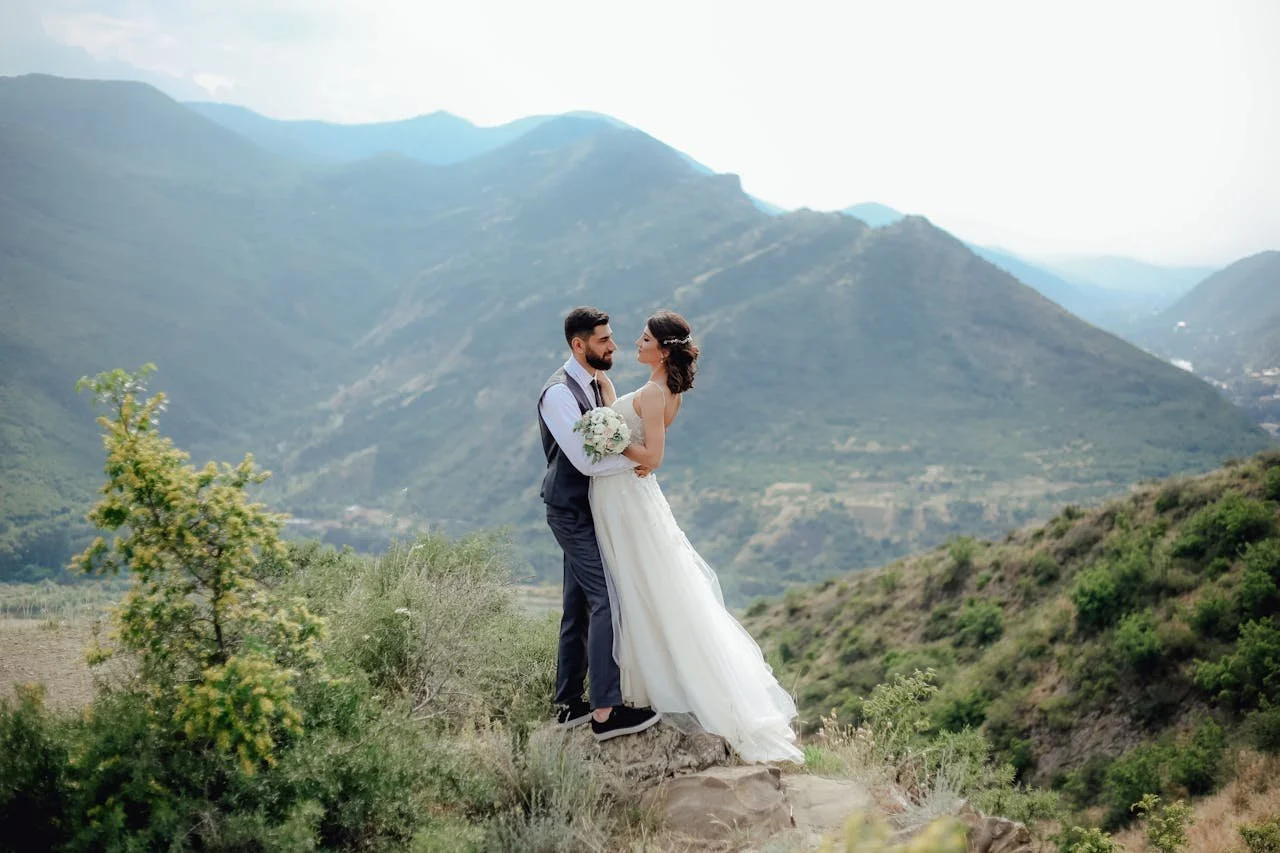
Golden Wedding Ceremonies / Photo: Photography Maghradze PH
Why Choose Golden in Spring
Golden blends small-town charm with dramatic foothills scenery—perfect for intimate creekside vows or elegant mountain-view venues. Spring brings wildflowers along Clear Creek, milder temps than the high country, and earlier venue availability before peak summer.
Ideal Timing and Weather Tips
Best windows: Late April to late May for greener foliage and longer light.
Temperature range: Cool mornings, mild afternoons, crisp evenings—plan layers for you and guests.
Sunset portraits: Aim for ceremonies 2–3 hours before sunset for soft light along Clear Creek or on Lookout Mountain.
Backup plan: Spring showers happen—confirm an indoor space or tent option and include clear umbrellas in your kit.
Golden Ceremony Locations to Consider
(Confirm permits and rules with each site/venue.)
Clear Creek Path and Golden History Park: Creekside ambiance, cottonwoods, and rustic cabins for photos.
Boettcher Mansion (Lookout Mountain): Arts and Crafts elegance with sweeping views and indoor/outdoor flow.
Mount Galbraith and North Table Mountain trailheads (photo spots): Iconic mesa backdrops—great for first looks or portraits.
Downtown Golden patios and courtyards: Walkable, guest-friendly settings steps from lodging and dining.
Guest Experience: Parking, Transit, and Ease
Walkable core: Many ceremony and photo locations sit within a short walk of hotels and restaurants.
Parking: Use municipal lots and garages near Washington Ave.; add a parking map to your invites.
Shuttles and rideshare: Provide a shuttle from hotel blocks or share a rideshare drop-off pin to avoid venue congestion.
Permits, Noise, and Local Etiquette
Public spaces: Creekside and park areas may require permits and time windows—apply early in spring.
Noise and curfews: Some outdoor sites cap amplified sound or set evening cutoffs—confirm before booking.
Leave No Trace: Stay on paths, avoid wildflower trampling, and pack out décor.
Legal Requirements (Marriage License)
Where: Jefferson County Clerk and Recorder (Golden).
When: Pick up within 35 days of your ceremony (same-day service typically available).
Bring: Government IDs and payment; your officiant can provide a signing plan.
Spring-Smart Ceremony Design
Florals: Ranunculus, tulips, anemones, lilac, hellebore—pair with local greenery.
Palette: Soft meadow hues (sage, buttercream, blush, sky) or bold spring pops (citrine, fuchsia).
Attire: Light layers, fabric weights that move (crepe, chiffon), and block-heel or lug-sole shoes for creek paths.
Comfort kit: Shawls, lap blankets for evening, sunscreen, bug wipes for dusk by the creek.
Sample Golden Spring Timeline (Saturday)
1:00 PM Getting ready at the hotel in downtown Golden
3:00 PM First look at Clear Creek footbridge
3:45 PM Wedding party photos at Golden History Park
5:00 PM Creekside or courtyard ceremony
5:30 PM Champagne mingle and family photos
6:15 PM Golden hour portraits on Lookout Mountain
7:00 PM Dinner and toasts
9:30 PM Last dance and downtown after-party
Vendor and Logistics Checklist
Officiant: Collaborative script, personalized vows, and rehearsal leadership.
Photography and video: Build travel time between downtown and Lookout Mountain.
Music: Battery-powered speaker for outdoor spots; confirm power at parks.
Catering: Spring-forward menu (asparagus, citrus, local greens); hot beverage station for cool evenings.
Rentals: Clear tent, heaters, and wind-friendly décor options.
Signage: Wayfinding for guests, permit display if required.
For Out-of-Town Couples: Plan a Destination Golden Wedding
Getting here:
Fly into Denver International Airport (DIA), ~45–55 minutes by car.
Where to stay:
Downtown boutique hotels: Walk to ceremony sites, tasting rooms, and brunch spots.
Lookout Mountain lodges: Quiet settings and sunrise views for day-after photos.
What to do:
Hikes and views: North Table Mountain, Lookout Mountain, Mount Galbraith—easy access and iconic scenery.
Food and drink: Craft breweries, patios along Washington Ave., and local brunch staples.
Weekend flow tip: Keep everything within the Golden core to minimize driving and maximize time with guests.
Stroll Clear Creek: Paths, bridges, and spring blooms.
How Michael Will Personalize Your Golden Ceremony
As your wedding officiant, Michael will:
Learn your story and craft a ceremony that feels like you—warm, inclusive, and beautifully paced.
Coordinate with the photo, video, and venue teams to time your vows for the best lighting.
Guide rehearsals so everyone feels confident and present on the day.
About the Author: Michael Moody, Wedding Officiant
Michael Moody is a Colorado wedding officiant serving Denver, Boulder, Golden, Larkspur, and mountain communities throughout the state. Since 2012, he has officiated more than 300 weddings, bringing a calm presence, thoughtful guidance, and emotionally grounded ceremony writing to couples seeking a meaningful experience. He also offers Colorado elopement ceremonies for couples who want something intimate, intentional, and beyond the boundaries of a traditional wedding day. His work is shaped by a lifelong interest in connection, reflection, and personal growth. Michael is the author of the self-improvement book Redefine Yourself: The Simple Guide to Happiness and host of The Elements of Being podcast. As a wedding officiant, he draws from that same foundation: the belief that our relationships, words, and everyday interactions help shape a life rooted in love, empathy, and purpose. Michael’s ceremony work has been recognized across Colorado. He is a 2023 WeddingWire Couples’ Choice Award winner in Denver, marking his eighth consecutive year receiving the honor. He was also named “Best Business of 2024, 2025, and 2026” by Three Best Rated and earned “The Best Wedding Officiant in Commerce City, Colorado for 2024” from Quality Business Awards USA.
Beyond weddings, Michael and his wife, Sammy, have sponsored an annual student scholarship for more than 10 years. They also founded Civic Growth Alliance, a 501(c)(4) nonprofit dedicated to strengthening communities through civic advocacy, resident engagement, strategic partnerships, public safety initiatives, neighborhood vitality, and community well-being.
Wedding locations: Michael officiates wedding ceremonies in the Denver neighborhoods of LoDo, River North, Washington Park, Cherry Creek, City Park, Central Park, Capitol Hill, Cheesman Park, Park Hill, Lower Highlands, and Sloan Lake. Michael also serves as an ordained minister in Larkspur, Littleton, Golden, Boulder, Breckenridge, Frisco, Aspen, Vail, Estes Park, and more. If your Denver neighborhood or Colorado town isn’t listed here, no worries! Please contact Michael to propose a wedding ceremony location in a different area!
Wedding Planning Tips

Boulder Fall Wedding Guide: Venues, Permits, License, and Tips
Summary
Plan a stunning fall wedding in Boulder with expert tips on venues (Chautauqua, Flagstaff Mountain), permits, Boulder marriage license, and Colorado self-solemnization. Perfect for elopements and micro weddings, including advice for out-of-town couples, weather backups, and timing peak color with a local Boulder wedding officiant.
Key Topics
Boulder wedding officiant
Boulder Fall Wedding
Boulder wedding ceremony
Boulder elopement
Boulder micro wedding
chautauqua wedding
Flagstaff Mountain Wedding
colorado self-solemnization
Boulder marriage license
Boulder wedding venues
outdoor wedding boulder
fall wedding colorado
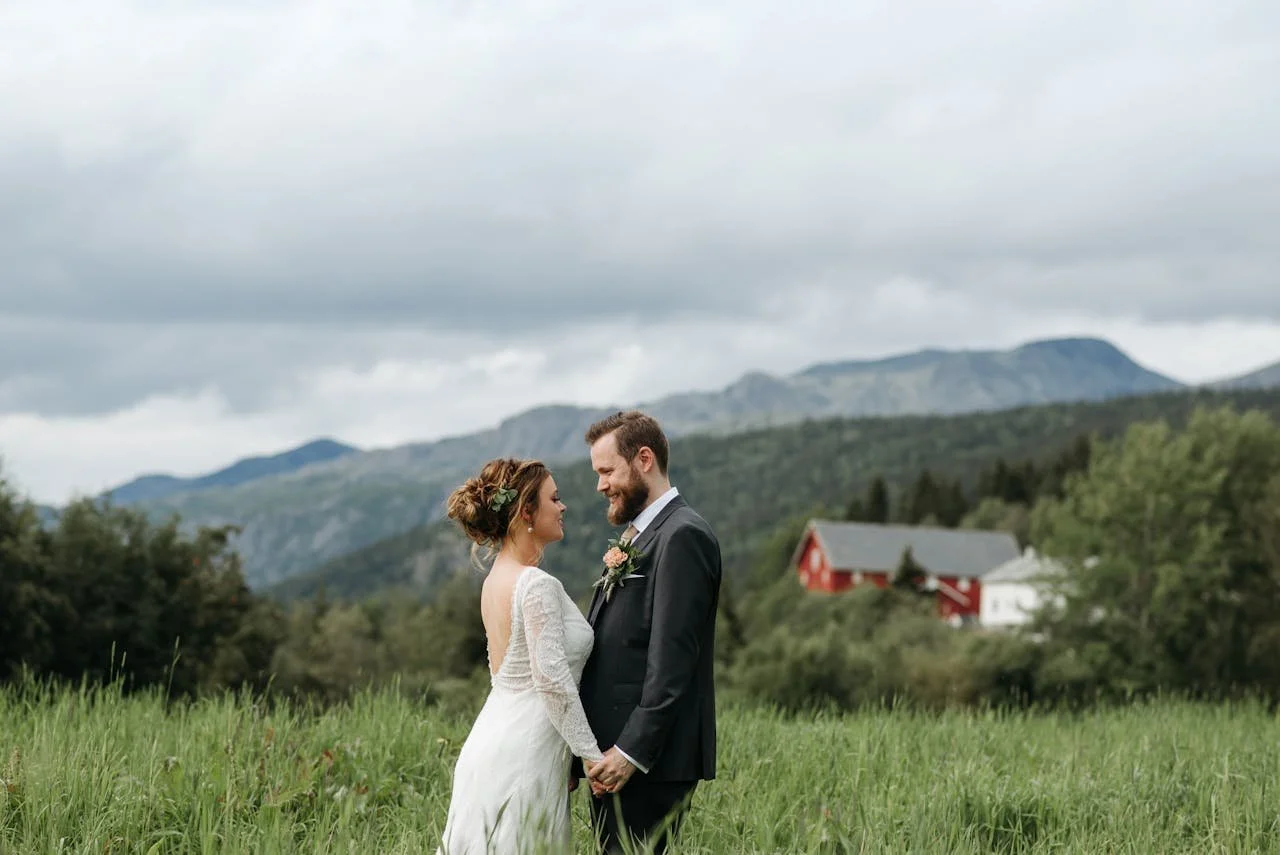
Wedding Officiant Colorado / Photo: Pavel Danilyuk
Introduction
Fall in Boulder is a showstopper—golden cottonwoods, glowing Flatirons, crisp air, and that signature Colorado blue sky. Whether you’re local or traveling in, this guide walks you through the essentials: locations, permits, weather prep, guest experience, and a step-by-step wedding day plan.
Key Takeaways
Peak color: Typically late September to mid-October, with variability by elevation—have a backup date or plan.
Permits vary by location: City parks, county open space, state parks, and Chautauqua each have different rules—secure yours early.
Colorado allows self-solemnization: You can marry yourselves; witnesses aren’t required (though many couples still include them).
Weather swings fast: Build a covered or indoor fallback and keep guests warm (layers, blankets, warm beverages).
Keep it walkable: If you’re staying near Pearl Street or Chautauqua, your ceremony, portraits, and dinner can be within walking distance.
Why Choose Boulder in the Fall
Boulder combines small-city charm with dramatic natural backdrops. In autumn, the Flatirons glow at golden hour, and creek corridors turn fiery yellow. You’ll also benefit from shoulder-season lodging rates (outside peak football/homecoming weekends) and an incredible farm-to-table dining scene for rehearsal dinners and micro-receptions.
Best Ceremony Settings (City & Nature)
Choose what fits your vision, guest count, and accessibility needs. (Confirm current availability and permit rules with each site.)
Iconic & Walkable
Chautauqua Green/Meadows: Views of the Flatirons, proximity to historic cottages, and the Dining Hall.
Central Park & Boulder Creek Path: Creekside ambiance with easy access to downtown/Pearl Street restaurants.
University Hill & Near-Campus Greens: Convenient for small gatherings and portraits.
Nature-Forward
Open Space & Mountain Parks (OSMP) trailheads and overlooks: Great for elopements and small groups; some areas limit group size and amplified sound.
Flagstaff Mountain overlooks: Sunset vistas and short walk-ups—parking is limited; carpooling is smart.
Nearby foothill parks and reservoir areas: Offer color, water, and space for small ceremonies.
Indoor/Hybrid (for weather peace of mind)
Historic venues and small lodges near Chautauqua or downtown that allow a brief outdoor vow exchange, followed by an immediate move inside for warmth, cocktails, or dinner.
Permits, Licenses, and Logistics
Ceremony location permits: Requirements differ across Boulder City Parks, OSMP, Flagstaff, and private venues. Confirm if you need a special event or small gathering permit, group size limits, parking, and any seasonal closures.
Marriage license: Issued by a Colorado county clerk (Boulder County is convenient). Bring a valid ID; witnesses are not required, and self-solemnization is allowed in Colorado.
Sound & music: Many outdoor spots restrict amplified sound—opt for acoustic or low-profile speakers where allowed.
Leave No Trace: Stay on durable surfaces, pack out décor, and respect seasonal wildlife closures.
Tip: Lock your permit + license first, then book vendors (officiant, photo, hair/makeup) and finalize your guest communications.
Weather & Light Strategy (Backup Plans Included)
Temperature swing: Mornings and evenings can be chilly; mid-day can still feel warm in the sun.
Wind & storms: Afternoon gusts are likely—secure florals and choose hairstyles that withstand movement.
Golden hour portraits: Plan vows to finish 30–60 minutes before sunset for warm light on the Flatirons.
Plan B: Reserve a cozy indoor space, tent a patio, or choose a venue with a covered porch; have blankets, warm drinks, and clear signage to guide guests.
Guest Experience & Accessibility
Parking & transit: Some trailheads have limited parking and paid kiosks. Consider rideshare codes, shuttles, or carpool instructions.
Footwear & pathways: Flagstone, roots, and gravel are everyday—recommend sensible shoes or provide flip-flops for photos.
Comfort station: Basket with blankets, hand warmers, tissues, sunscreen (yes—even in fall), and water.
Post-ceremony flow: Choose a dinner venue within a 10-minute drive of the portraits to keep the evening relaxed.
For Out-of-Town Couples: Travel, Timing, & Altitude
Airports: Most couples fly into Denver International Airport (DEN); Boulder is ~45–60 minutes by car (depending on traffic).
Acclimation: Boulder’s elevation is ~5,300 ft. Arrive a day early, hydrate, limit alcohol, and plan an easy first evening.
Where to stay:
Near Pearl Street: Walkable to shops, bakeries, and dinner spots; easy for downtown photo ops.
Chautauqua Cottages: Historic charm at the base of the Flatirons; ideal for sunrise portraits and quick ceremony access.
Guest comms: Send a simple PDF or page with parking/permit notes, footwear guidance, weather expectations, and your Plan B location pinned on a map.
Make a weekend of it: Sunrise Flatirons stroll, Pearl Street brunch, and a farm-to-table dinner for a relaxed, local feel.
How to Plan Your Boulder Fall Ceremony (Step-by-Step)
Choose your vibe & guest count (city-adjacent vs. nature-forward; elopement vs. small gathering).
Secure your ceremony location & permits (confirm group size and sound rules).
Apply for your Colorado marriage license (self-solemnization is allowed; witnesses optional).
Book your core team (wedding officiant, photographer, hair/makeup), and consider weekday timing for privacy.
Time your ceremony around light (wrap vows ~30–60 minutes before sunset; keep a wind-proof Plan B).
Design guest comfort (layers, blankets, warm drinks, clear directions, and parking tips).
Finalize details (readings, music within rules, signing table, pens, and license return).
Confirm week-of (weather check, vendor group text, Plan B triggers, and signage).
Boulder Fall Wedding FAQ
Can we self-solemnize in Colorado?
Yes. In Colorado, couples can marry themselves—no officiant or witnesses required. Many still choose a wedding officiant to craft and lead the ceremony.
Do we need witnesses?
No. Witnesses are optional.
When is peak fall color in Boulder?
Often late September to mid-October, with year-to-year variation. Book a flexible date or maintain a weather-friendly backup.
Are drones allowed?
Rules depend on location. Many public lands restrict drone use; verify before you fly.
What about amplified music?
Expect restrictions outdoors. Acoustic or low-volume setups usually work best—confirm with your permit.
What’s a smart Plan B?
A venue with covered space or a nearby indoor room you can flip to quickly. Blankets, warm drinks, and clear guest messaging help keep the vibe cozy.
Wedding Day Checklist
Marriage license, IDs, and a pen for signing
Permit confirmation and printed location map(s)
Rings, vows, and reading copies (wind-proof clips)
Weather kit: shawls, blankets, hand warmers, clear umbrellas
Low-profile speaker (if allowed) + offline playlist
Water/snacks for the couple and key guests
Day-of point person (not the couple) and vendor group text
Signed license return plan
Work With Michael
Looking for a calm, thoughtful ceremony that fits Boulder’s autumn magic? I’ll help you shape a personal script, navigate local rules, and keep the day smooth—from sunrise vows at the Flatirons to a candlelit dinner downtown.
About the Author: Michael Moody, Wedding Officiant
Michael Moody is a Colorado wedding officiant serving Denver, Boulder, Golden, Larkspur, and mountain communities throughout the state. Since 2012, he has officiated more than 300 weddings, bringing a calm presence, thoughtful guidance, and emotionally grounded ceremony writing to couples seeking a meaningful experience. He also offers Colorado elopement ceremonies for couples who want something intimate, intentional, and beyond the boundaries of a traditional wedding day. His work is shaped by a lifelong interest in connection, reflection, and personal growth. Michael is the author of the self-improvement book Redefine Yourself: The Simple Guide to Happiness and host of The Elements of Being podcast. As a wedding officiant, he draws from that same foundation: the belief that our relationships, words, and everyday interactions help shape a life rooted in love, empathy, and purpose. Michael’s ceremony work has been recognized across Colorado. He is a 2023 WeddingWire Couples’ Choice Award winner in Denver, marking his eighth consecutive year receiving the honor. He was also named “Best Business of 2024, 2025, and 2026” by Three Best Rated and earned “The Best Wedding Officiant in Commerce City, Colorado for 2024” from Quality Business Awards USA.
Beyond weddings, Michael and his wife, Sammy, have sponsored an annual student scholarship for more than 10 years. They also founded Civic Growth Alliance, a 501(c)(4) nonprofit dedicated to strengthening communities through civic advocacy, resident engagement, strategic partnerships, public safety initiatives, neighborhood vitality, and community well-being.
Wedding locations: Michael officiates wedding ceremonies in the Denver neighborhoods of LoDo, River North, Washington Park, Cherry Creek, City Park, Central Park, Capitol Hill, Cheesman Park, Park Hill, Lower Highlands, and Sloan Lake. Michael also serves as an ordained minister in Larkspur, Littleton, Golden, Boulder, Breckenridge, Frisco, Aspen, Vail, Estes Park, and more. If your Denver neighborhood or Colorado town isn’t listed here, no worries! Please contact Michael to propose a wedding ceremony location in a different area!
Wedding Planning Tips
#30 - The Dynamics of Marriage During a Pandemic | Clinical Psychologist Dr. Lavelle
Introduction
Welcome to “The Elements of Being” podcast, where I dissect and explore the minds and habits of psychologists, filmmakers, writers, and industry icons. Essentially, we examine the mental and emotional narratives and processes that steer the social stream of consciousness….Truly a chance to geek out over the psychology behind human behavior. Each episode is a glimpse into the trends and patterns of human behavior and the underlying influences that navigate us into different directions. Whether we primarily focus on nutrition or the unconscious, guests share insights, thought-provoking lessons, the nuances of creativity, and the elements of being….us.
Today, I’d like to introduce the very talented Dr. Sera Lavelle, owner of NY Health Hypnosis & Integrative Therapy and co-founder of the soon-to-be-launched mindful eating app, Bea Better Eating. It’s practically a sin that we didn’t discuss her current project in great detail (especially with my interest in our relationship to food and the psychology of our eating behaviors). Instead, we took a deep dive into the role of hypnosis in the clinical setting and the intriguing dynamics of marriages and conflict resolution. A fitting topic as everyone reflects on their relationships during the last 12 months of the pandemic.
Clinical Psychologist, Dr. Lavelle, is an expert in using hypnosis and integrative therapy for weight loss, eating disorders, anxiety, depression, infertility, and relationship issues. She also served as an Adjunct Professor at Brooklyn College and Adelphi University, where she taught Psychology of Sex and Gender.
and Psychology from a Multi-Cultural Perspective. Dr. Lavelle’s work with eating disorders has been highly recognized, with articles about her and her team appearing in Forbes, Prevention, Elle Magazine, NY Times, and NY Magazine.
In our interview, we discussed hypnosis and the broader implications for one's inability to reach a hypnotic state as well as its integrative role in the restoration of a failing marriage. We also dissect the fair expectations in the marriage dynamic, maladaptive patterns that lead to the most conflict and sustained tension, the idea of “settling down,” and the new relationship challenges experienced during the shelter-in periods of the pandemic.
To learn more about Dr. Lavelle, visit https://www.nyhealthhypnosis.com/dr-sera-lavelle. Check out her latest project, Bea Better Eating, on https://www.beabettereating.com/, as well.
About the Author: Michael Moody, Wedding Officiant
Michael Moody—author of the self-improvement book Redefine Yourself: The Simple Guide to Happiness and host of the “The Elements of Being” podcast—is a wedding officiant serving Denver, Boulder, Golden, and other towns across Colorado. He is a 2023 WeddingWire Couples’ Choice Award winner in Denver (his eighth consecutive year), was named “Best Business of 2024 and 2025” by Three Best Rated, and earned “The Best Wedding Officiant in Commerce City, Colorado for 2024” from Quality Business Awards USA. Since 2012, he has officiated more than 300 weddings and now offers Colorado elopement ceremonies for couples looking for an intimate experience beyond the boundaries.
Wedding locations: Michael officiates wedding ceremonies in the Denver neighborhoods of LoDo, River North, Washington Park, Cherry Creek, City Park, Central Park, Capitol Hill, Cheesman Park, Park Hill, Lower Highlands, and Sloan Lake. Michael also serves as an ordained minister in Golden, Boulder, Breckenridge, Frisco, Aspen, Vail, Estes Park, and more. If your Denver neighborhood or Colorado town isn’t listed here, no worries! Please contact Michael to propose a wedding ceremony location in a different area!
Wedding Planning Tips
#31 - Understanding our Emotional Regulation (and Self-Injury in Adolescence) | Research Scientist Dr. Whitlock
Introduction
Welcome to “The Elements of Being” podcast, where I dissect and explore the minds and habits of psychologists, filmmakers, writers, and industry icons. Essentially, we examine the mental and emotional narratives and processes that steer the social stream of consciousness….Truly a chance to geek out over the psychology behind human behavior. Each episode is a glimpse into the trends and patterns of human behavior and the underlying influences that navigate us into different directions. Whether we primarily focus on nutrition or the unconscious, guests share insights, thought-provoking lessons, the nuances of creativity, and the elements of being….us.
In today's episode, I examine emotional regulation and self-injury in adolescence with research scientist, Dr. Janis Whitlock. She has worked in the area of adolescent and young adult mental health, resilience, and wellbeing for over 30 years. She is dedicated to bridging science, practice, and lived experience wisdom in ways that inform, enhance, and support the human capacity to thrive. She has experience as a frontline provider and program developer and, for the past two decades, as a researcher, educator, author, and public speaker in these and related areas.
As the founder and director of the Cornell Research Program on Self-Injury and Recovery and the co-founder of the International Society for the Study of Self-Injury, she has deep expertise in areas of self-injury and related mental health challenges, including suicide, depression, and anxiety. She has also studied and written about connectedness, resilience, the role of social media in mental health and prevention, and sexual health. She earned a doctorate in Developmental Psychology from Cornell University, a Masters of Public Health from UNC Chapel Hill, and a BA from the University of California at Berkeley.
In this episode, we discuss:
-The call to understand our emotional selves.
-Common emotional regulation strategies.
-Learning the value of awareness and detachment when appropriate.
-The concept of emotional dysregulation and how it contributes to the cycles in our lives.
-Rethinking the role of controlling our thoughts and emotions.
-How emotional regulation strategies can vary among populations.
-Connection between emotional regulation and adolescent and young adult mental health challenges.
-Emotion as an allowable part of your life.
-Reasons for the classification of non-suicidal self-injury and suicide cases.
-Assumptions and reasons for self-injury among adolescents
-Patterns of adolescent self-injury and the likelihood of the same patterns in adulthood.
-The role of social media and other technological affordances in mental health and development.
To learn more about Dr. Whitlock, visit https://www.human.cornell.edu/people/jlw43 and check out her book “Healing Self-Injury: A Compassionate Guide for Parents and Other Loved Ones.”
About the Author: Michael Moody, Wedding Officiant
Michael Moody—author of the self-improvement book Redefine Yourself: The Simple Guide to Happiness and host of the “The Elements of Being” podcast—is a wedding officiant serving Denver, Boulder, Golden, and other towns across Colorado. He is a 2023 WeddingWire Couples’ Choice Award winner in Denver (his eighth consecutive year), was named “Best Business of 2024 and 2025” by Three Best Rated, and earned “The Best Wedding Officiant in Commerce City, Colorado for 2024” from Quality Business Awards USA. Since 2012, he has officiated more than 300 weddings and now offers Colorado elopement ceremonies for couples looking for an intimate experience beyond the boundaries.
Wedding locations: Michael officiates wedding ceremonies in the Denver neighborhoods of LoDo, River North, Washington Park, Cherry Creek, City Park, Central Park, Capitol Hill, Cheesman Park, Park Hill, Lower Highlands, and Sloan Lake. Michael also serves as an ordained minister in Golden, Boulder, Breckenridge, Frisco, Aspen, Vail, Estes Park, and more. If your Denver neighborhood or Colorado town isn’t listed here, no worries! Please contact Michael to propose a wedding ceremony location in a different area!
Wedding Planning Tips
#33 - Systematically Building a Regenerative Future | Brenna Simmons-St. Onge`
Introduction
Welcome to “The Elements of Being” podcast, where I dissect and explore the minds and habits of psychologists, filmmakers, writers, and industry icons. Essentially, we examine the mental and emotional narratives and processes that steer the social stream of consciousness….Truly a chance to geek out over the psychology behind human behavior. Each episode is a glimpse into the trends and patterns of human behavior and the underlying influences that navigate us into different directions. Whether we primarily focus on nutrition or the unconscious, guests share insights, thought-provoking lessons, the nuances of creativity, and the elements of being….us.
Today, I’d like to introduce you to Brenna Simmons-St. Onge, the Executive Director of The Alliance Center. She is a pragmatic visionary with over 15 years of leadership experience, including a decade in corporate social responsibility. During the pandemic, Brenna launched the Regenerative Recovery Coalition, a coalition with over 335 members working together to build Colorado toward a regenerative future. Through large public-private partnerships, Brenna is leading the Coalition to create equitable social structures that will foster shared prosperity on a healthy planet. As a dynamic change agent, Brenna leads with a nonprofit heart and a business mind, leveraging holistic approaches to implement and scale solutions to some of humanity's most significant issues.
In our interview, we break down the concept of a regenerative future, the individual and social efforts required for systems-level change, and the gap between idealism and pragmatism. We also examine how to secure the attention of policymakers and corporations and how they should rethink and measure success and growth within a capitalist system.

In this episode, we specifically discussed:
-How to personally balance living in our modern capitalist system while recognizing the significant challenges upon us.
-Transition from a corporate career to a values-driven professional path.
-The definition of the concept "regenerative future."
-How the Alliance Center has drawn the attention of governors and other politicians in Colorado.
-How Brenna and the Alliance Center choose the most appropriate focuses at a given time for driving systems-level change with regenerative business in mind.
-How can we bridge the gap between idealism and pragmatism?
-What's required in the "regenerative future" message to secure the attention of policymakers and corporations?
-How corporations and smaller businesses should rethink and measure success and growth within a capitalist system.
___________________________
To learn more about Brenna Simmons-St. Onge, visit https://www.thealliancecenter.org/.
About the Author: Michael Moody, Wedding Officiant
Michael Moody—author of the self-improvement book Redefine Yourself: The Simple Guide to Happiness and host of the “The Elements of Being” podcast—is a wedding officiant serving Denver, Boulder, Golden, and other towns across Colorado. He is a 2023 WeddingWire Couples’ Choice Award winner in Denver (his eighth consecutive year), was named “Best Business of 2024 and 2025” by Three Best Rated, and earned “The Best Wedding Officiant in Commerce City, Colorado for 2024” from Quality Business Awards USA. Since 2012, he has officiated more than 300 weddings and now offers Colorado elopement ceremonies for couples looking for an intimate experience beyond the boundaries.
Wedding locations: Michael officiates wedding ceremonies in the Denver neighborhoods of LoDo, River North, Washington Park, Cherry Creek, City Park, Central Park, Capitol Hill, Cheesman Park, Park Hill, Lower Highlands, and Sloan Lake. Michael also serves as an ordained minister in Golden, Boulder, Breckenridge, Frisco, Aspen, Vail, Estes Park, and more. If your Denver neighborhood or Colorado town isn’t listed here, no worries! Please contact Michael to propose a wedding ceremony location in a different area!
Wedding Planning Tips

#34 - The Lens of a Positive Psychologist During a Crisis | Dr. Itai Ivtzan
Introduction
Welcome to “The Elements of Being” podcast, where I dissect and explore the minds and habits of psychologists, filmmakers, writers, and industry icons. Essentially, we examine the mental and emotional narratives and processes that steer the social stream of consciousness….Truly a chance to geek out over the psychology behind human behavior. Each episode is a glimpse into the trends and patterns of human behavior and the underlying influences that navigate us into different directions. Whether we primarily focus on nutrition or the unconscious, guests share insights, thought-provoking lessons, the nuances of creativity, and the elements of being….us.
Today, I’d like to introduce you to Dr. Itai Ivtzan, a positive psychologist, a Professor at Naropa University, and the School of Positive Transformation Director. Over the past 20 years, he has run seminars, lectures, workshops, and retreats in the USA, UK, and worldwide at various educational institutions and private events. In addition, Dr. Itzvan is a regular keynote speaker at conferences and has published five books and more than 50 journal papers and book chapters. His main areas of research and teaching are positive psychology, mindfulness, and spirituality.
Accordingly, Dr. Itzvan has invested much time in studying mindfulness academically, writing books about it, teaching it, and training mindfulness teachers. As part of his work, he established the School of Positive Transformation, offering practical well-being courses for practitioners, teaching them how to transform themselves and their clients and students.
___________________________
To learn more about Dr. Itai Ivtzan, visit https://schoolofpositivetransformation.com.
The Elements of Being Podcast with Michael Moody featuring Dr. Itai Ivtzan
In our interview, we examine the lens of a positive psychologist during a period of crisis. Dr. Ivtzan shared his personal struggles during the onset of the pandemic, and we discussed how to practice empathy when in conflict with family and friends and compassion for loved ones who hurt us. We also dive into the meaning we assign to such disruptions as the recent pandemic and destructive wildfires in Colorado, as well as the role of meditation and mindfulness in our well-being.
In this episode, we specifically discussed:
-The lens of a positive psychologist during a crisis.
-Making sense of crisis.
-Sitting with ourselves when our physical states are threatened.
-The dialogue regarding collective trauma in the positive psychology community.
-Feeling compassion for others when we've been hurt by even those who love us.
-Practicing empathy when experiencing fiery divisions between family, friends, and people we don't know.
-The role of mindfulness in building resiliency.
-The reasons why solitude is vital to our mindfulness.
About the Author: Michael Moody, Wedding Officiant
Michael Moody—author of the self-improvement book Redefine Yourself: The Simple Guide to Happiness and host of the “The Elements of Being” podcast—is a wedding officiant serving Denver, Boulder, Golden, and other towns across Colorado. He is a 2023 WeddingWire Couples’ Choice Award winner in Denver (his eighth consecutive year), was named “Best Business of 2024 and 2025” by Three Best Rated, and earned “The Best Wedding Officiant in Commerce City, Colorado for 2024” from Quality Business Awards USA. Since 2012, he has officiated more than 300 weddings and now offers Colorado elopement ceremonies for couples looking for an intimate experience beyond the boundaries.
Wedding locations: Michael officiates wedding ceremonies in the Denver neighborhoods of LoDo, River North, Washington Park, Cherry Creek, City Park, Central Park, Capitol Hill, Cheesman Park, Park Hill, Lower Highlands, and Sloan Lake. Michael also serves as an ordained minister in Golden, Boulder, Breckenridge, Frisco, Aspen, Vail, Estes Park, and more. If your Denver neighborhood or Colorado town isn’t listed here, no worries! Please contact Michael to propose a wedding ceremony location in a different area!
Wedding Planning Tips
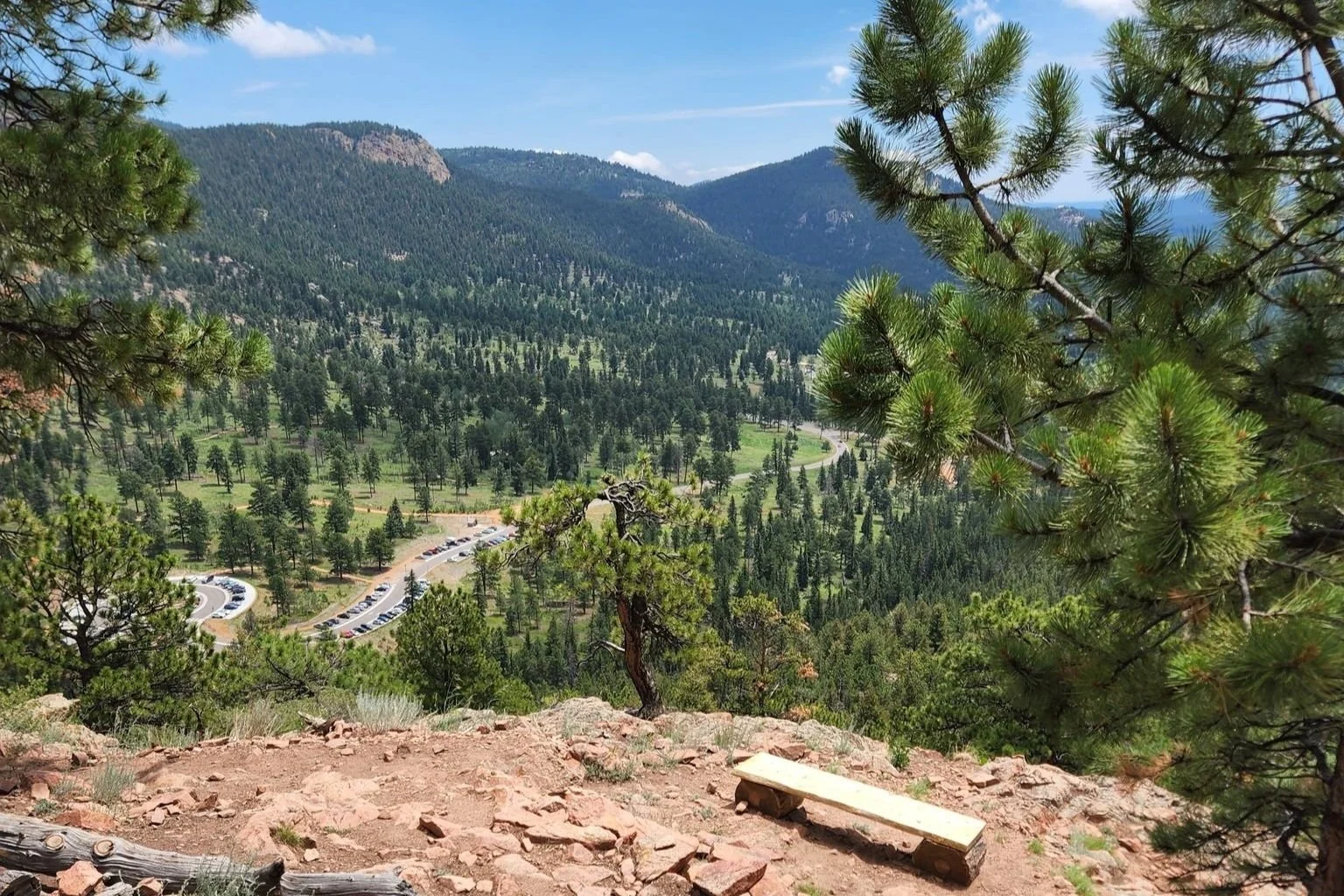
Colorado Elopement: Elk Falls Lookout & Pond (Staunton State Park) | Denver Wedding Officiant
Summary
Plan a Colorado elopement ceremony at Staunton State Park’s Elk Falls Lookout and Elk Falls Pond near Denver. A Denver wedding officiant shares route tips, distance, parking, and the best seasons for hiking elopements. Find scenic ceremony spots with mountain views and rock platforms—even within the first miles. Book your Colorado elopement wedding for unforgettable photos.
Key Topics
Denver wedding officiant; Colorado elopement wedding; Staunton State Park elopement; Elk Falls Lookout; Elk Falls Pond; hiking elopement near Denver; Front Range elopement; scenic ceremony locations Colorado; Colorado ordained minister; mountain wedding backdrop; Evergreen/Conifer elopement; wedding ceremony hikes
Introduction
Living in Denver offers many perks, including beautiful hiking trails in state parks within 60 minutes of a Colorado elopement wedding. Here’s the first of a series of Staunton State Park hikes that I’ve recently recommended to my wedding couples in Colorado as options for a wedding ceremony elopement. I’ve included a review from a past visit and my notes.

Staunton State Park offers impeccable views from its trail for a beautiful elopement wedding in Colorado.
Colorado Elopement Wedding Hikes:
Elk Falls Lookout and Elk Falls Pond via Scout Line Trail, Marmot Passage Trail, and Chimney Rock Trail
Time of Year: Late July.
Weather: 60 degrees and sunny at 8:49 am, 71 degrees and cloudy at 12:56 pm.
Cover: Sparse trees on the Scout Line trail and more exposed on Marmot Passage and Chimney Rock Trails. Completely exposed around Elk Falls Pond.
Time: 8:49 am - 12:56 pm.
Distance: 10.9 Miles total (Scout Line to Marmot Passage to Elk Falls Pond to Chimney Rock to Elk Falls Overlook. Return: Lion's Back to Elk Falls Pond again. Marmot Passage to Scout Line to the parking lot).
Traffic: Light to moderate (a mix of bikers and hikers on Marmot Passage to Elk Falls Pond).
Parking: Lazy V parking lot (2 miles past the visitor center). 60% full at the beginning and end of the hike.
Equipment: Hiking boots.
Terrain: A well-marked dirt and rock path that connects to many routes. The accent on Scout Line and the first part of Marmot Passage had more rocky terrain overall.
Experience: Absolutely love Staunton State Park! All the staff are friendly, and the trails and picnic areas are well-maintained. The ascent on Scout Line Trail and the first part of Marmot Passage Trail offered incredible sweeping views of the surrounding mountains (all within 2 miles of the hike). Most of the hike was scenic, and I saw a deer just 15 feet off the trail. The pond is charming, and the Elk Falls Overlook provides beautiful 270-degree views. I passed the Elk Falls Trail on the way up and chose Lion's Back on the way down to the pond to save time. Although this route is out-and-back, you can create a loop with their extensive trail system. Can't wait to bring other hikers! Note: I bypassed a few miles by starting my hike from the Lazy V lot.
Cost: A state park day pass or annual pass is required for access to the trail.
Difficulty: Easy, but the initial uphill hike may require a baseline of cardio.
Notes from Your Colorado Wedding Officiant: I loved this trail and can’t wait to return! Although the 11-mile trek might be a haul for wedding couples with less endurance, you’ll be plenty satisfied hiking within the first 2.5 miles with plenty of stunning views right off the bat. Many areas also offer rock platforms large enough for additional guests. No doubt, there are many options on this trail for a Colorado Wedding Elopement. You may also take other trails for photos or a wedding ceremony at Elk Falls Pond or Elk Falls Lookout. Being so close to the Front Range of Colorado, the winter season will offer snow-covered options with fewer road closures. It also serves as a cooler option than the Front Range during the summer. Fall would be a wonderful, dry option, while the early spring may be muddy depending on the snowmelt.

Staunton State Park offers endless options for elopement ceremonies. A state park pass Is required, though.

The sweeping panoramic views is a perfect backdrop for a wedding elopement in Colorado.

You don’t need to hike 11 miles for a Colorado elopement wedding ceremony in this state park. You’ll find the perfect location in the first 2.5 miles (even in the first .5 mile).

The terrain aren’t ideal for high heels but they aren’t bad for a bride in hiking boots!

The interesting rock formations in Staunton State Park offer an interesting backdrop for your elopement ceremony.

Although it might be a bit of a hike up, the Elk Falls Overlook offers a 270-degree view from a rock platform (perfect for a ceremony with Colorado ordained minister).

A perfect location for a wedding elopement ceremony. Only a 25 minute hike up to this point.
About the Author: Michael Moody, Wedding Officiant
Michael Moody—author of the self-improvement book Redefine Yourself: The Simple Guide to Happiness and host of the “The Elements of Being” podcast—is a wedding officiant serving Denver, Boulder, Golden, and other towns across Colorado. He is a 2023 WeddingWire Couples’ Choice Award winner in Denver (his eighth consecutive year), was named “Best Business of 2024 and 2025” by Three Best Rated, and earned “The Best Wedding Officiant in Commerce City, Colorado for 2024” from Quality Business Awards USA. Since 2012, he has officiated more than 300 weddings and now offers Colorado elopement ceremonies for couples looking for an intimate experience beyond the boundaries.
Wedding locations: Michael officiates wedding ceremonies in the Denver neighborhoods of LoDo, River North, Washington Park, Cherry Creek, City Park, Central Park, Capitol Hill, Cheesman Park, Park Hill, Lower Highlands, and Sloan Lake. Michael also serves as an ordained minister in Golden, Boulder, Breckenridge, Frisco, Aspen, Vail, Estes Park, and more. If your Denver neighborhood or Colorado town isn’t listed here, no worries! Please contact Michael to propose a wedding ceremony location in a different area!